
Blog
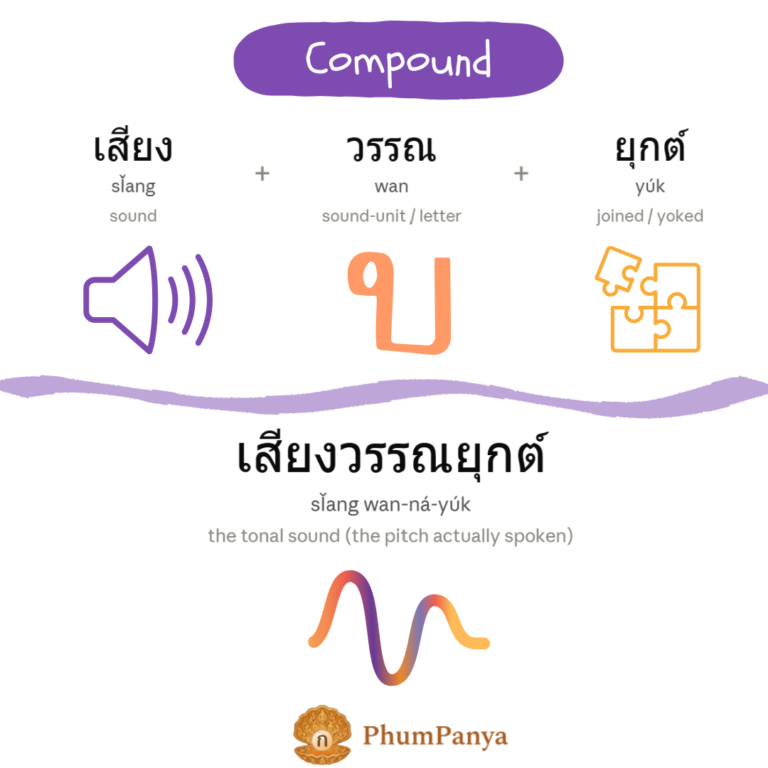 เสียงวรรณยุกต์ – Thai Tone Etymology
The Thai word for tone breaks into three roots — เสียง (sound), วรรณ (letter, from Sanskrit varṇa), and ยุกต์ (joined, from Sanskrit yukta). Native Tai and Sanskrit fused into one concept.
1 min read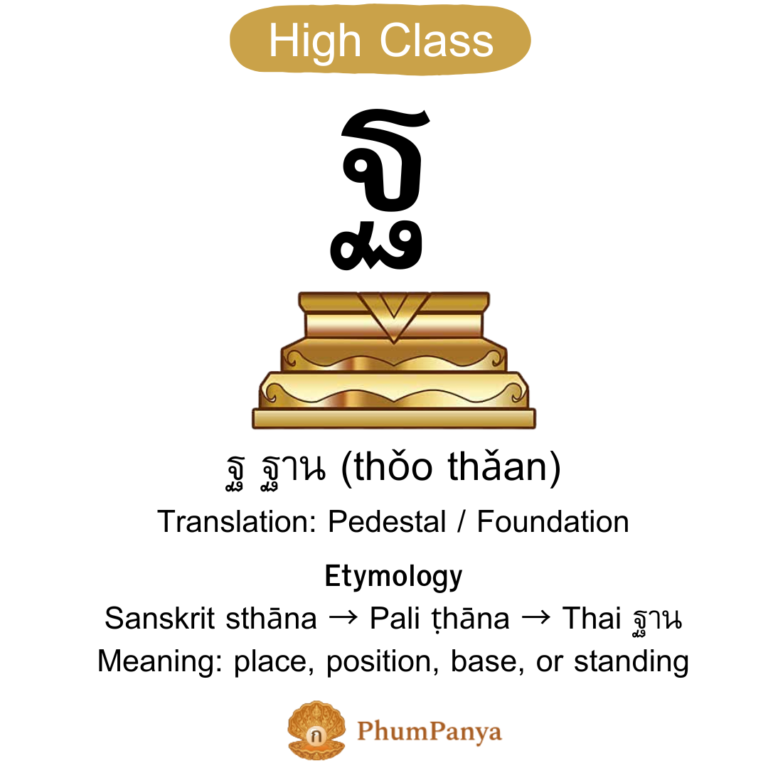 Down the Rabbit Hole of ฐ: One Thai Letter’s Journey Across Eurasia
I do love digging through the seams of Thai vocabulary. You sit down, say, to read about the letter — tɔ̌ɔ tǎan, the 16th consonant of the Thai alphabet. And several hours later you find yourself far from Thailand, gleefully time-traveling back and forth across Eurasia. Welcome down the rabbit hole.
3 min read McFarland House Hua Hin: A Wooden House Between Two Worlds
Among the beachfront hotels of Hua Hin stands a wooden house from another century. It once belonged to an American who became Siamese aristocracy, and who left behind a dictionary that still teaches Thai today.
6 min read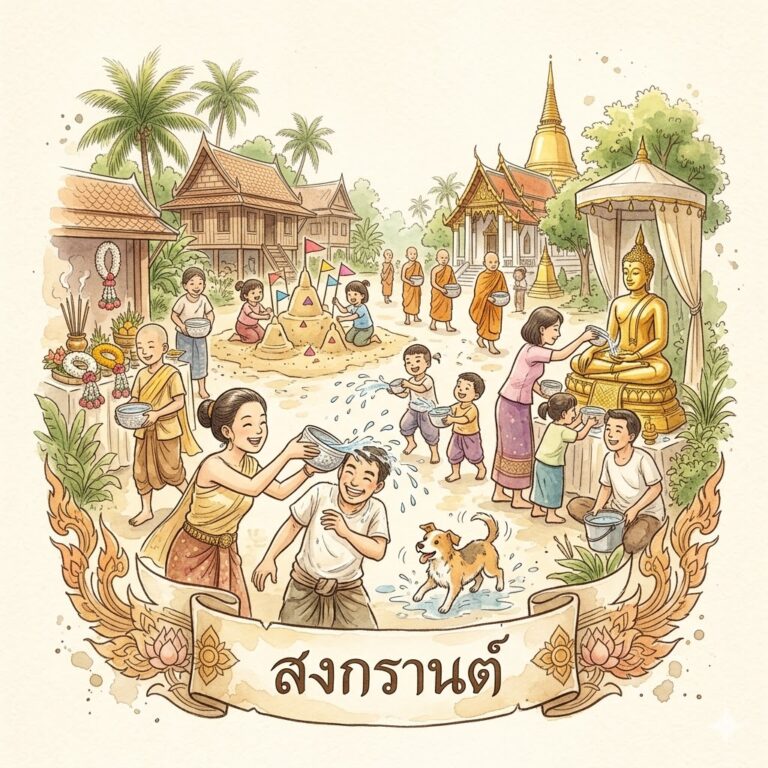 Songkran Festival: Thailand’s Water Celebration & Thai New Year
Songkran festival marks Thai New Year with water blessings, temple visits, and nationwide celebration. Discover the meaning of สงกรานต์ and essential traditions.
7 min read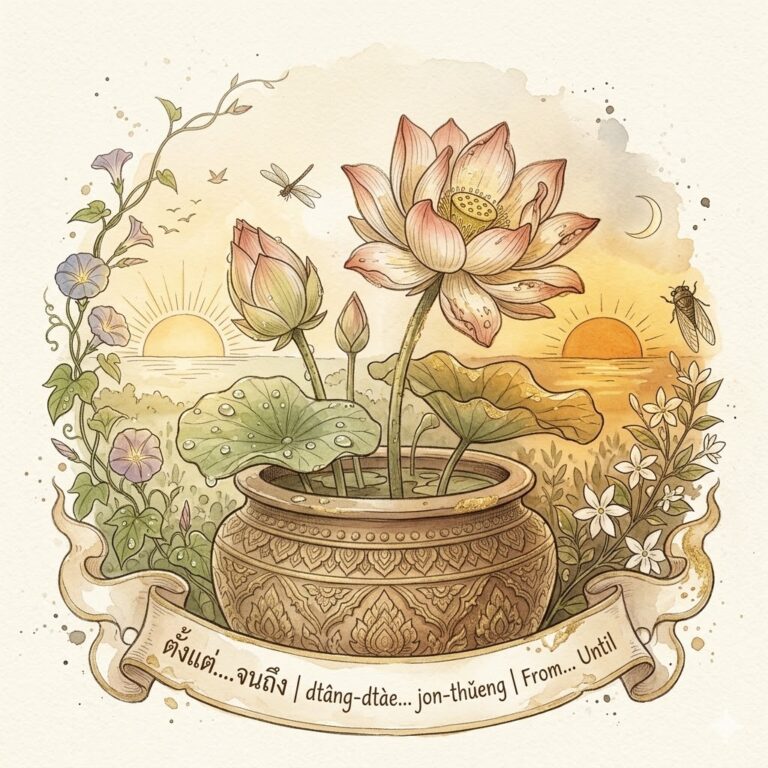 ตั้งแต่…จนถึง: The Bracket That Holds Thai Time and Space
ตั้งแต่ and จนถึง are the two anchors that bracket time, space, and everything in between.
2 min read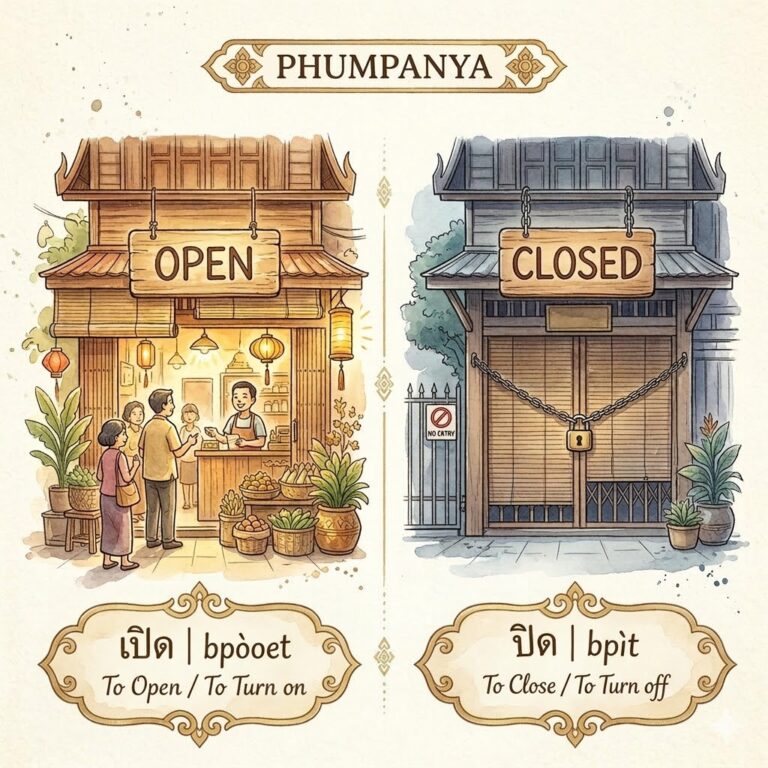 เปิด & ปิด: The Two Switches That Run Thai Life
English needs dozens of verbs — turn on, switch off, launch, activate, shut down. Thai needs two. เปิด opens everything. ปิด closes it. Here’s the logic behind the most useful word pair in the language.
2 min read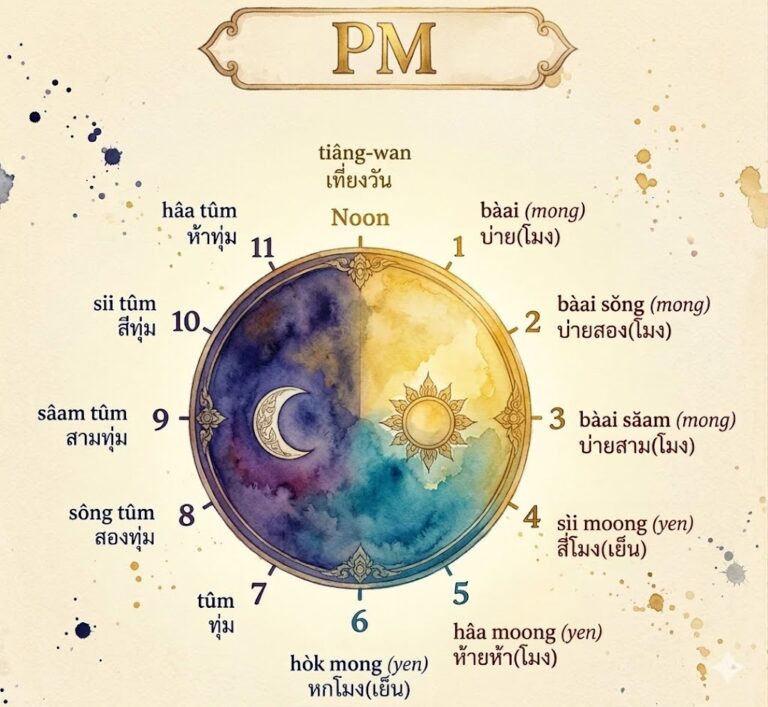 Telling Time in Thai: How Drums, Gongs and Watchmen Built the Clock
The Thai clock resets four times a day. Instead of counting straight to 24, each period starts from one again — and each is named after the instrument that ancient watchmen used to signal it.
10 min read Thai Verbs: The 20 Essential Action Words
Twenty verbs run Thai life. Learn the action words that cover everything from survival to deep thought.
8 min read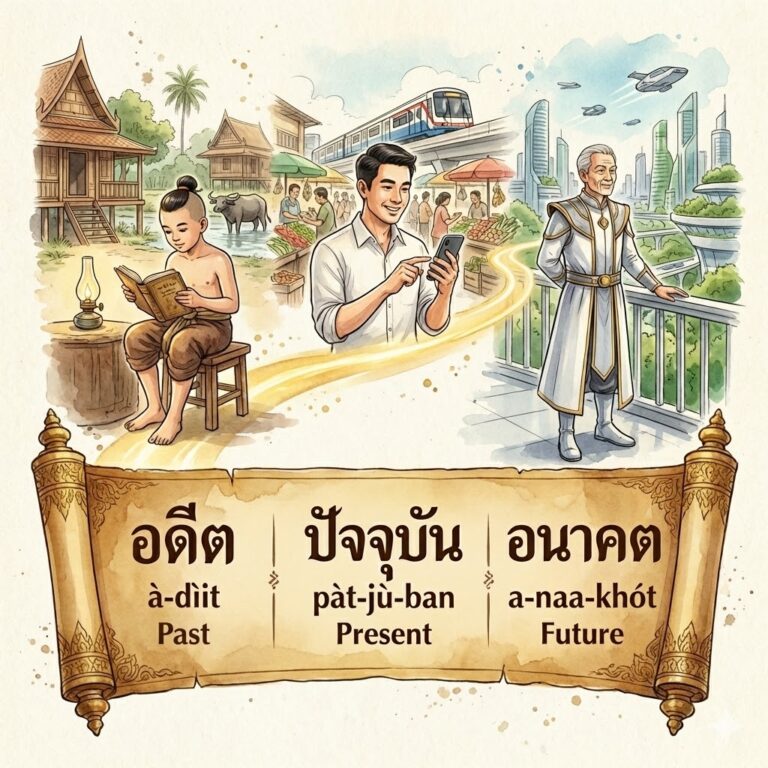 Past, Present & Future in Thai
Thai maps time through Sanskrit roots. Past is “already gone,” present is “born before you,” future is “not yet arrived.”
1 min read