
Telling Time in Thai: How Drums, Gongs and Watchmen Built the Clock
10 min readLong before smartphones, the village temple or the town watchmen would signal the hour using different instruments. The words Thais use today — Dtee, Moong, and Thoom are the echoes of those ancient tools.
The Sounds of the Sun and Moon
The Thai day is divided into four distinct “shifts.” Each shift has its own signature instrument, chosen specifically for how its sound affects the human ear at that time of day.
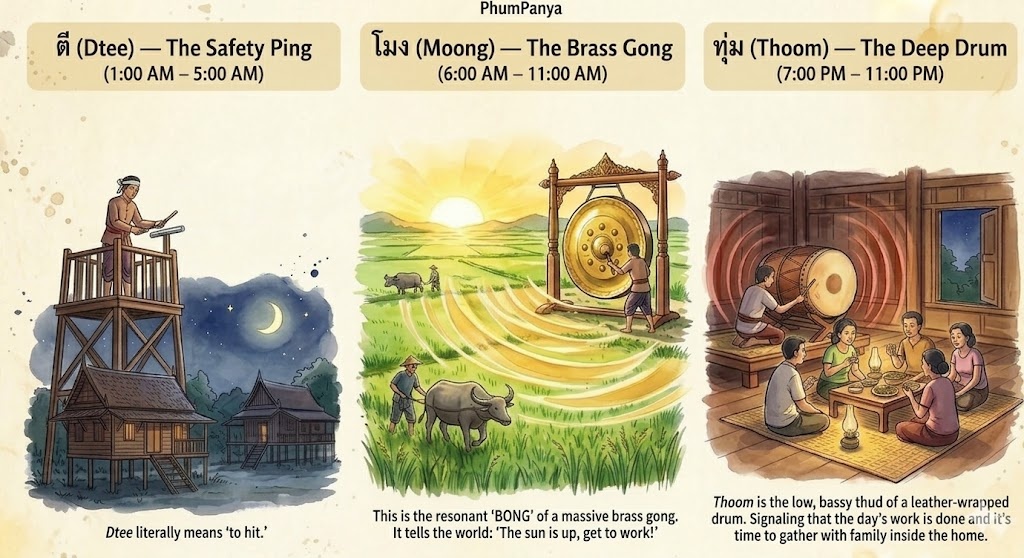
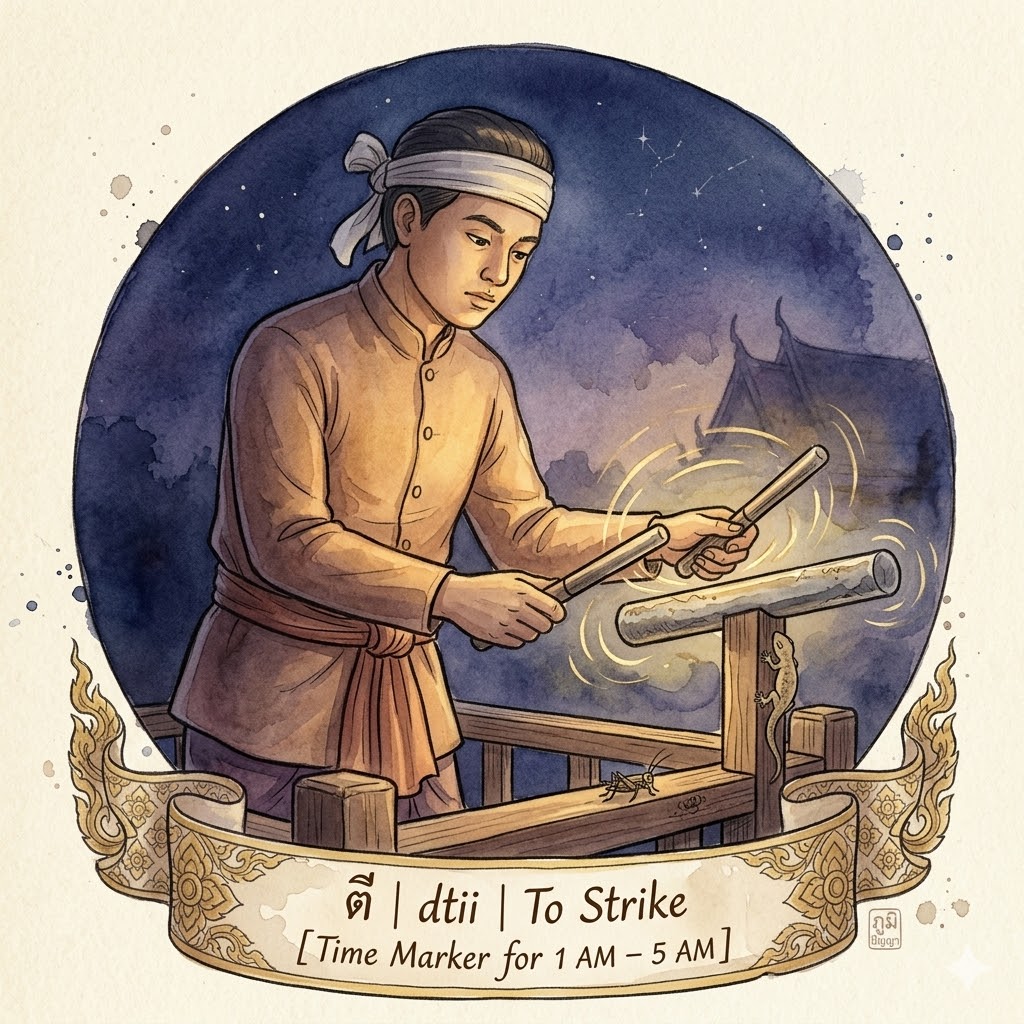
ตี (Dtee) — The Safety Ping (1:00 AM – 5:00 AM): Dtee literally means “to hit.” In the dead silence of the night, watchmen would strike a small metal bar. It wasn’t meant to wake you up; it was a reassuring signal. To anyone awake, that sharp “ping” meant the guard was on duty and the village was safe. It is the only time-word that is a verb — a nod to the human keeping watch.
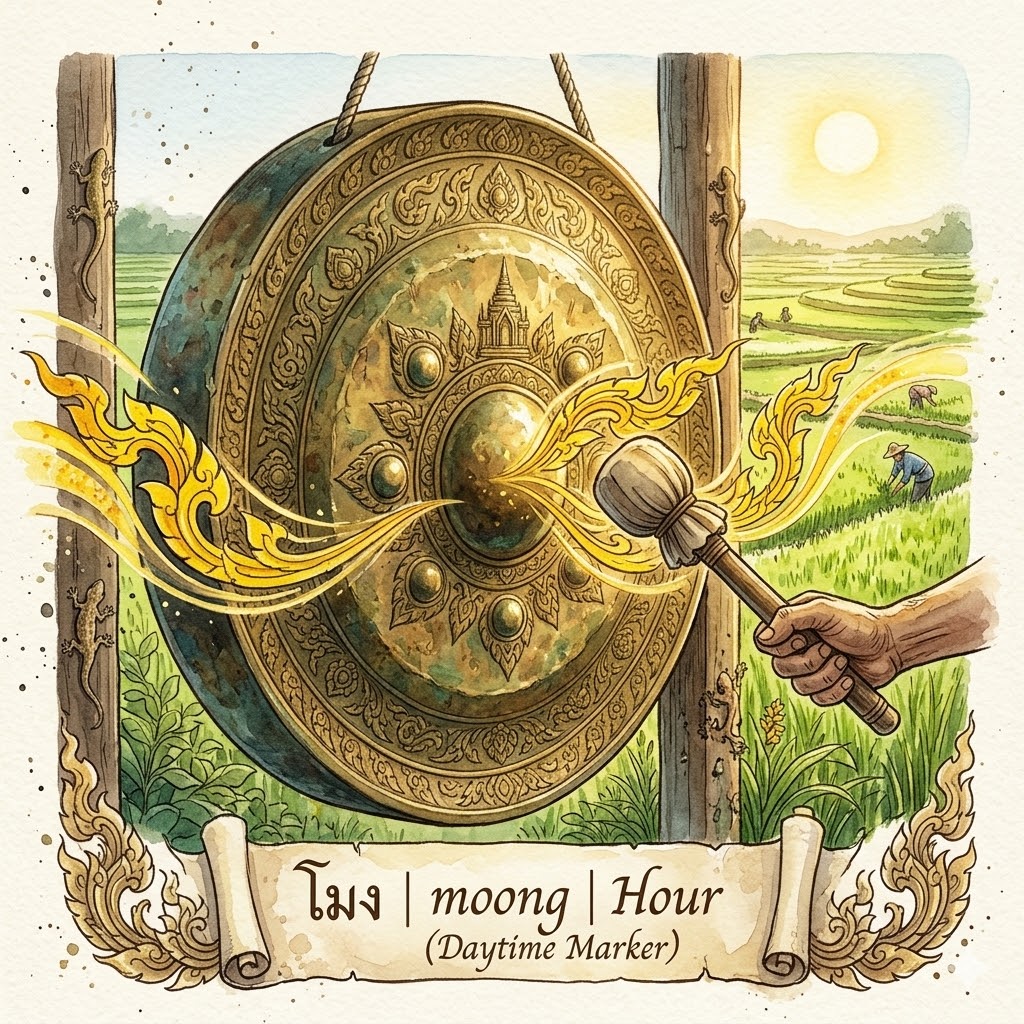
โมง (Moong) — The Brass Gong (6:00 AM – 11:00 AM): This is the resonant “BONG” of a massive brass gong. It’s a bright, expansive sound that carries across rice fields. It tells the world: “The sun is up, get to work!”
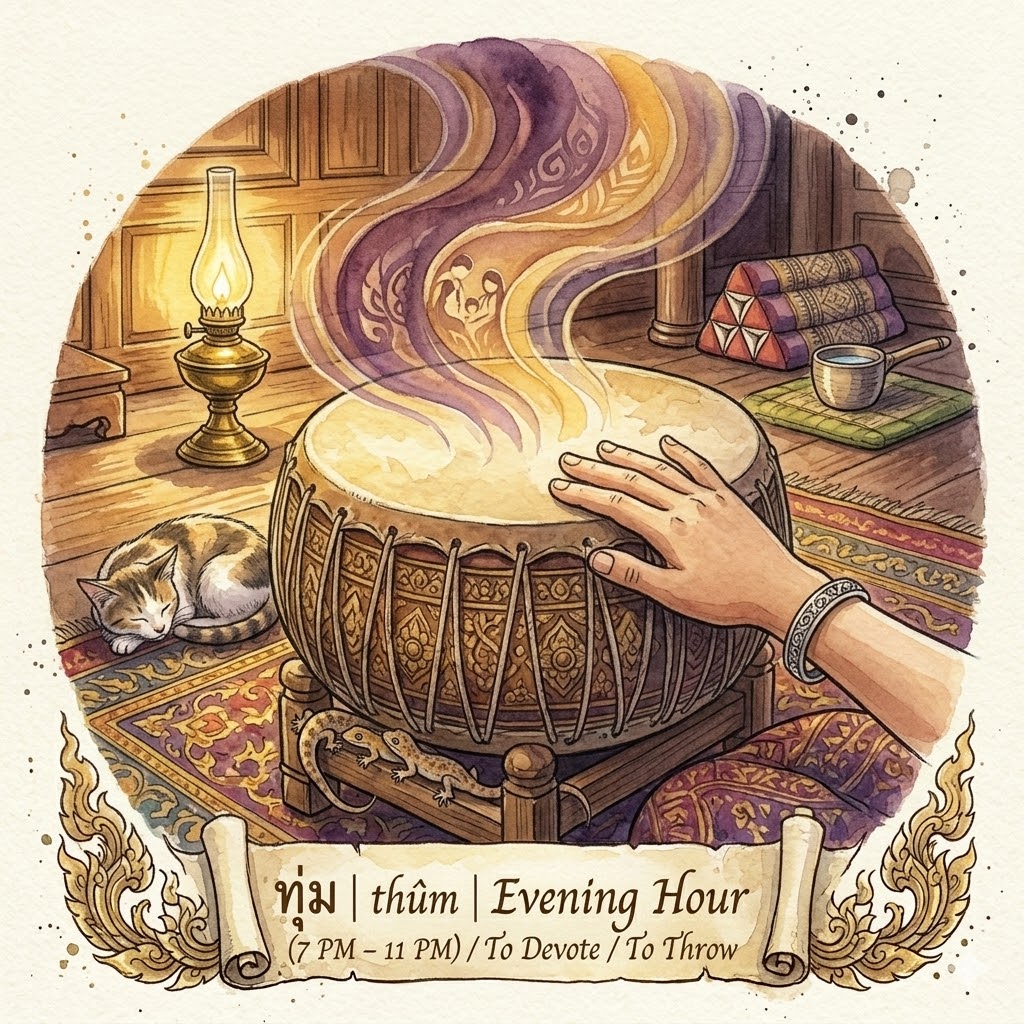
ทุ่ม (Thoom) — The Deep Drum (7:00 PM – 11:00 PM): Thoom is the low, bassy thud of a leather-wrapped drum. It’s a comforting, “indoor” sound. It doesn’t travel far, signaling that the day’s work is done and it’s time to gather with family inside the home.
The Four Quarters of the Day
Instead of one long 24-hour stretch, the Thai clock resets every six hours, following the rhythm of the sun.
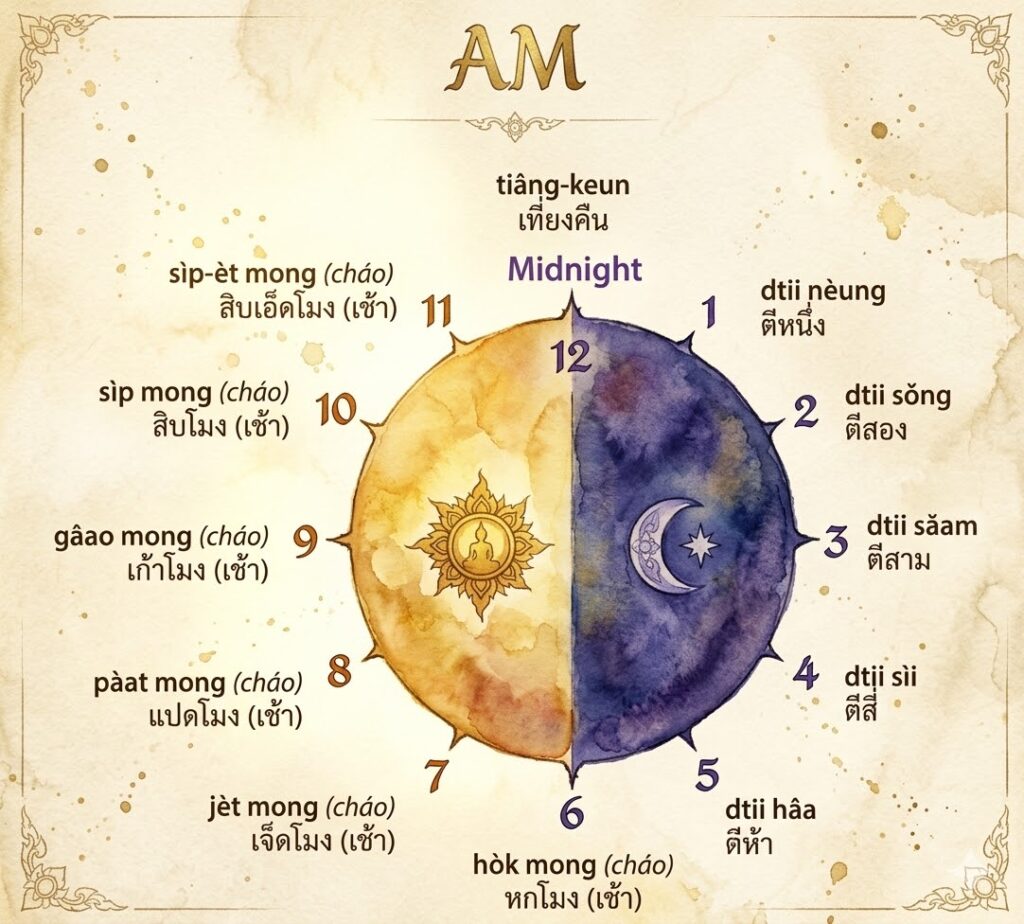
1. The Deep Night — ตี (Dtee) | 1:00 AM – 5:00 AM
Everything starts with the watchman’s strike.
- 1:00 AM — ตีหนึ่ง — dtee nùeng
- 2:00 AM — ตีสอง — dtee sǒng
- 3:00 AM — ตีสาม — dtee sǎam
- 4:00 AM — ตีสี่ — dtee sìi
- 5:00 AM — ตีห้า — dtee hâa
2. The Rising Sun — โมงเช้า (Moong Chao) | 6:00 AM – 11:00 AM
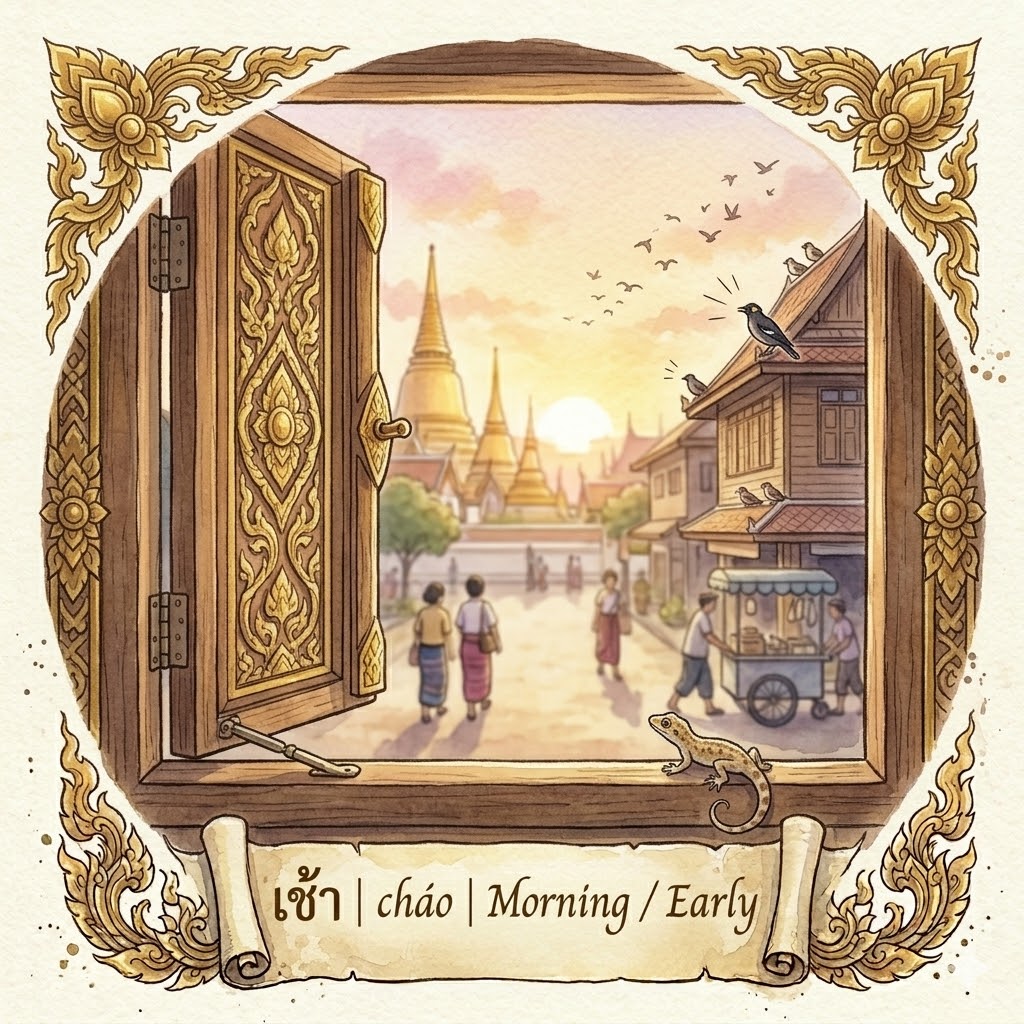
We switch to the morning gong. Since it’s early, เช้า (Chao) is added to the end — marking it as the morning hour.
- 6:00 AM — หกโมงเช้า — hòk moong cháo
- 7:00 AM — เจ็ดโมงเช้า — jèt moong cháo
- 8:00 AM — แปดโมงเช้า — bpàet moong cháo
- 9:00 AM — เก้าโมงเช้า — gâo moong cháo
- 10:00 AM — สิบโมงเช้า — sìp moong cháo
- 11:00 AM — สิบเอ็ดโมงเช้า — sìp èt moong cháo
Note: สาย (sǎai) describes the same morning hours but carries a different weight — late morning, with the implication that the day is already moving. สายแล้ว is what you hear when you’ve slept in.
3. The High Heat & Cooling Off | 1:00 PM – 6:00 PM
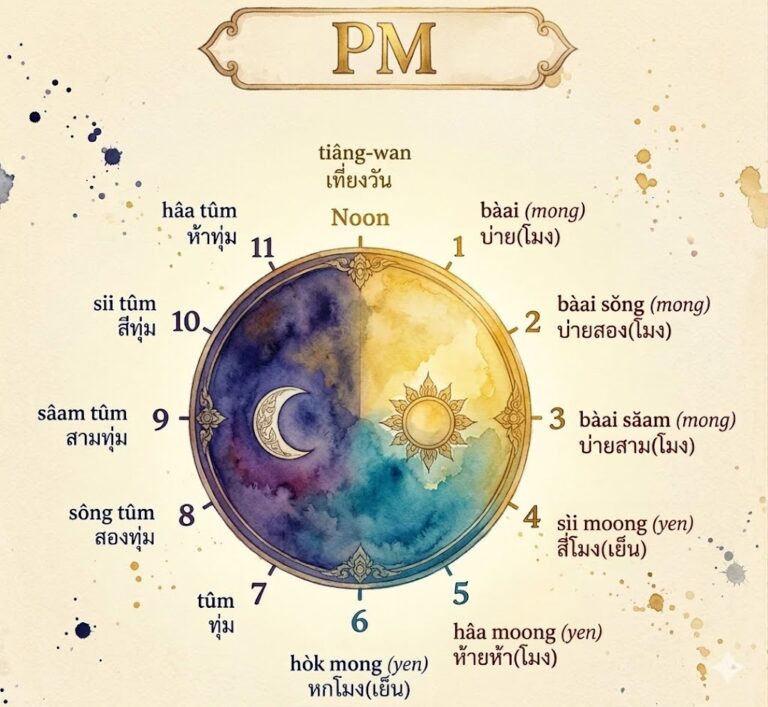
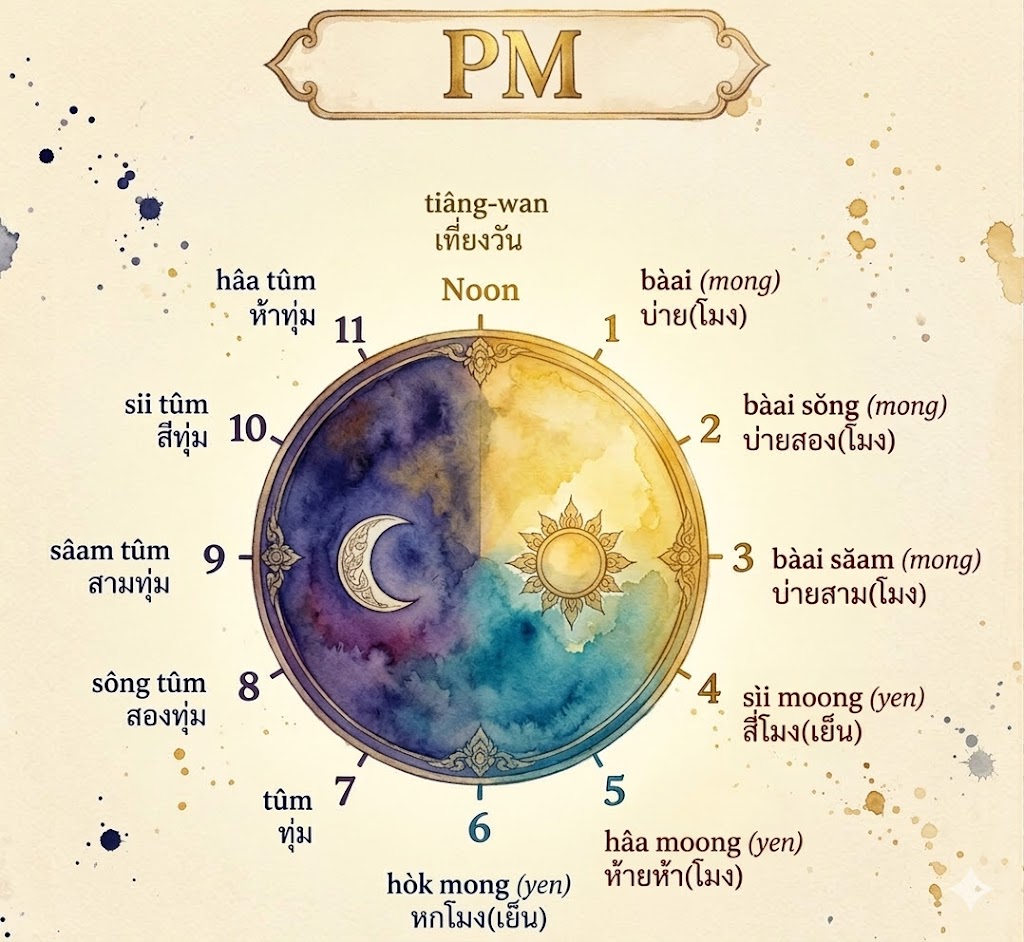
After the noon reset, บ่าย (Baai) covers the heat of the afternoon. เย็น (Yen) marks when the air begins to cool — not evening in the English sense, but the cooler part of the day.


- 1:00 PM — บ่ายโมง — bàai moong — Afternoon
- 2:00 PM — บ่ายสองโมง — bàai sǒng moong — Afternoon
- 3:00 PM — บ่ายสามโมง — bàai sǎam moong — Afternoon
- 4:00 PM — สี่โมงเย็น — sìi moong yen — Cool of the Day
- 5:00 PM — ห้าโมงเย็น — hâa moong yen — Cool of the Day
- 6:00 PM — หกโมงเย็น — hòk moong yen — Cool of the Day
Note on variation: Some Thais extend บ่าย further — using บ่ายสี่ for 4 PM. The boundary between บ่าย and เย็น is a matter of habit and region, not a hard rule.
4. The Gathering — ทุ่ม (Thoom) | 7:00 PM – 11:00 PM
The sun is gone and the drum begins. We count from one again.
- 7:00 PM — หนึ่งทุ่ม — nùeng thoom
- 8:00 PM — สองทุ่ม — sǒng thoom
- 9:00 PM — สามทุ่ม — sǎam thoom
- 10:00 PM — สี่ทุ่ม — sìi thoom
- 11:00 PM — ห้าทุ่ม — hâa thoom
Noon & Midnight
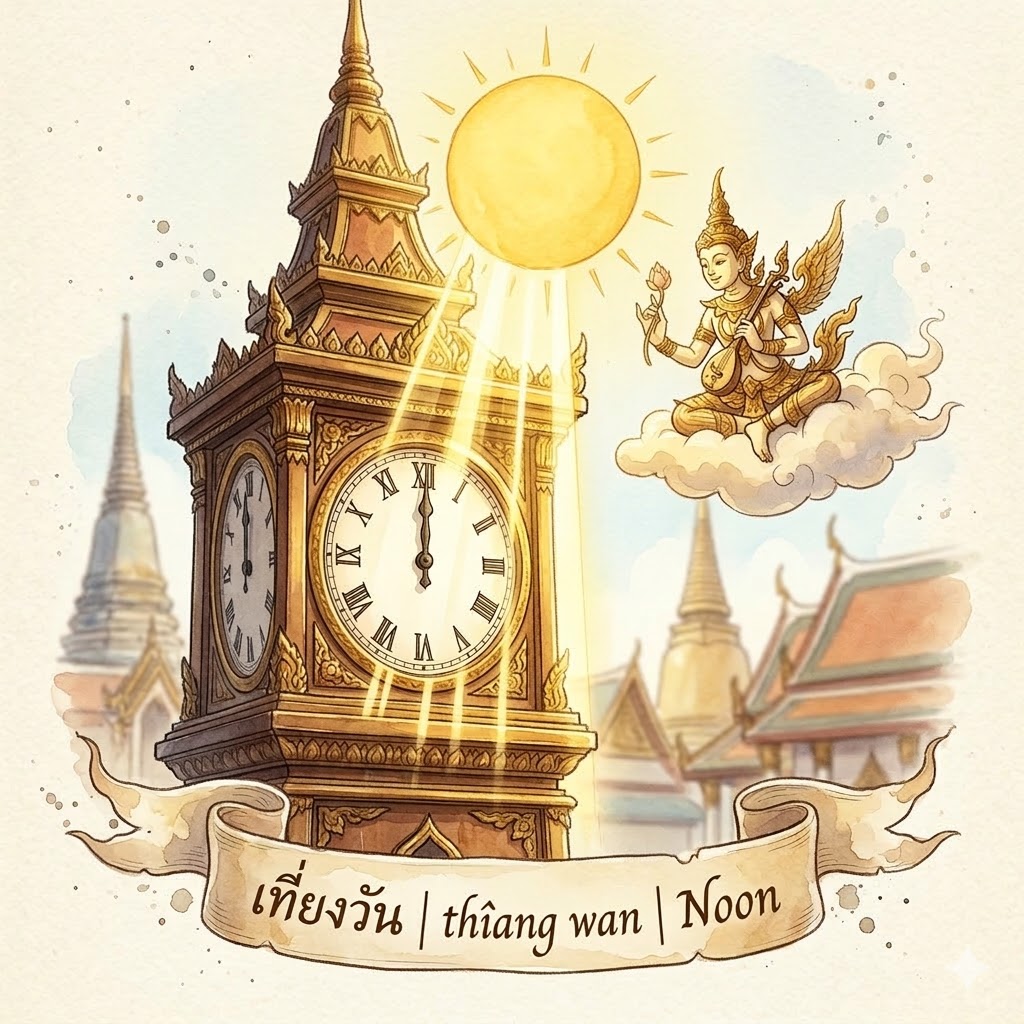
เที่ยง (thîiang) means “straight” or “center.”
เที่ยงวัน (thîiang wan): Noon. When the sun is “straight” above.
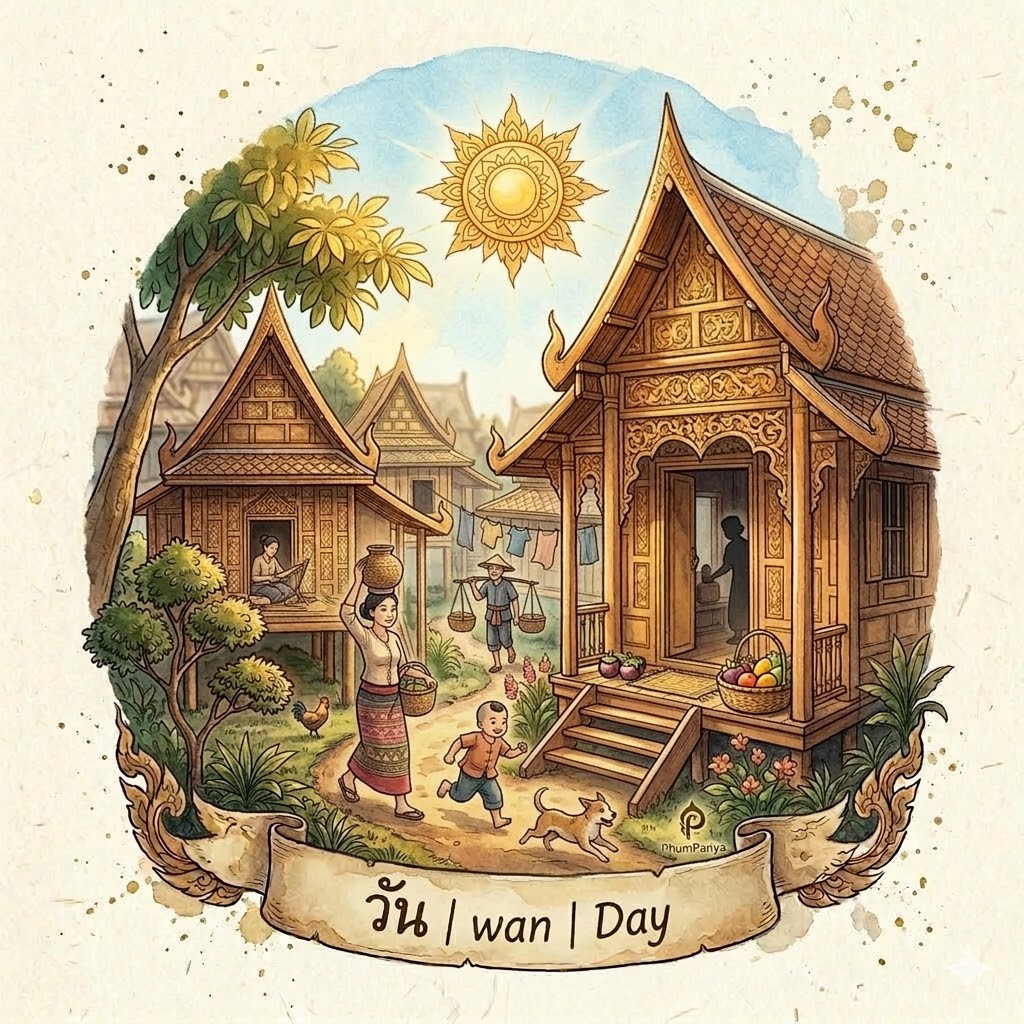
วัน means day — every Thai date, every day of the week, every holiday starts with this word.
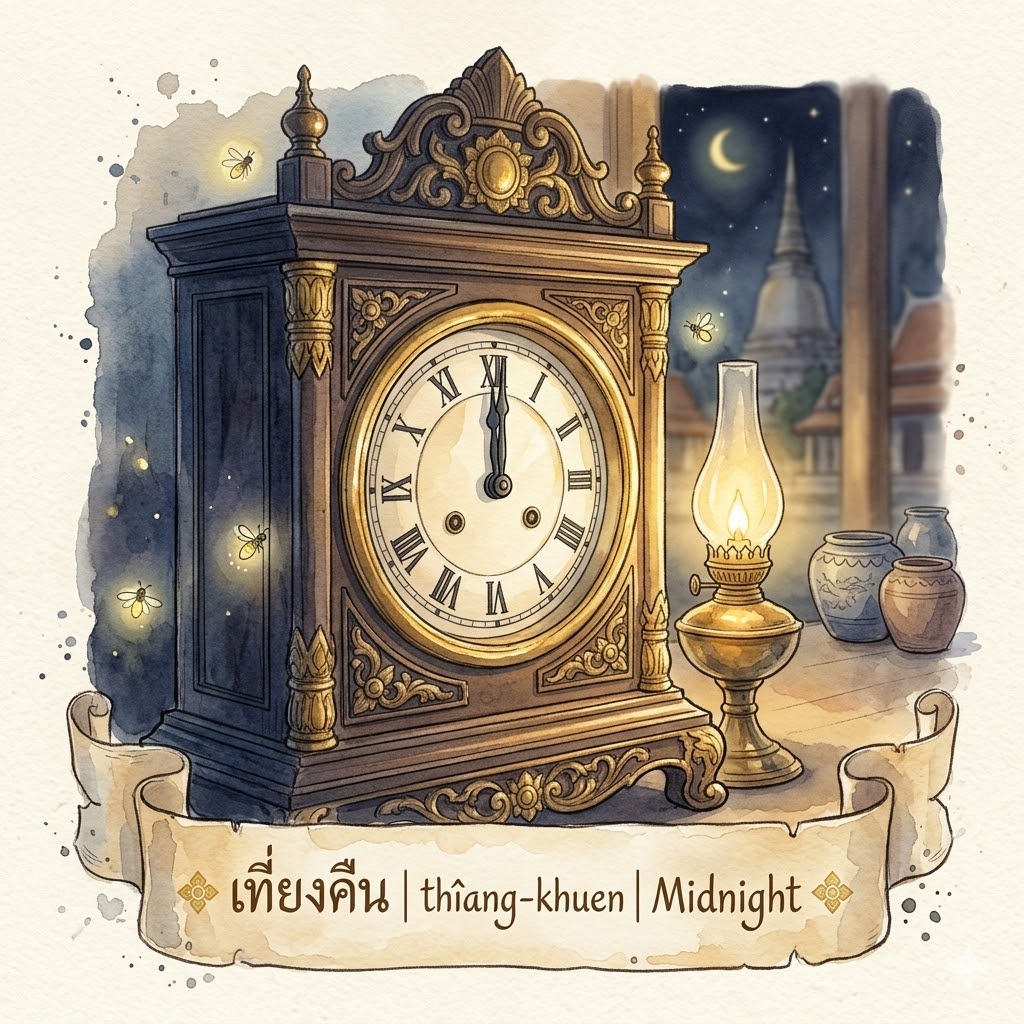
เที่ยงคืน (thîiang kheun): Midnight. When the night is “straight” through.
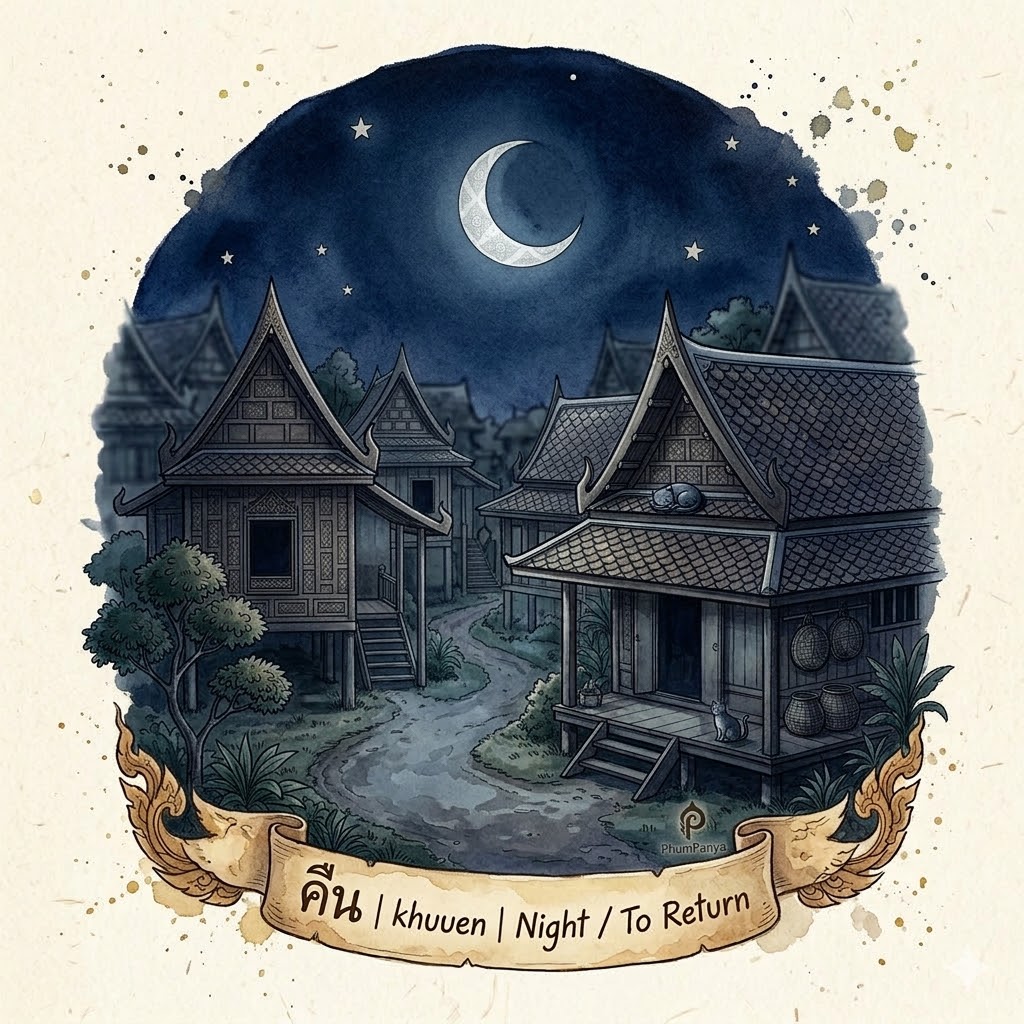
คืน means night — but also “to return.” The darkness that comes back.
The Building Blocks of Time
Before you can tell the time, you need the three atoms that time is made of.
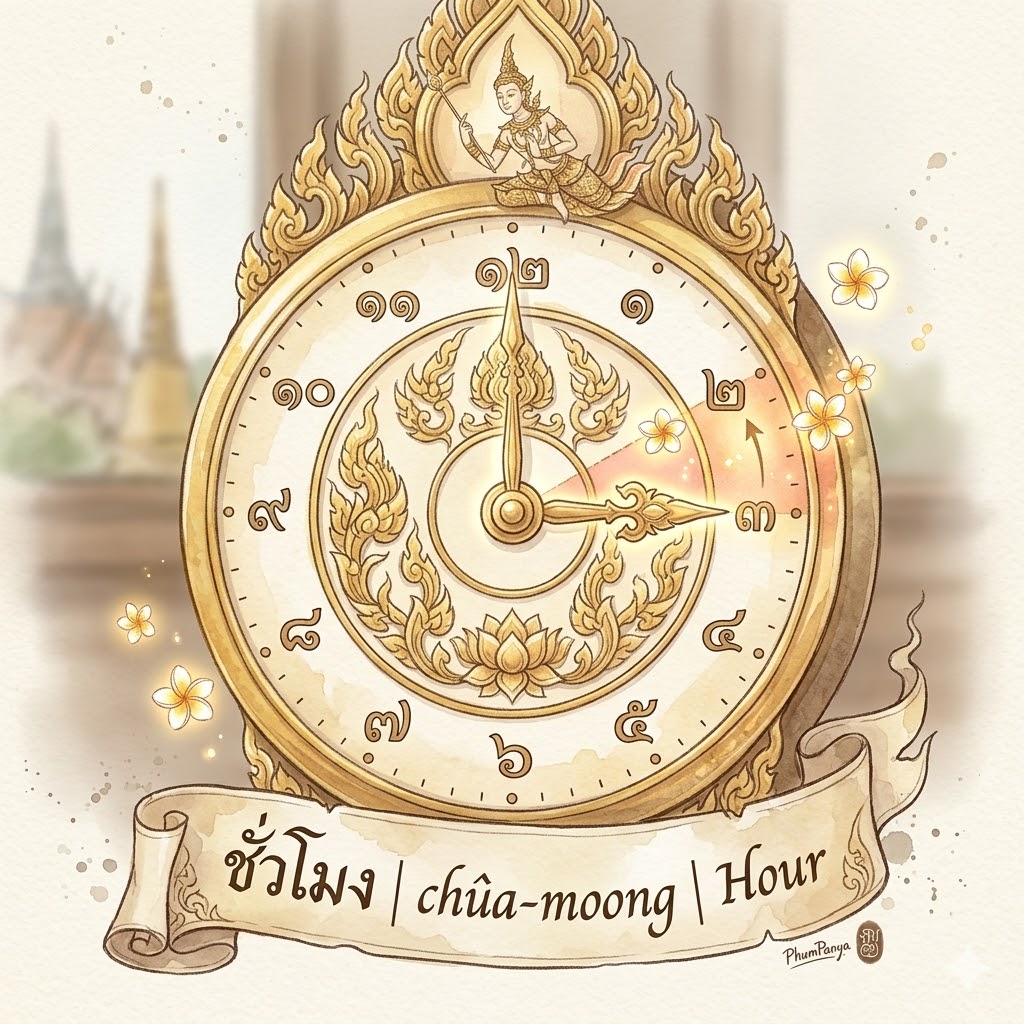
Hour | ชั่วโมง | chûua moong
Minute | นาที | naa-thii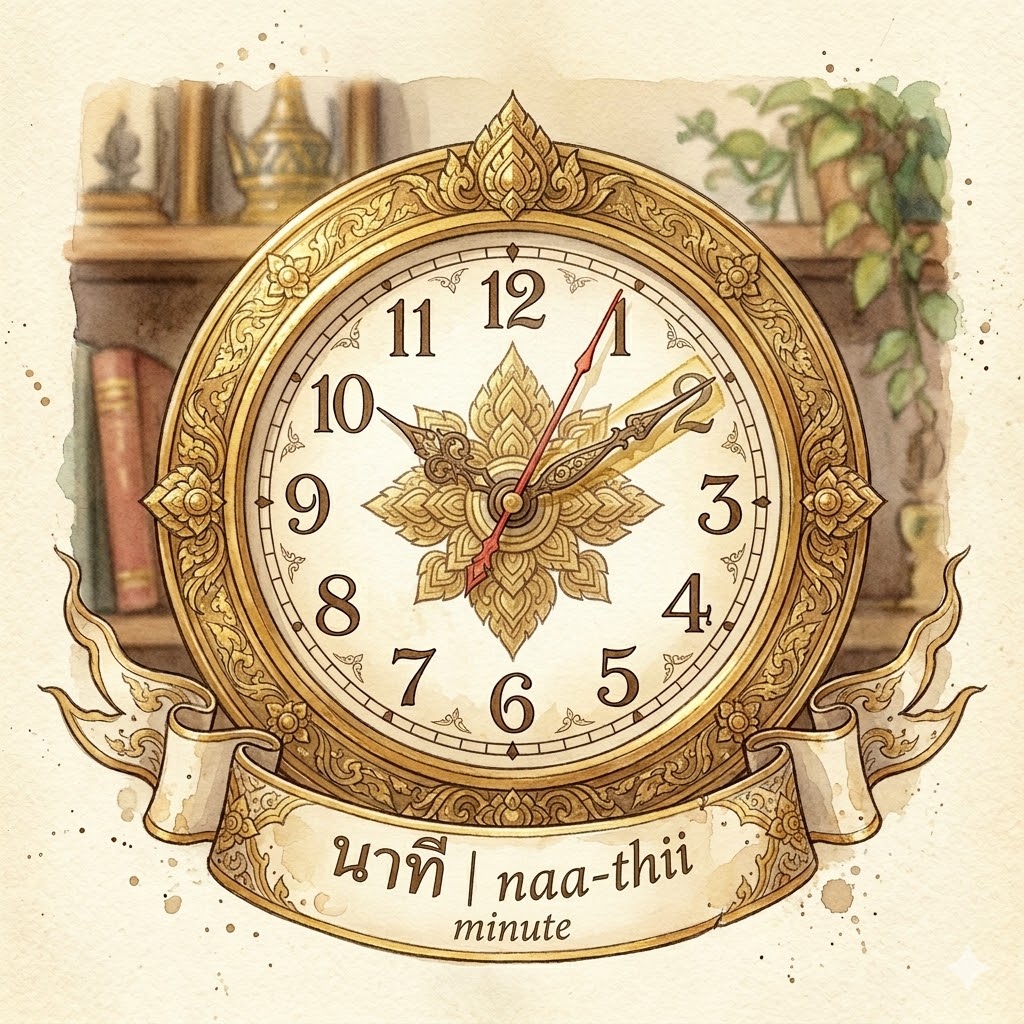
Second | วินาที | wí-naa-thii
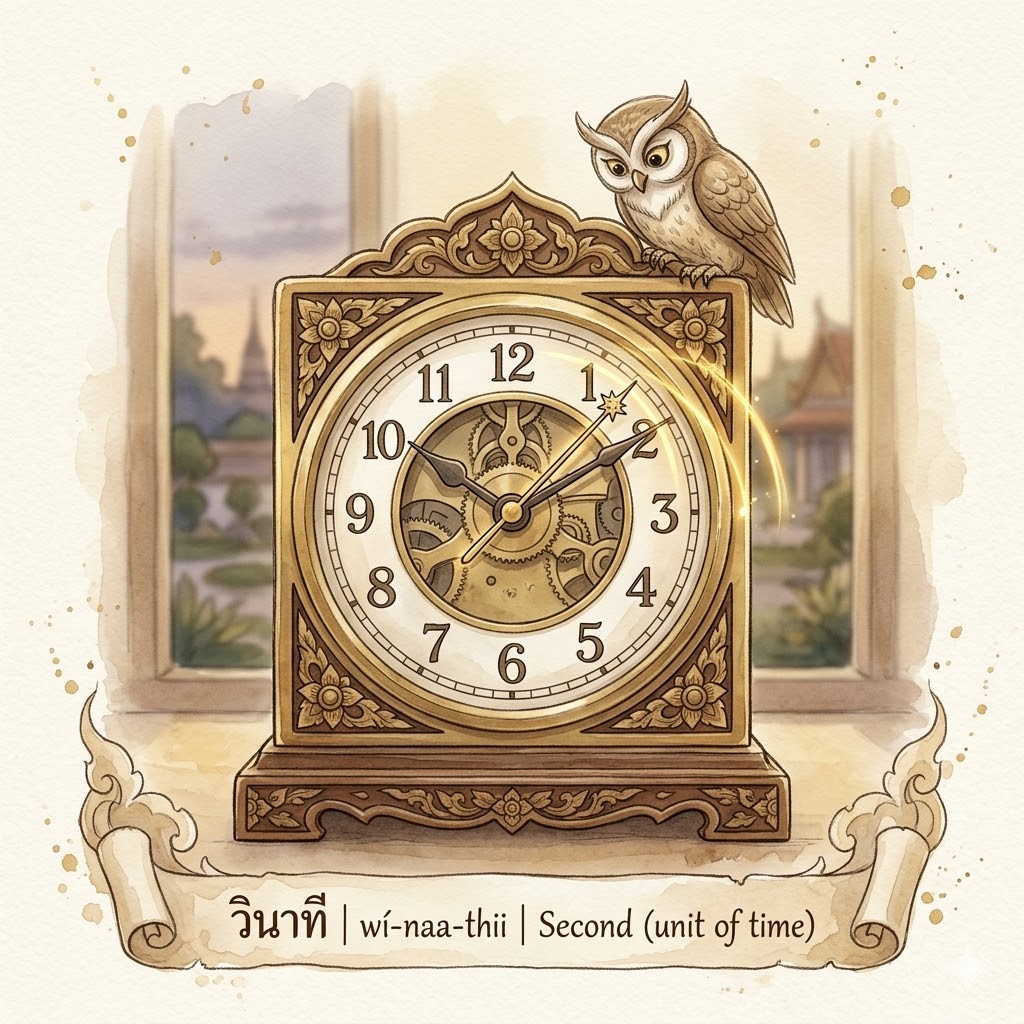
The etymology is worth pausing on. นาที (minute) and วินาที (second) share the same root — นาที comes from Sanskrit nāḍī, a unit of time. วินาที adds the prefix วิ (wi), a Sanskrit intensifier meaning “apart” or “special” — making it the smaller, more precise division of the same unit.
The Modifiers
- Minutes | นาที | naa-thii | หกโมงเช้าสิบห้านาที | 6:15 AM
- Half past | ครึ่ง | khrʉ̂ng | หกโมงเช้าครึ่ง | 6:30 AM
- To / Until | อีก | ìik | สิบเอ็ดโมงเช้าอีกสิบห้านาที | 10:45 AM (15 to 11)
Beyond the Clock: Time in Thai
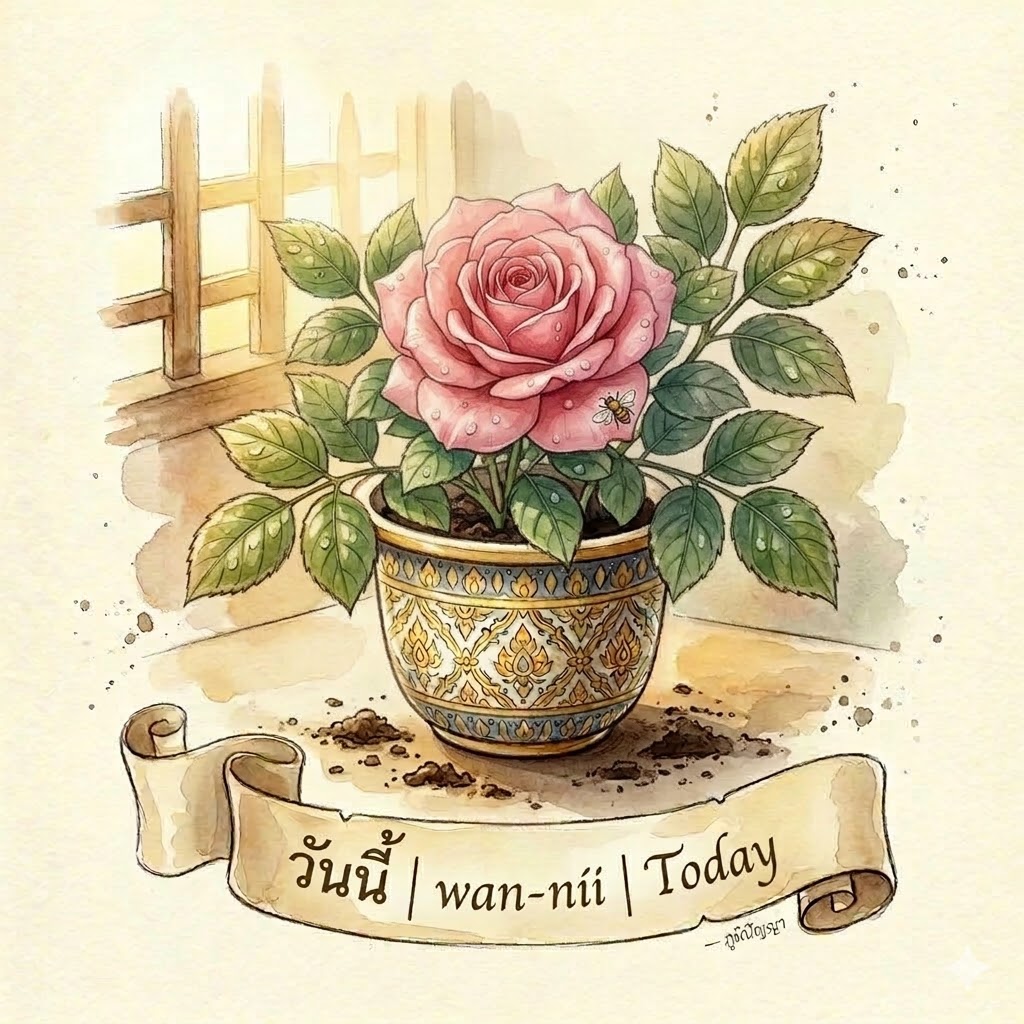
Today | วันนี้ | wan níi | This day
Tomorrow | พรุ่งนี้ | phrûng níi | The brightening day
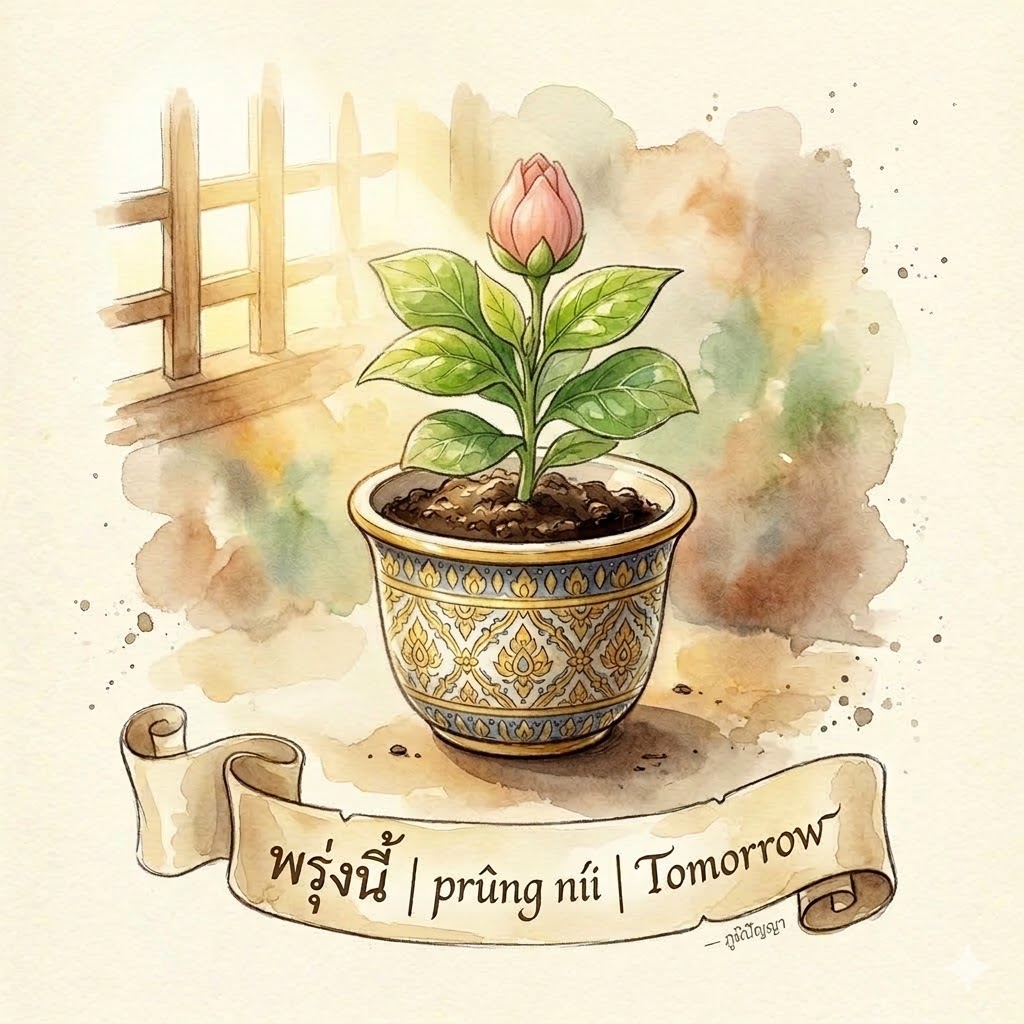
Yesterday | เมื่อวาน | mûuea waan | The day that passed
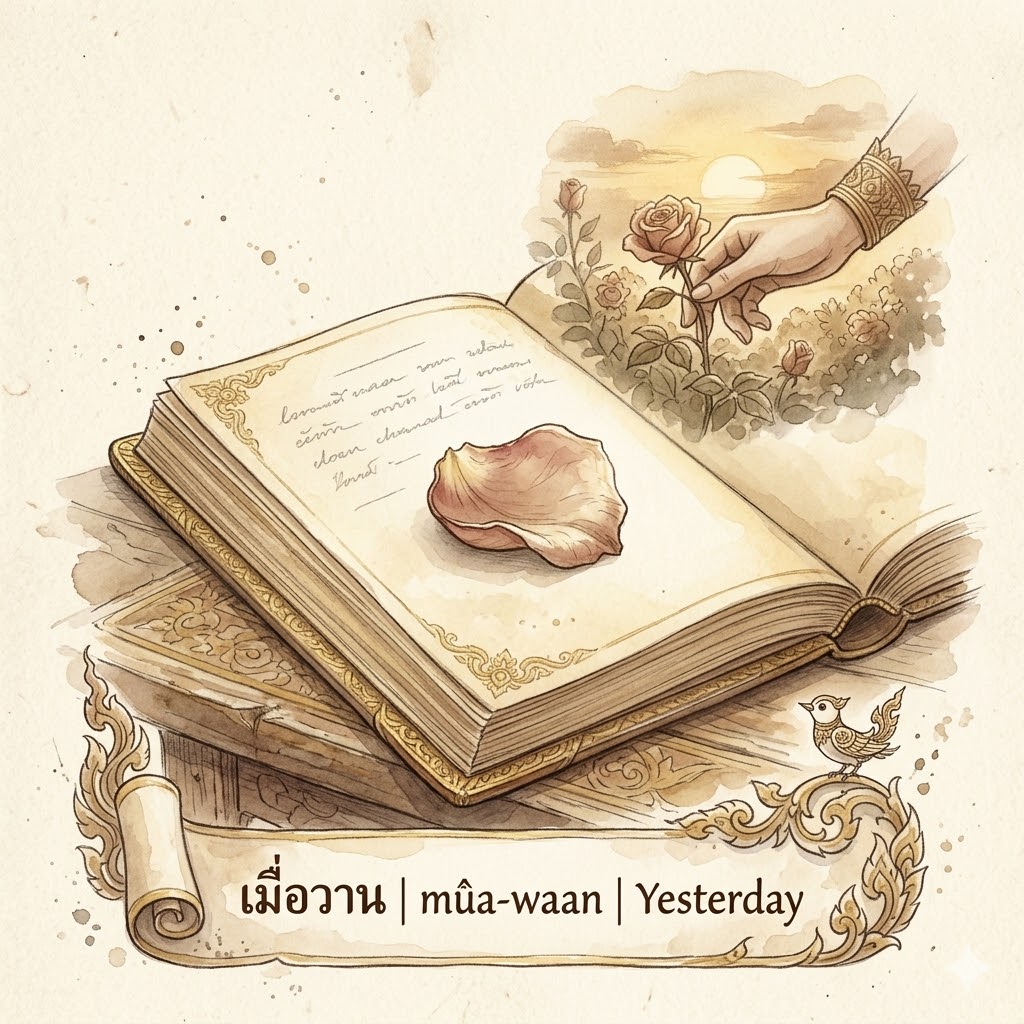
The logic is layered here. วัน (wan) means “day.” นี้ (níi) means “this.” So วันนี้ is simply “this day.” พรุ่ง carries the sense of dawn approaching — the day that is about to brighten. เมื่อวาน uses เมื่อ (mûuea), meaning “when” or “at the time of” — the day you can point back to.
Related posts
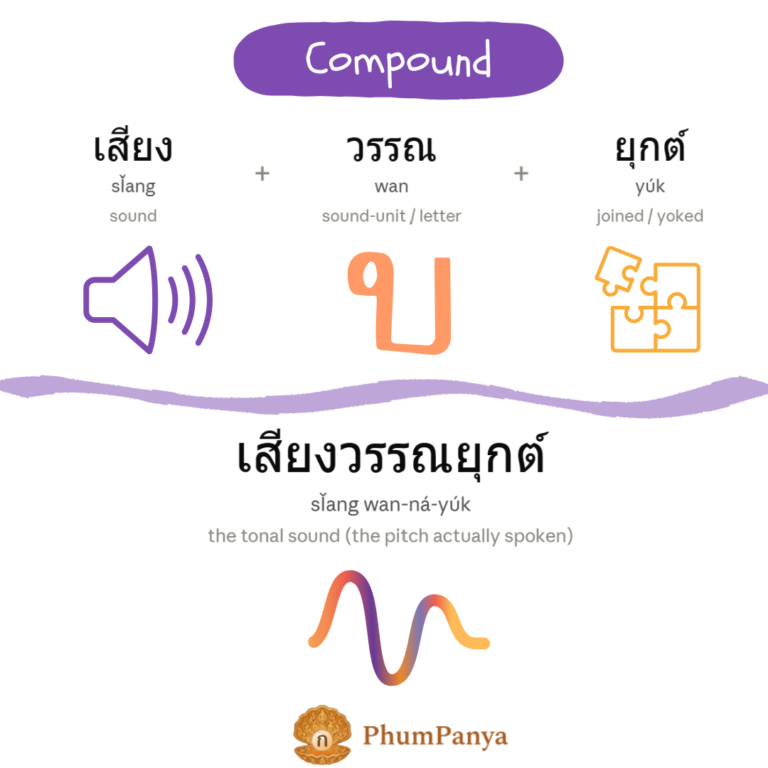 เสียงวรรณยุกต์ – Thai Tone Etymology
The Thai word for tone breaks into three roots — เสียง (sound), วรรณ (letter, from Sanskrit varṇa), and ยุกต์ (joined, from Sanskrit yukta). Native Tai and Sanskrit fused into one concept.
1 min read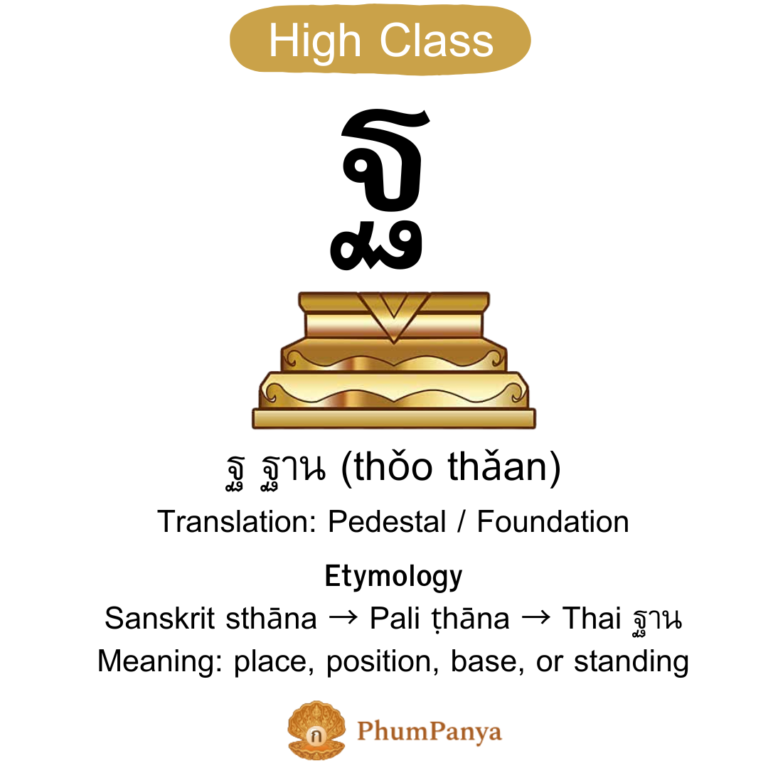 Down the Rabbit Hole of ฐ: One Thai Letter’s Journey Across Eurasia
I do love digging through the seams of Thai vocabulary. You sit down, say, to read about the letter — tɔ̌ɔ tǎan, the 16th consonant of the Thai alphabet. And several hours later you find yourself far from Thailand, gleefully time-traveling back and forth across Eurasia. Welcome down the rabbit hole.
3 min read McFarland House Hua Hin: A Wooden House Between Two Worlds
Among the beachfront hotels of Hua Hin stands a wooden house from another century. It once belonged to an American who became Siamese aristocracy, and who left behind a dictionary that still teaches Thai today.
6 min read