
Thai Prepositions
4 min readThese eight words are the connective tissue of the Thai language. If verbs are the engine and nouns are the vehicle, Thai prepositions are the roads and signs that tell you how everything relates to each other.
The 8 Essential Thai Prepositions
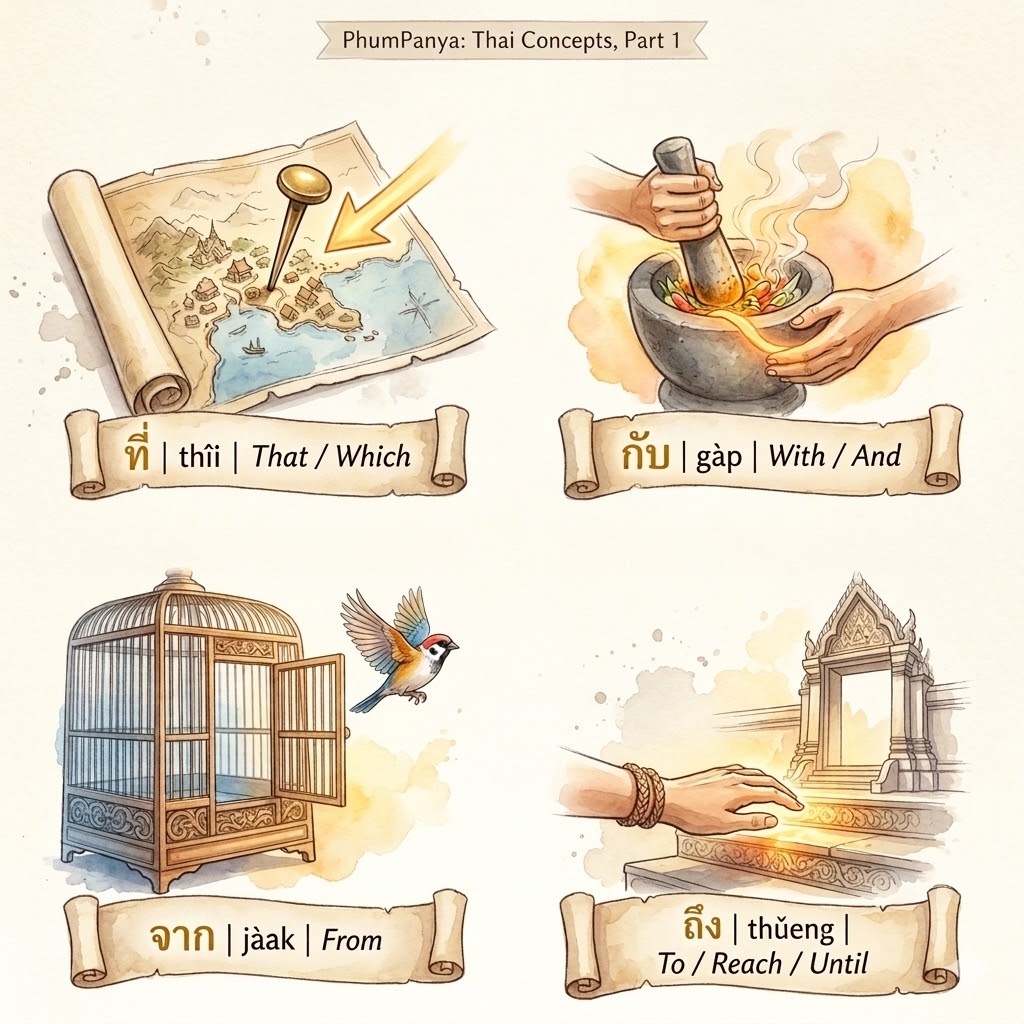
1. ที่ (thîi) | At / That / Which
The Logic: “The Pin”
Example:
อยู่ ที่ ทะเล (yùu thîi thá-lee)
“[I am] at the sea”
2. กับ (gàp) | With / And
The Logic: “The Glue”
Example:
ไป กับ แม่ (bpai gàp mâe)
“Go with mother”
3. จาก (jàak) | From
The Logic: “The Launchpad”
Example:
มาจาก อนาคต (maa jàak a-naa-khót)
“Come from the future”
4. ถึง (thǔeng) | To / Reach / Until
The Logic: “The Finish Line”
Example:
ไปถึง ชายหาด (bpai thǔeng chaai-hàat)
“Arrive at/to the beach”
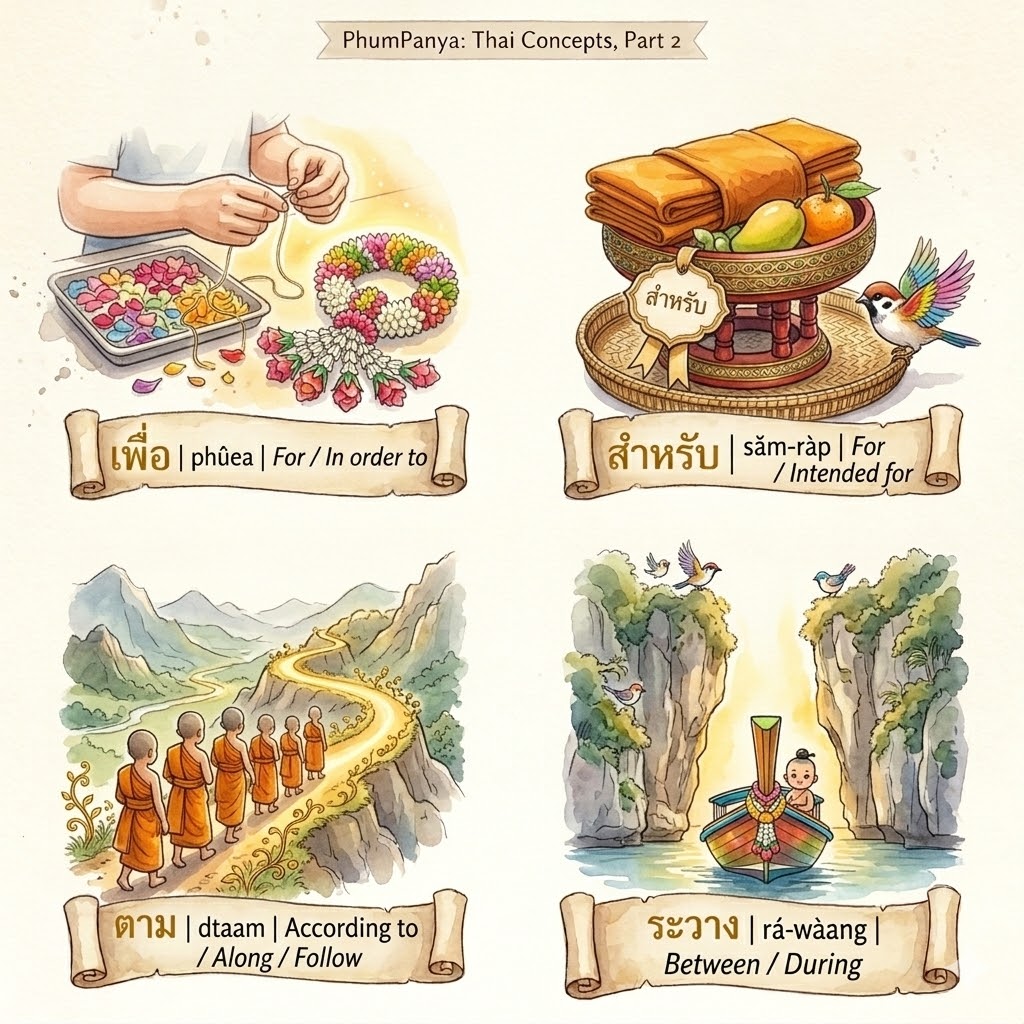
5. เพื่อ (phûea) | For (the sake of / purpose of)
The Logic: “The Sacrifice”
Example:
ทำ เพื่อ เธอ (tham phûea thoe)
“Do [it] for her”
6. สำหรับ (sǎm-ràp) | For (specifically for)
The Logic: “The Label”
Unlike เพื่อ, this is about suitability or assignment. It’s like a “Reserved” sign.
Example:
สำหรับ มือใหม่ (sǎm-ràp mue-mài)
“For beginners”
7. ตาม (dtaam) | According to / Along / Follow
The Logic: “The Path”
Example:
ทำ ตาม สัญญา (tham dtaam sǎn-yaa)
“Do according to the promise”
8. ระหว่าง (rá-wàang) | Between / During
The Logic: “The Gap”
Example:
ระหว่าง ทาง (rá-wàang thaang)
“Between the way” (on the way)
The Insight: How Thai Prepositions Build Relationships
Thai prepositions function like precise instruments:
- ที่ pins location and identity
- กับ creates partnerships
- จาก and ถึง mark journeys (from → to)
- เพื่อ and สำหรับ both mean “for” but with different logic (sacrifice vs. assignment)
- ตาม ensures alignment with a path
- ระหว่าง bridges gaps in space and time
When combined with position words like left and right and directional concepts like north, south, east, and west, these prepositions let you map any spatial or temporal relationship in Thai.
Explore the Map
See how these prepositions combine with verbs and directional words to create complex Thai expressions:
Related posts
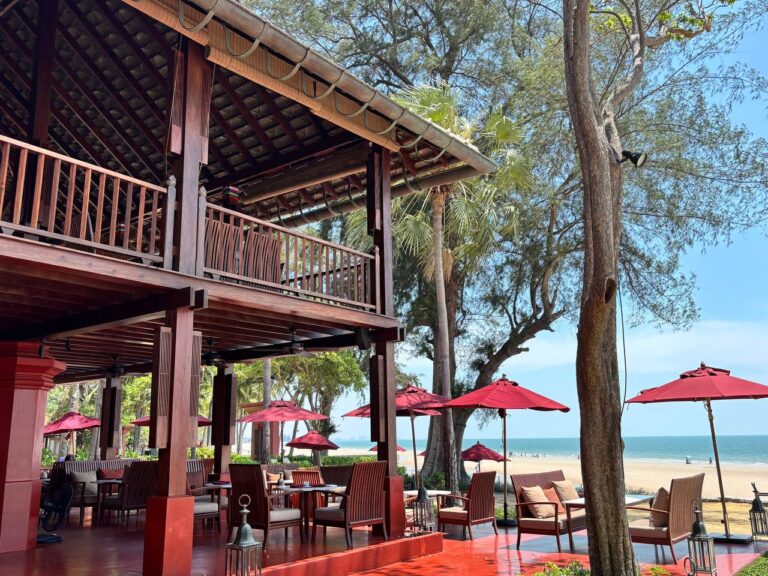 McFarland House Hua Hin: A Wooden House Between Two Worlds
Among the beachfront hotels of Hua Hin stands a wooden house from another century. It once belonged to an American who became Siamese aristocracy, and who left behind a dictionary that still teaches Thai today.
6 min read Songkran Festival: Thailand’s Water Celebration & Thai New Year
Songkran festival marks Thai New Year with water blessings, temple visits, and nationwide celebration. Discover the meaning of สงกรานต์ and essential traditions.
7 min read ตั้งแต่…จนถึง: The Bracket That Holds Thai Time and Space
ตั้งแต่ and จนถึง are the two anchors that bracket time, space, and everything in between.
3 min read