
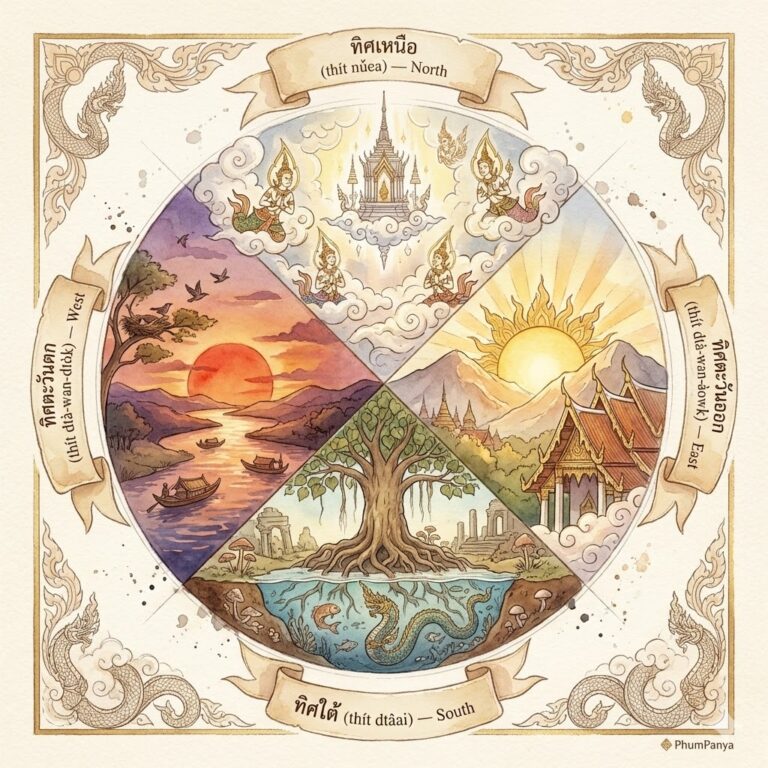
Directions in Thai: Mapping the Logic of the Compass
3 min readIn Thai, directions are anchored in ancient roots that describe your position in the universe.
Understanding north south east west in Thai isn’t just about navigation – it’s about seeing how Thai organizes space through the sun’s movement and vertical geography.
The Insight: The Two Systems
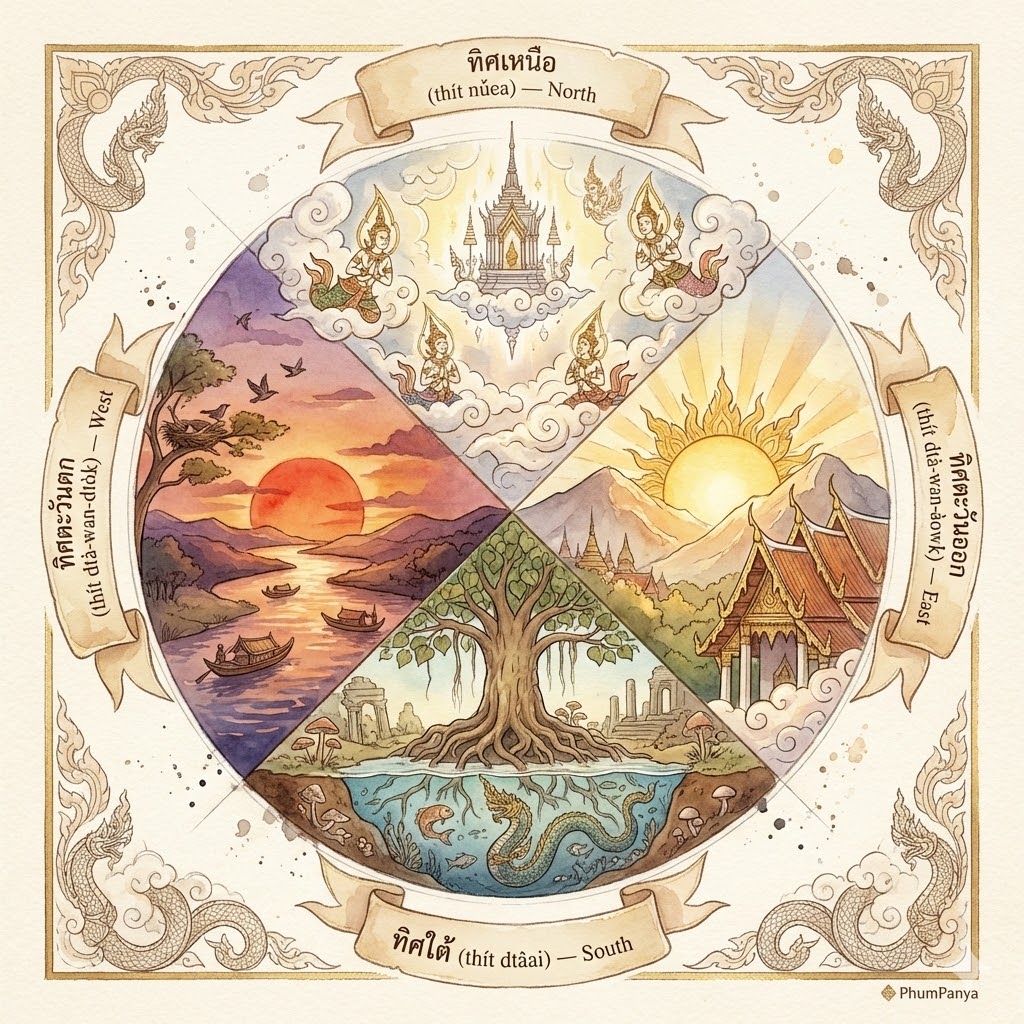
To understand the compass in Thai, you need to see two systems working together: one based on the sun, one based on vertical space.
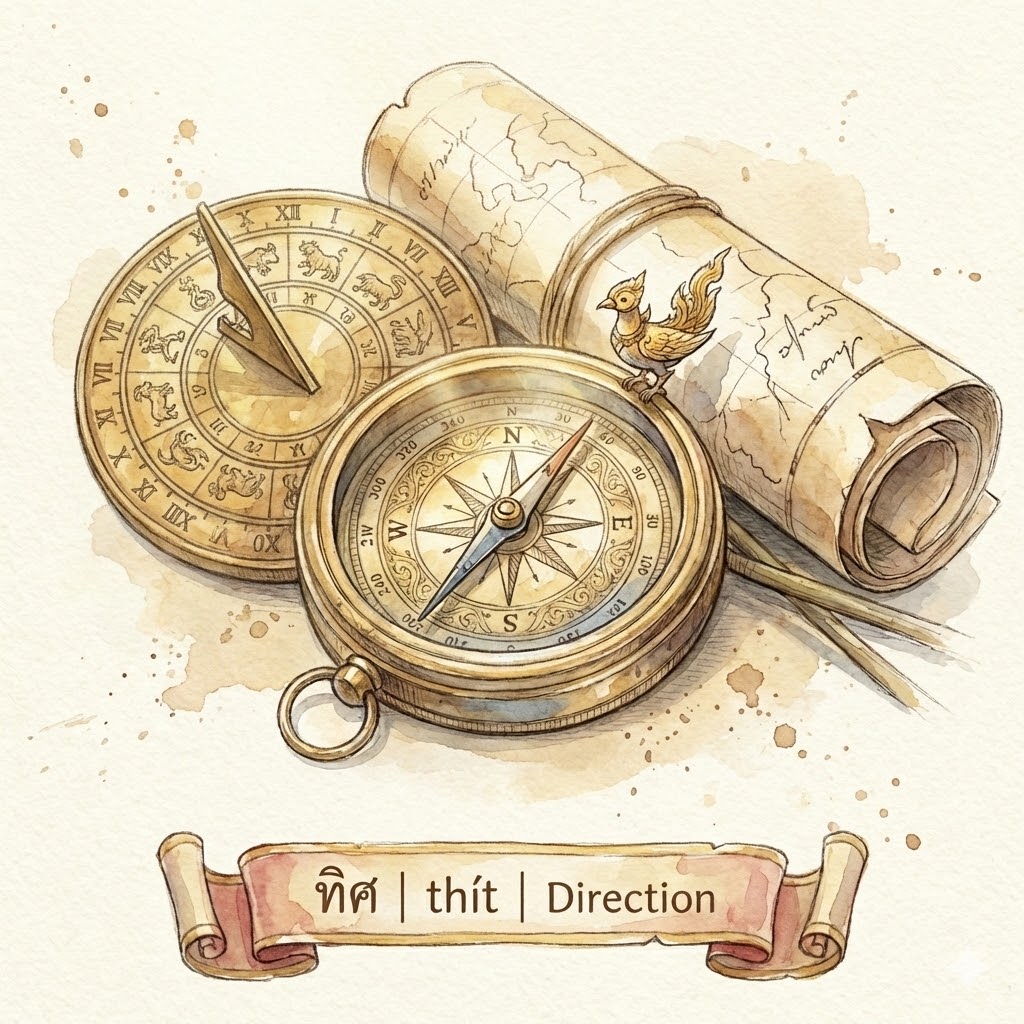
ทิศ / THÍT / Direction / Cardinal Point
-
Root: Sanskrit (Diś)
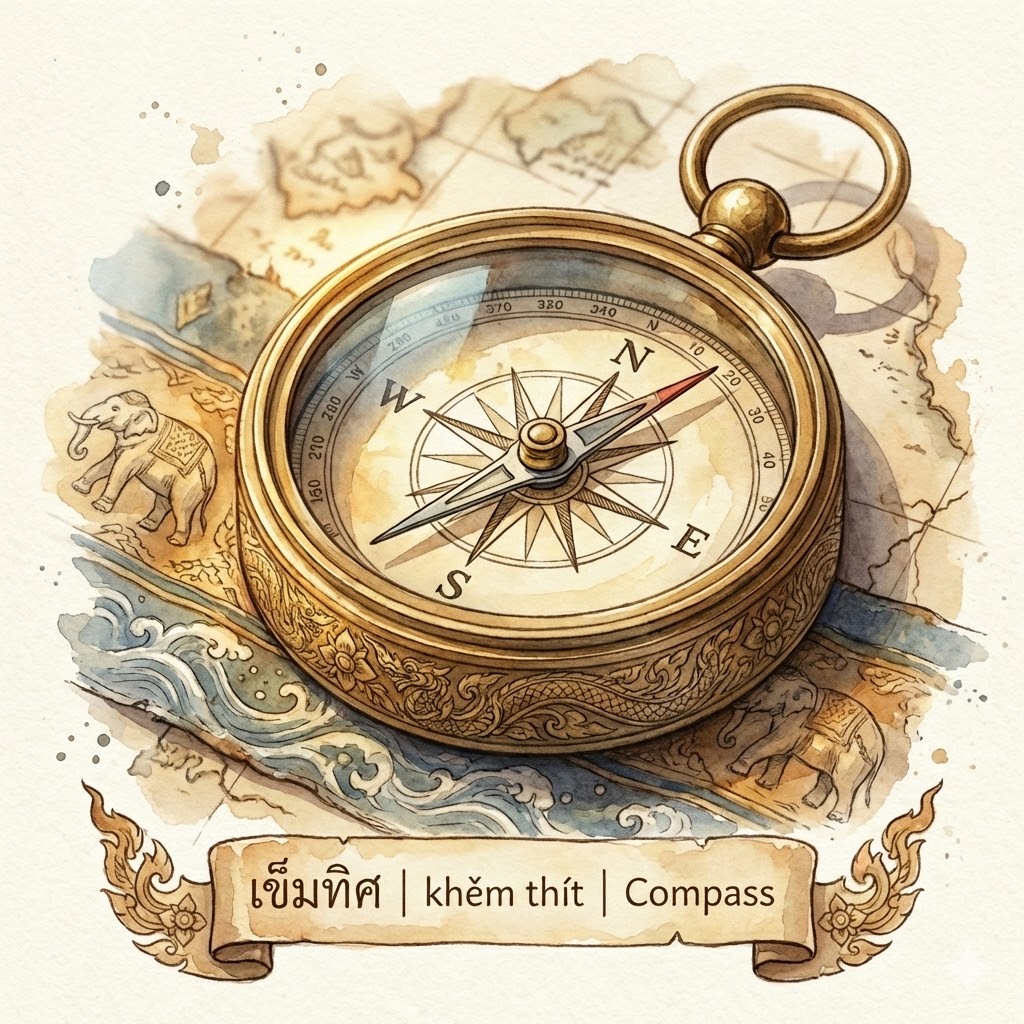
เข็มทิศ (Kĕm-thít)
-
- เข็ม (Kĕm): Needle. – This refers to the physical needle of the compass, but the root is used for anything sharp or pointed (e.g., a sewing needle or the hands of a clock).
- ทิศ (Thít): Direction. – Derived from the Sanskrit root Diś, meaning “to point out” or “to show.” This is the same root found in the English word diction or indicate.
System 1: Relative to the Sun (East & West)
Thai uses the sun’s daily path for horizontal directions:
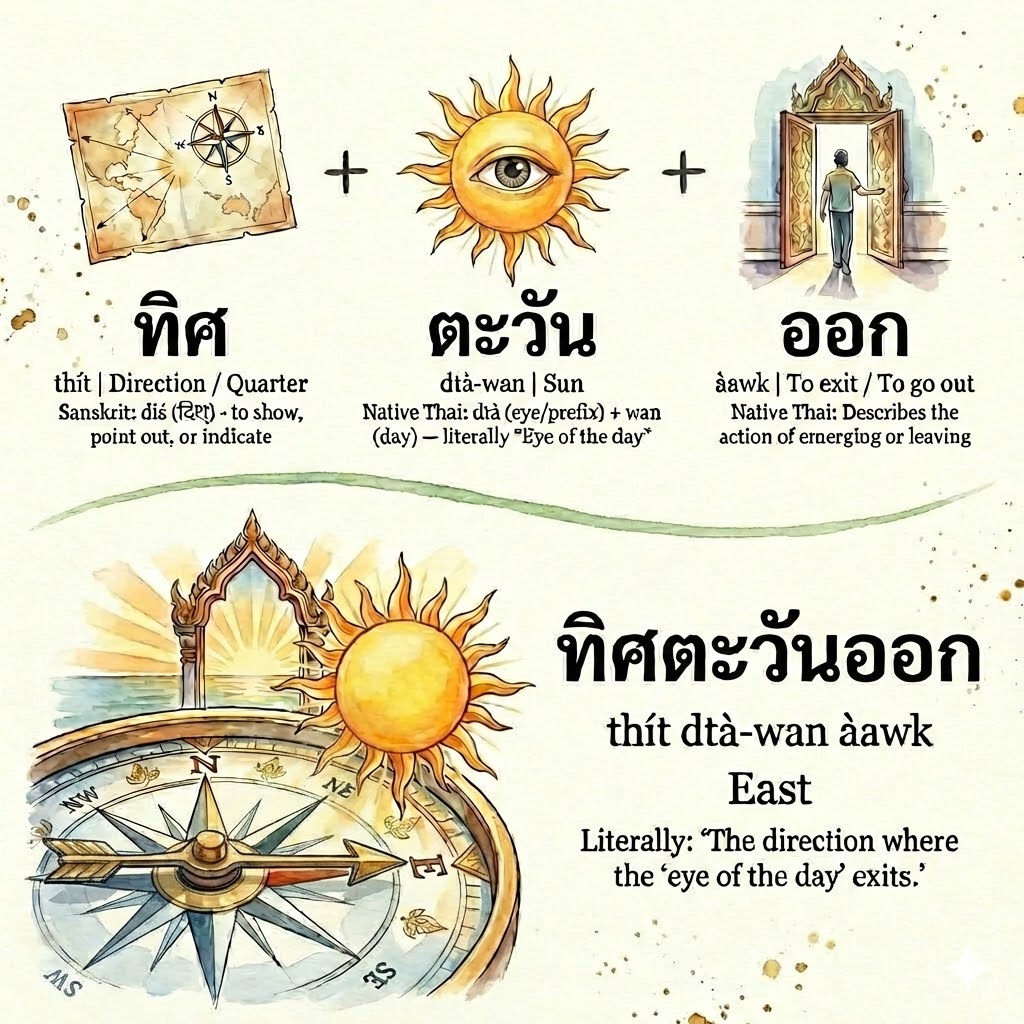
ทิศตะวันออก (thít dtà-wan-àawk) = East
Logic: “Direction where the sun emerges”
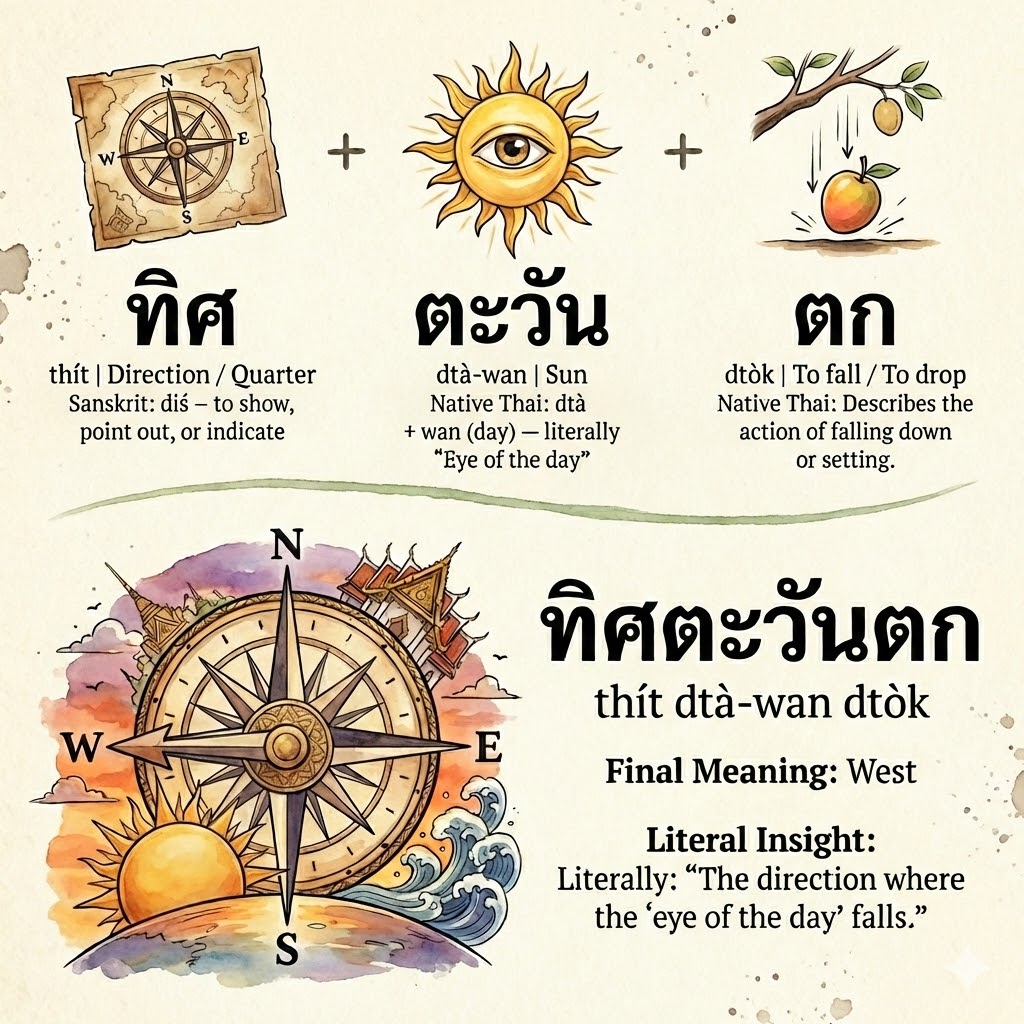
ทิศตะวันตก (thít dtà-wan-dtòk) = West
Logic: “Direction where the sun falls”
System 2: Relative to Vertical Space (North & South)
For north in Thai, the language uses position – the same words you already know for “above” and “below”:
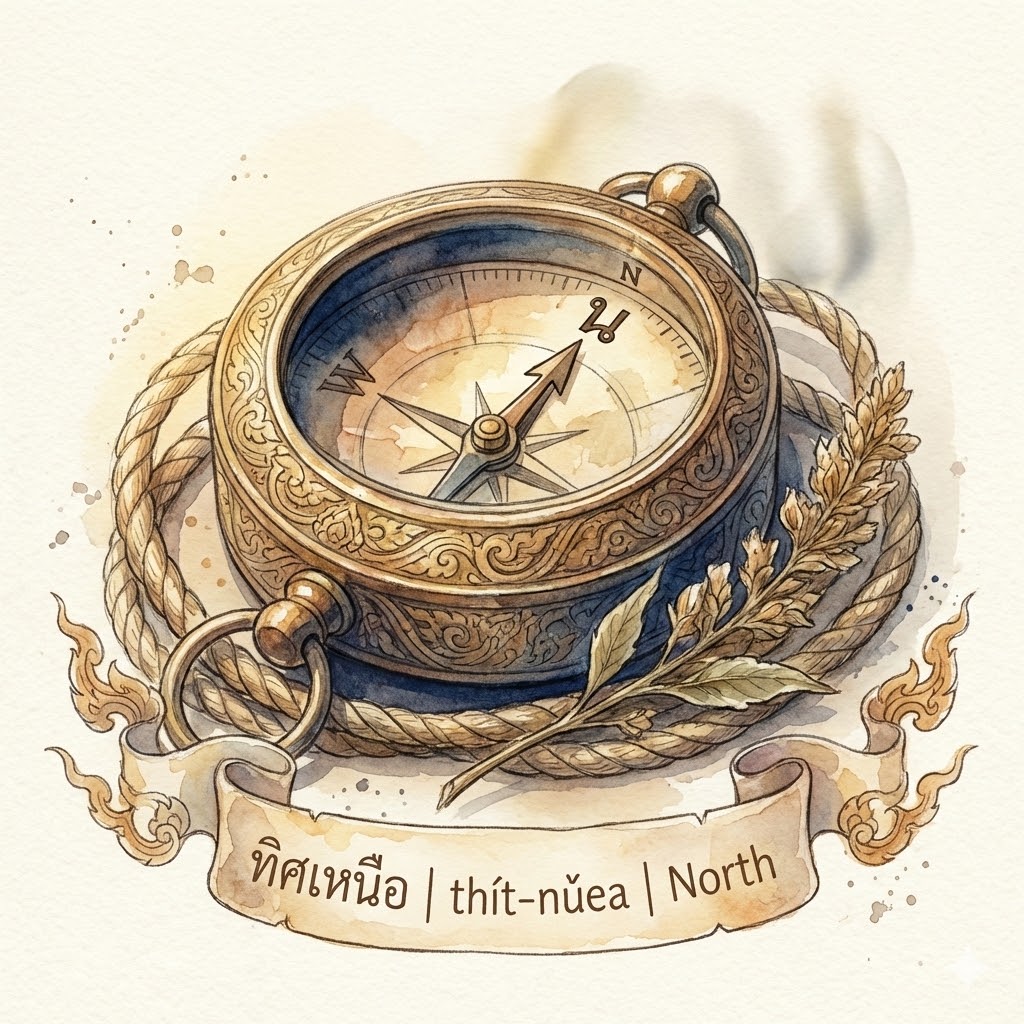
ทิศเหนือ (thít nǔea) = North
Logic: “Direction above” (North is “up” on the Thai mental map)
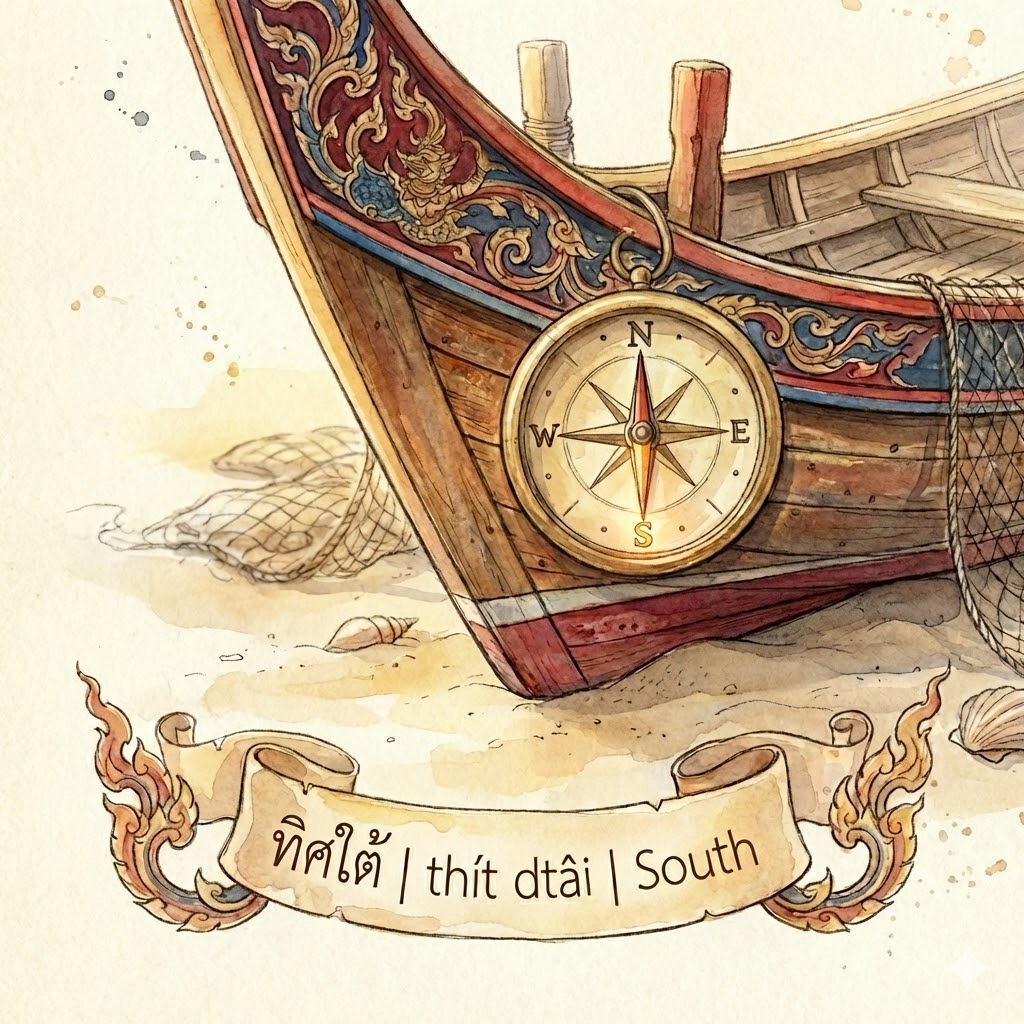
ทิศใต้ (thít dtâai) = South
Logic: “Direction under” (South is “down”)
The Formal Names (Sanskrit Roots)
In place names and formal usage, you’ll see different roots:
-
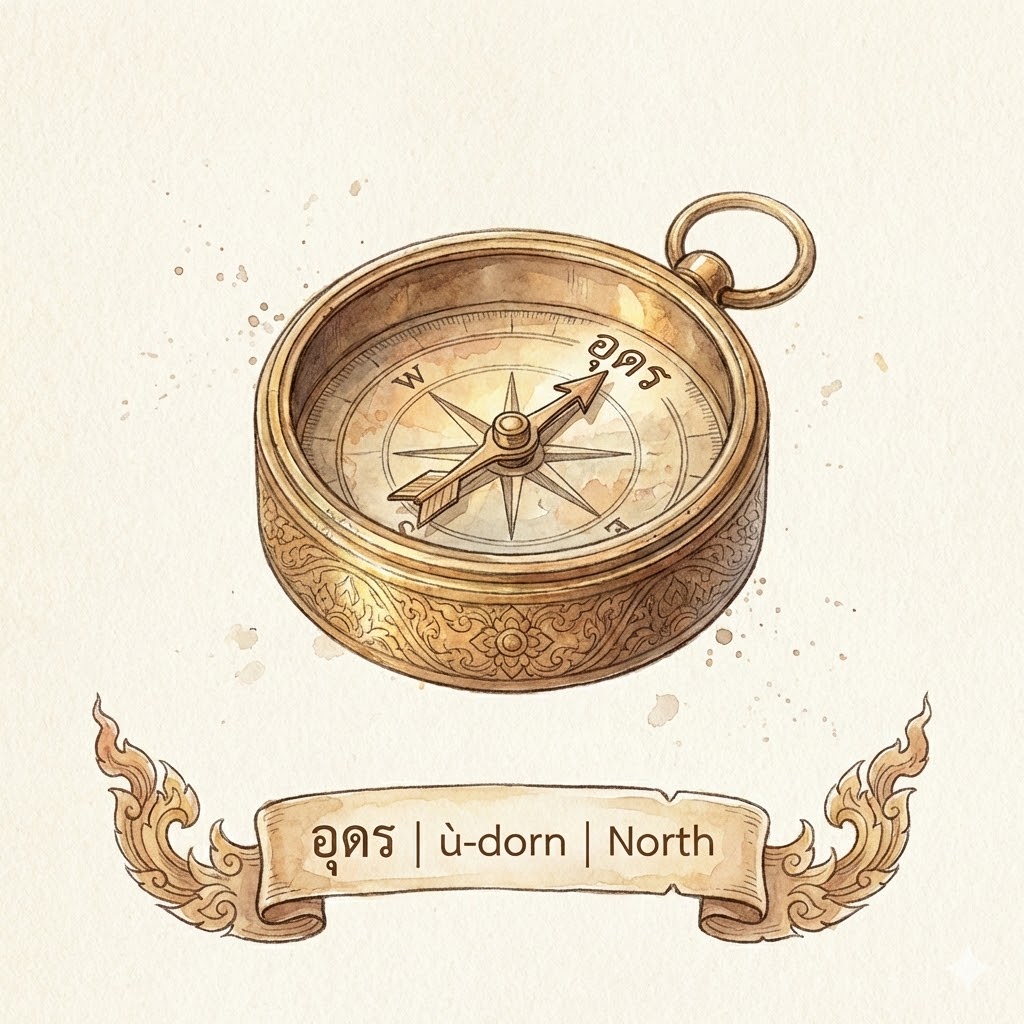
อุดร (ù-dorn): Derived from Sanskrit uttara, meaning “higher” or “northern.” It is found in the names of major provinces like Udon Thani (Northern City).
-
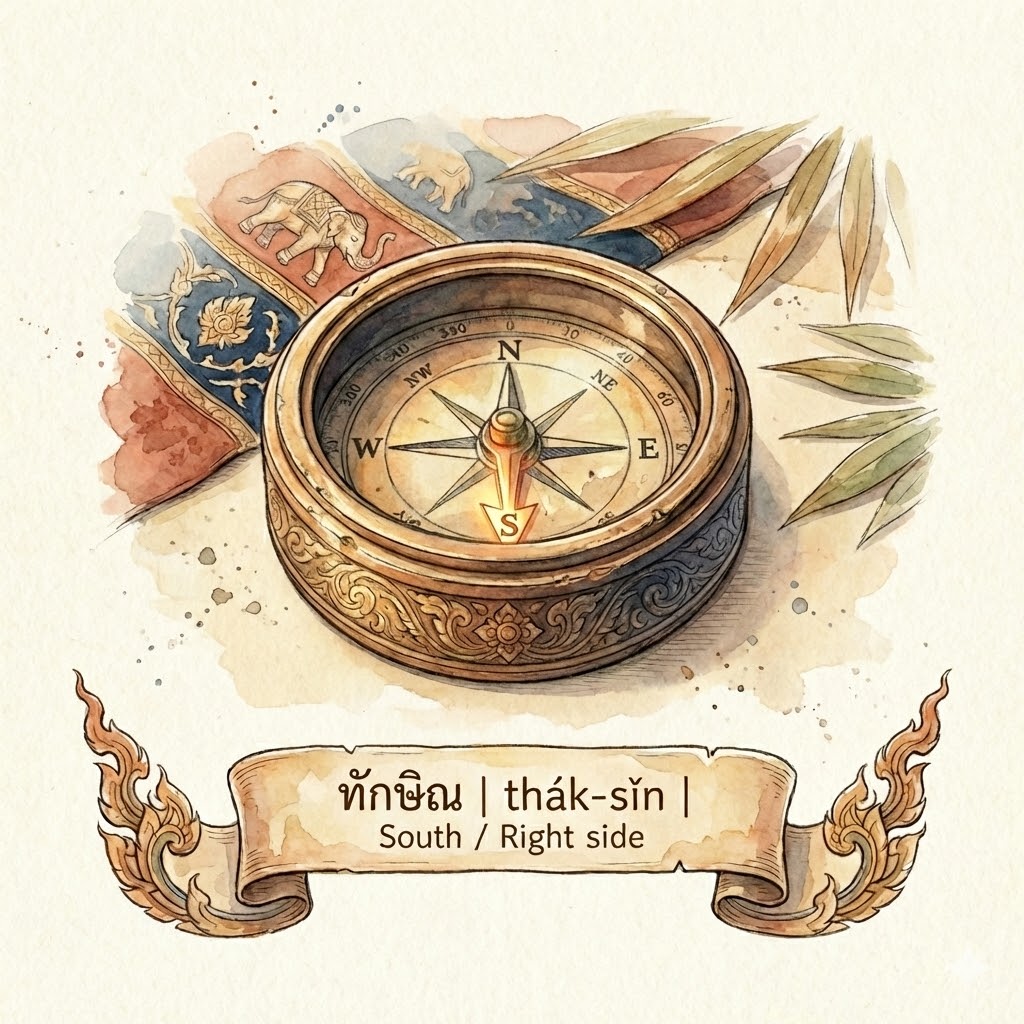
ทักษิณ (thák-sǐn): Derived from Sanskrit dakṣiṇa, meaning “right” or “south.” In ancient navigation, if facing East toward the rising sun, the South is to the right.
-
The “Right Hand” Logic: The word ทักษิณ is the linguistic root for “dexterity” and the “right-hand side.” In many Indo-European and Sanskrit-influenced languages, the concept of “South” and “Right” are tied to the same directional axis.
- Political Context: “Thaksin Shinawatra” (ทักษิณ ชินวัตร ). In news reports, he is almost always referred to simply as “Thaksin” or “Khun Thaksin”.
Related posts
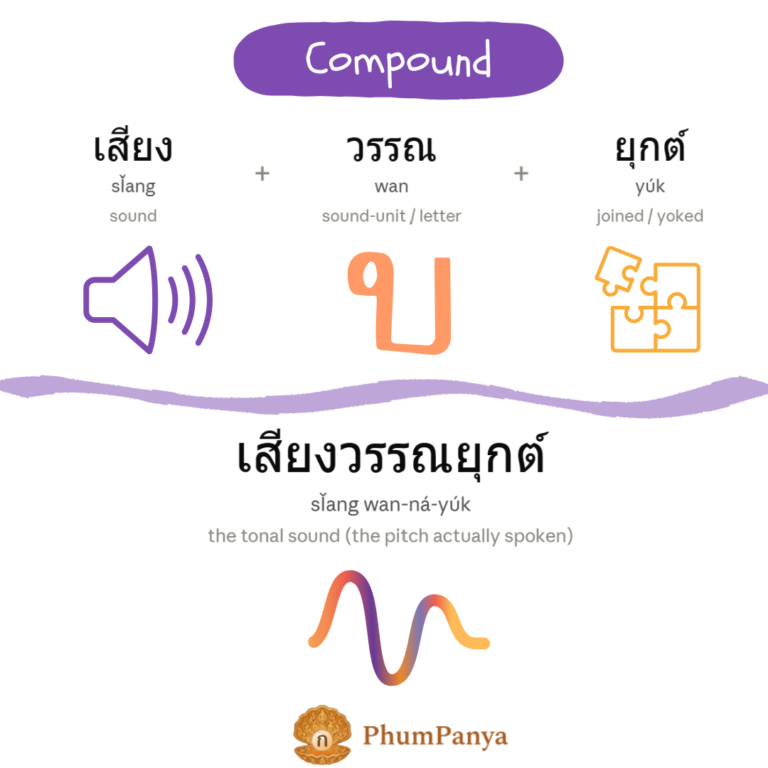 เสียงวรรณยุกต์ – Thai Tone Etymology
The Thai word for tone breaks into three roots — เสียง (sound), วรรณ (letter, from Sanskrit varṇa), and ยุกต์ (joined, from Sanskrit yukta). Native Tai and Sanskrit fused into one concept.
1 min read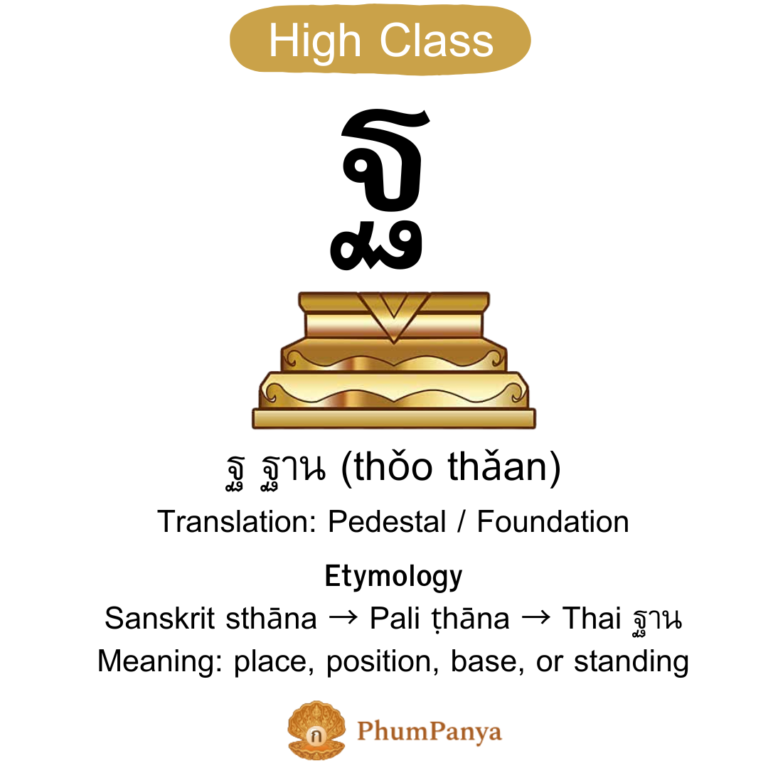 Down the Rabbit Hole of ฐ: One Thai Letter’s Journey Across Eurasia
I do love digging through the seams of Thai vocabulary. You sit down, say, to read about the letter — tɔ̌ɔ tǎan, the 16th consonant of the Thai alphabet. And several hours later you find yourself far from Thailand, gleefully time-traveling back and forth across Eurasia. Welcome down the rabbit hole.
3 min read McFarland House Hua Hin: A Wooden House Between Two Worlds
Among the beachfront hotels of Hua Hin stands a wooden house from another century. It once belonged to an American who became Siamese aristocracy, and who left behind a dictionary that still teaches Thai today.
6 min read