
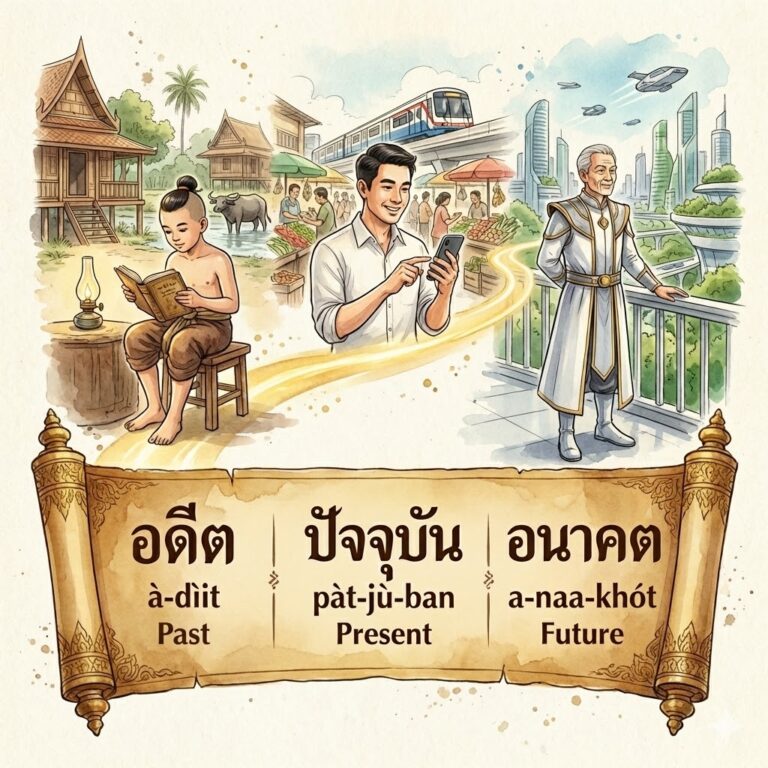
Past, Present & Future in Thai
1 min readIn Thai, time words reveal a philosophy: the past has already departed, the present is being born in front of you, and the future hasn’t arrived yet.
The Three Time Words
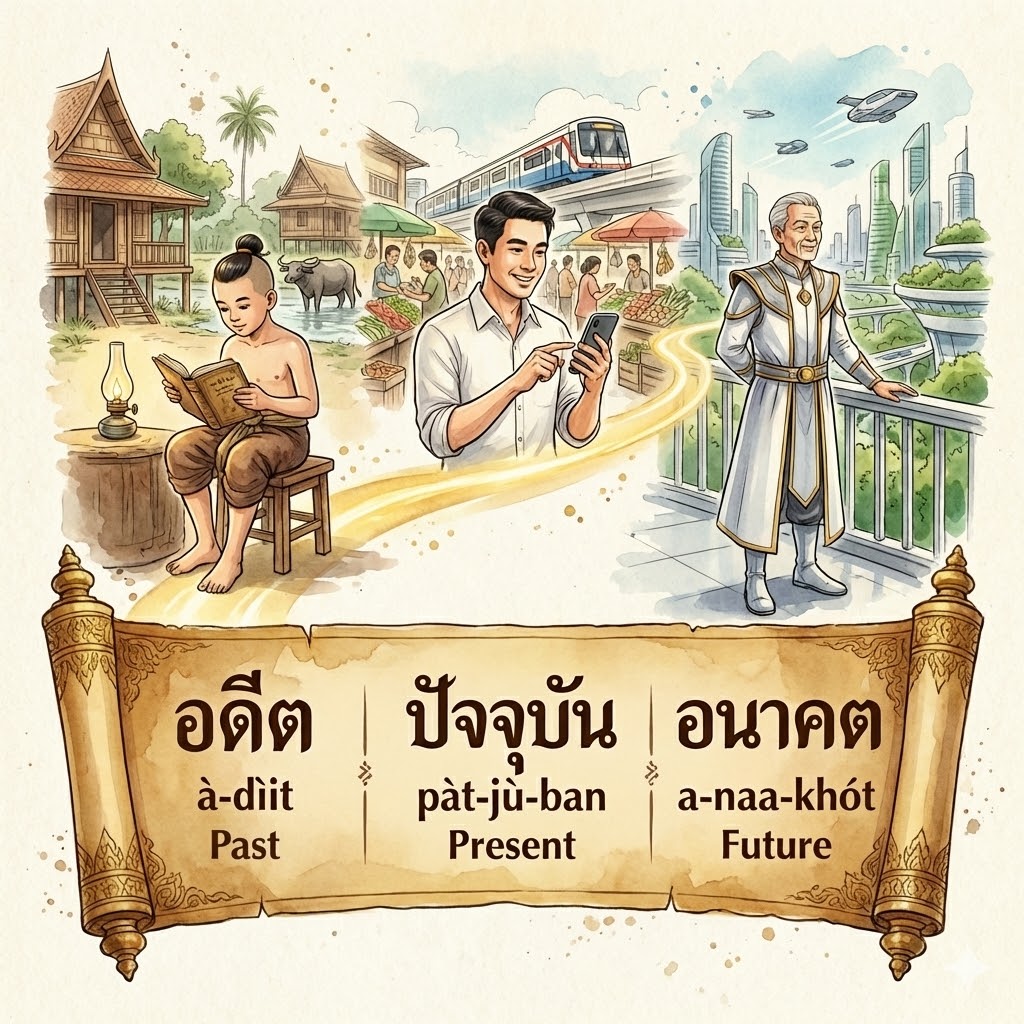
1. อดีต (a-dtìit) | The Past
Origin: Sanskrit Atīta
Literal meaning: “That which has already gone by”
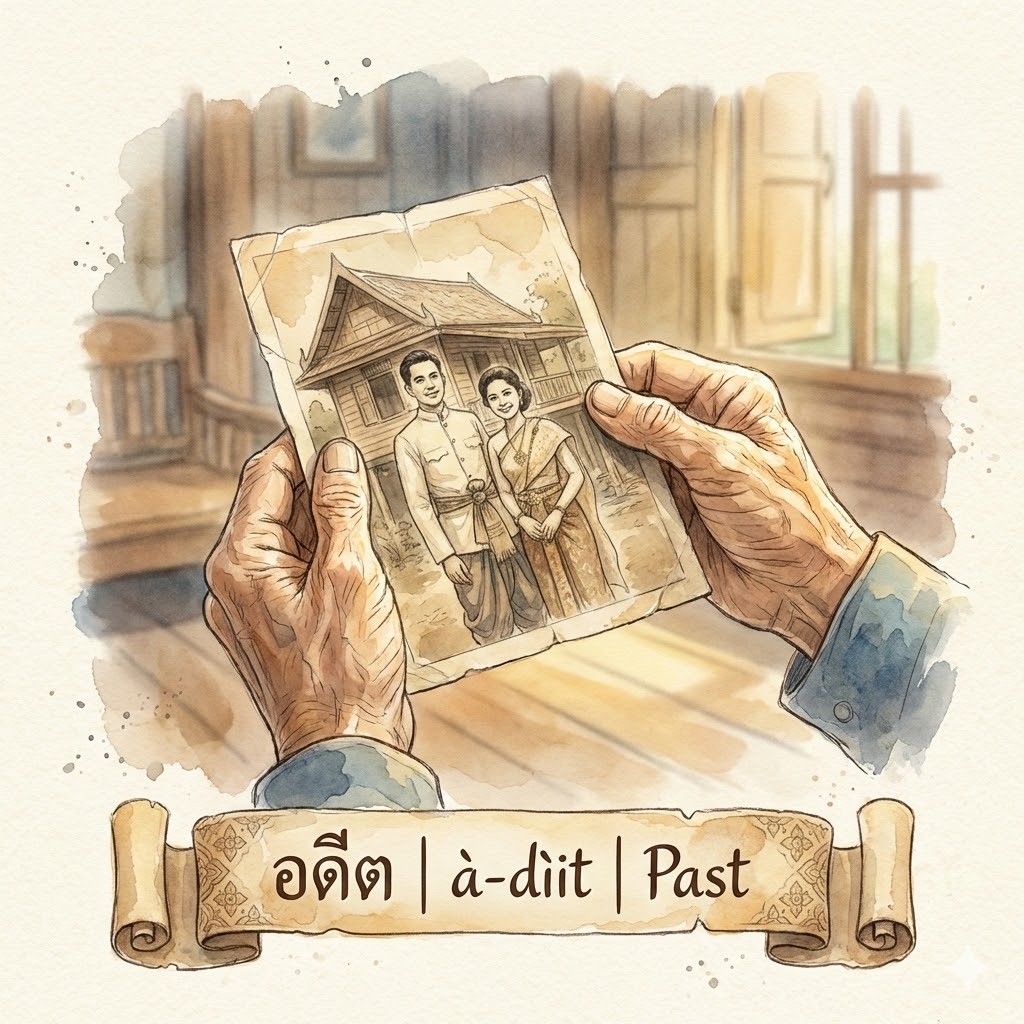
2. ปัจจุบัน (bpàt-jù-ban) | The Present
Origin: Pali Paccuppanna
Literal meaning: “That which is born right in front of you”
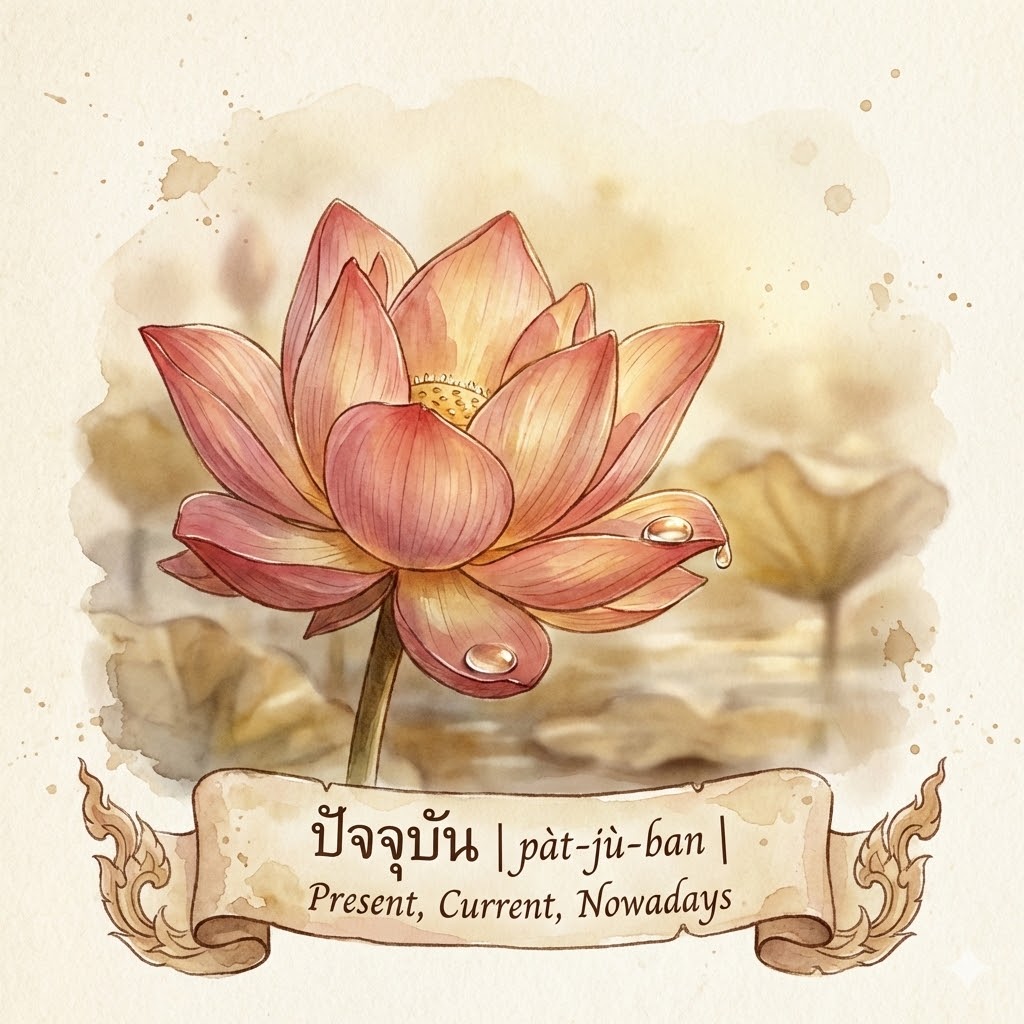
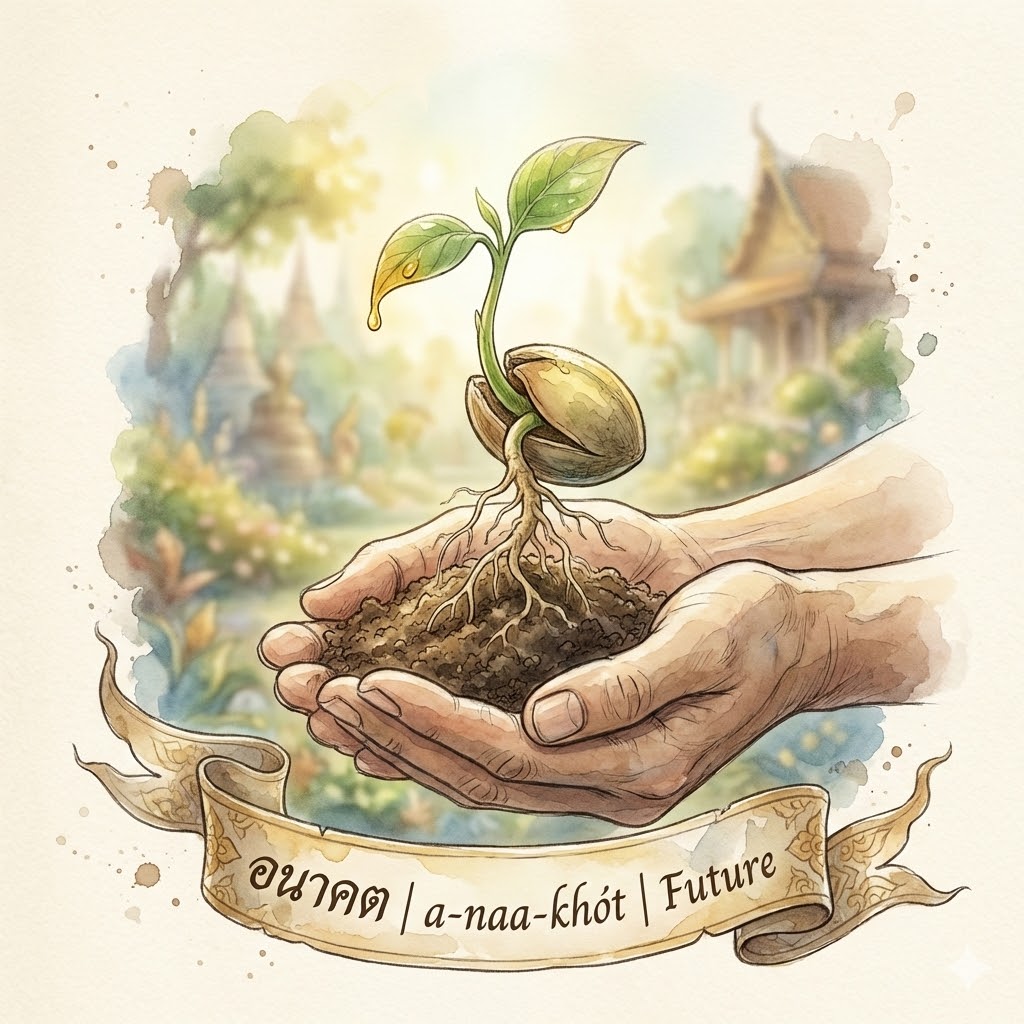
3. อนาคต (a-naa-khót) | The Future
Origin: Pali Anāgata
Literal meaning: “That which has not yet arrived”
Structure:
- อ- (a-) = Not
- นาคต (naa-khót) = Come
The Insight: Time as a River
Think of time as a river with directional flow:
มา (maa) = Things flowing from the อดีต (past) toward you
ไป (bpai) = You moving from the ปัจจุบัน (present) toward the อนาคต (future)
Example in Context
Thai:
เรา เรียน จาก อดีต เพื่อ ทำ ปัจจุบัน ให้ ดี สำหรับ อนาคต
Transliteration:
rao riian jàak a-dtìit phûea tham bpàt-jù-ban hâi dii sǎm-ràp a-naa-khót
Translation:
We learn from the past to make the present good for the future.
Related posts
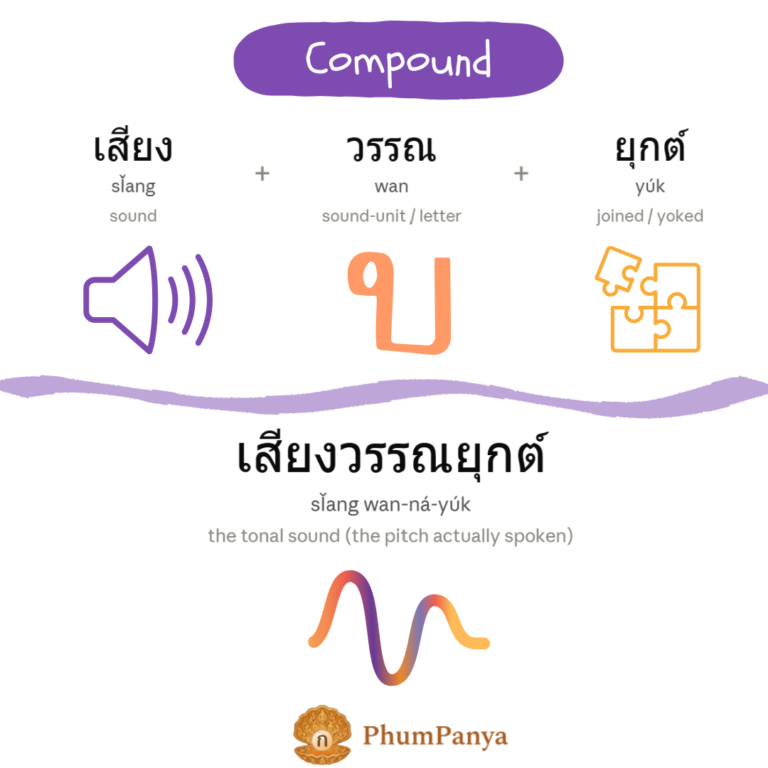 เสียงวรรณยุกต์ – Thai Tone Etymology
The Thai word for tone breaks into three roots — เสียง (sound), วรรณ (letter, from Sanskrit varṇa), and ยุกต์ (joined, from Sanskrit yukta). Native Tai and Sanskrit fused into one concept.
1 min read Down the Rabbit Hole of ฐ: One Thai Letter’s Journey Across Eurasia
I do love digging through the seams of Thai vocabulary. You sit down, say, to read about the letter — tɔ̌ɔ tǎan, the 16th consonant of the Thai alphabet. And several hours later you find yourself far from Thailand, gleefully time-traveling back and forth across Eurasia. Welcome down the rabbit hole.
3 min read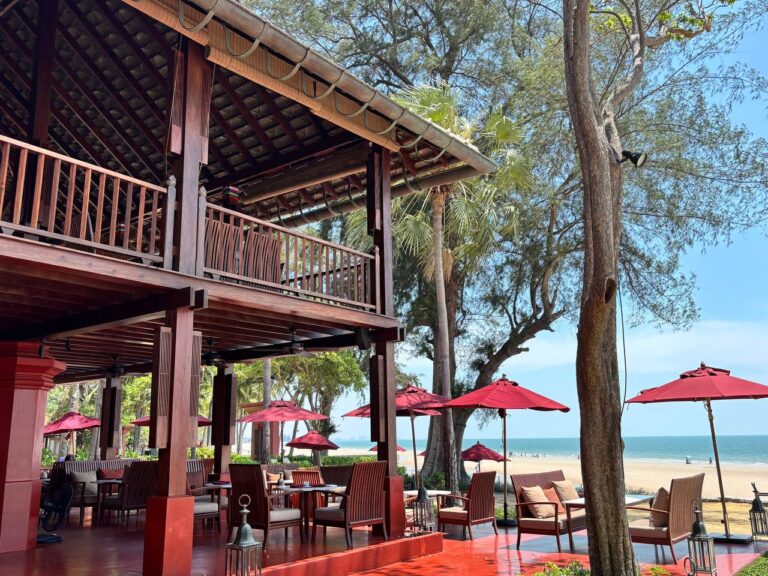 McFarland House Hua Hin: A Wooden House Between Two Worlds
Among the beachfront hotels of Hua Hin stands a wooden house from another century. It once belonged to an American who became Siamese aristocracy, and who left behind a dictionary that still teaches Thai today.
6 min read