

Come in Thai: มา vs ไป—How Direction Works
1 min readCome in Thai (มา / maa) and go (ไป / bpai) are directional compasses.
Understanding come in Thai language means seeing how มา pulls things toward you—through space, through time, and through relationships.

The Basic Split
Think of them as arrows:
ไป (bpai) = Go (away from you)

มา (maa) = Come (toward you)

The Insight: How มา and ไป Work
1. Taking vs. Bringing
Thai uses เอา (ao / grab) + direction:
เอาไป (ao bpai) = Take it away
เอามา (ao maa) = Bring it here
Example: At a restaurant, food “to go” is เอาไป—literally “take it away from here.”
2. Time Direction
มา = Past flowing to present:
รอ มา นาน แล้ว (raw maa naan láeo)
“I’ve been waiting for a long time”
(Started back then ➝ continues to now)
ไป = Present flowing to future:
ทำ ไป เรื่อย ๆ (tham bpai rûeay-rûeay)
“Just keep doing it”
(From now ➝ into the future)
3. Your Location Matters
The word changes based on where you are:
You’re at home, friend at office:
“I’ll ไป to the office” (moving away)
You’re at office, friend at home:
“When will you มา to the office?” (moving toward you)
Related posts
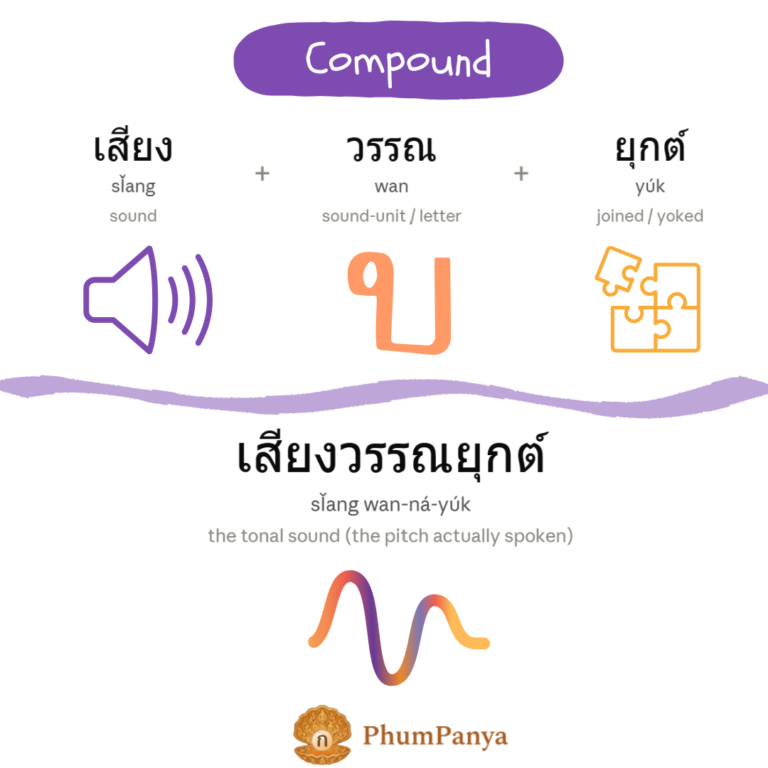 เสียงวรรณยุกต์ – Thai Tone Etymology
The Thai word for tone breaks into three roots — เสียง (sound), วรรณ (letter, from Sanskrit varṇa), and ยุกต์ (joined, from Sanskrit yukta). Native Tai and Sanskrit fused into one concept.
1 min read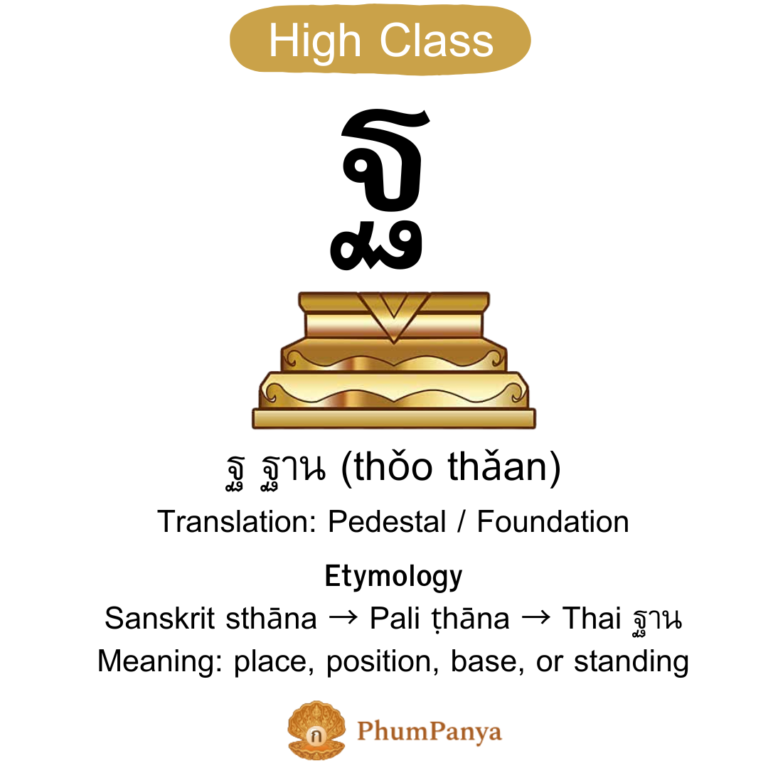 Down the Rabbit Hole of ฐ: One Thai Letter’s Journey Across Eurasia
I do love digging through the seams of Thai vocabulary. You sit down, say, to read about the letter — tɔ̌ɔ tǎan, the 16th consonant of the Thai alphabet. And several hours later you find yourself far from Thailand, gleefully time-traveling back and forth across Eurasia. Welcome down the rabbit hole.
3 min read McFarland House Hua Hin: A Wooden House Between Two Worlds
Among the beachfront hotels of Hua Hin stands a wooden house from another century. It once belonged to an American who became Siamese aristocracy, and who left behind a dictionary that still teaches Thai today.
6 min read