
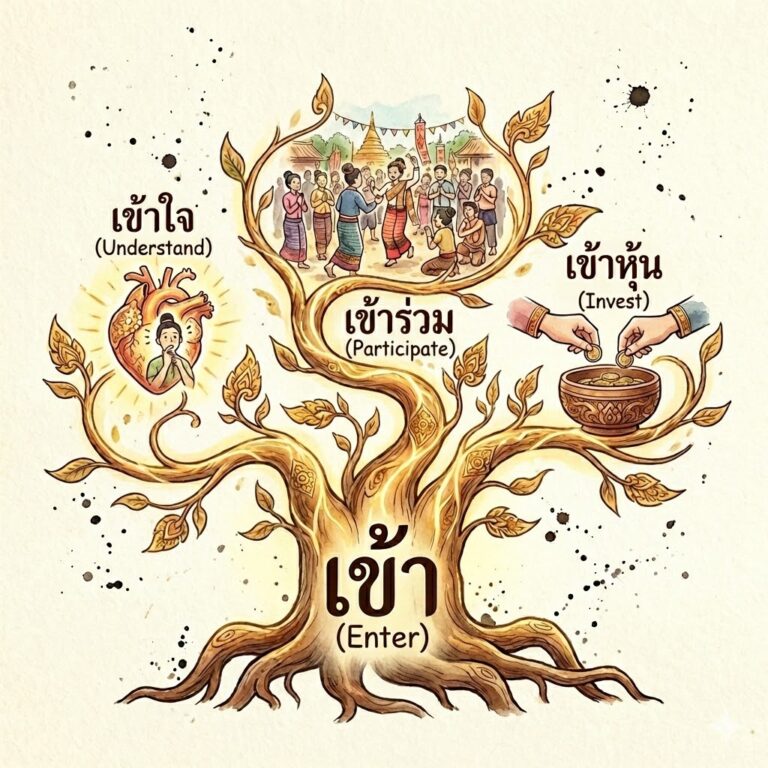
Verb in Thai Language: The Root System That Builds Meaning
2 min readUnderstanding how verb in Thai language works is one of the most essential Thai language basics: a single basic action like Khao (เข้า / To Enter) is the foundation for everything from “understanding” to “investing.”
The Visual
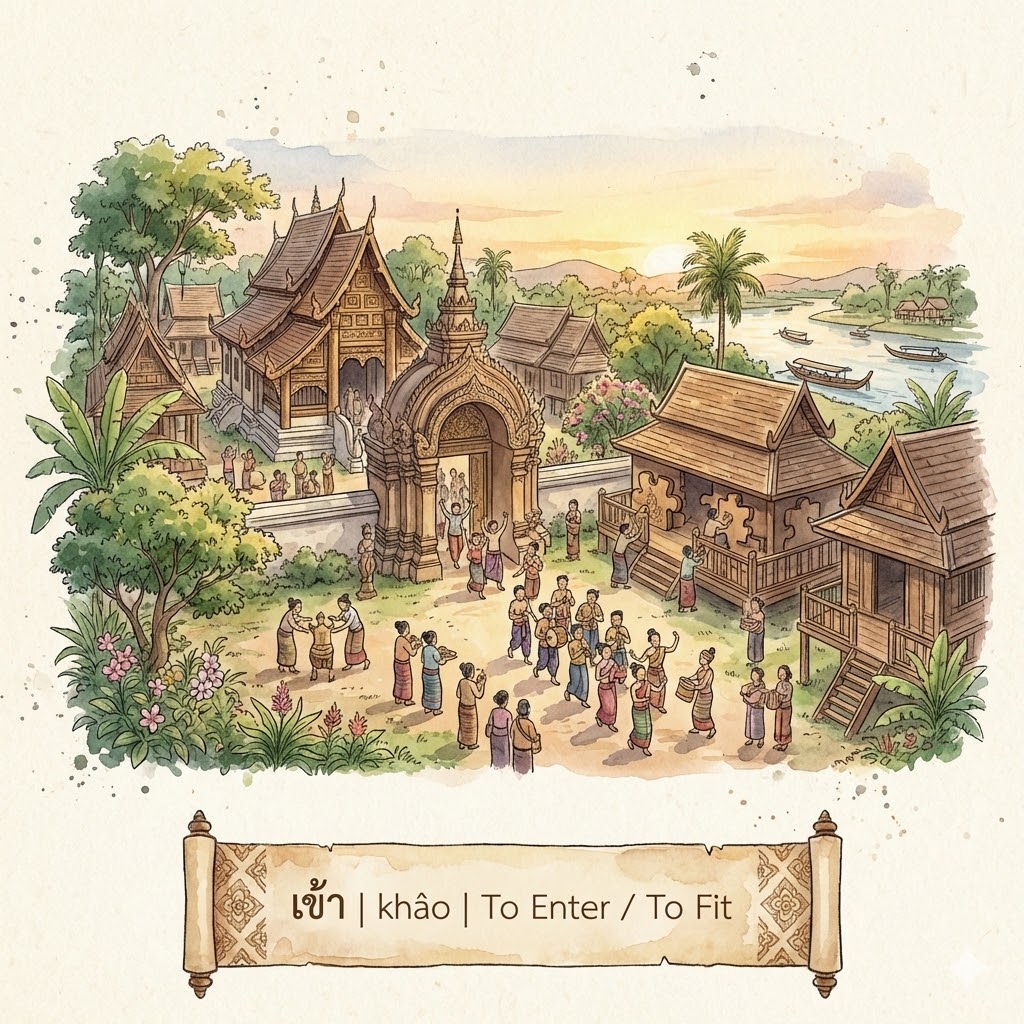
- Primary Meaning: To Enter / To Go In
- Root Type: Basic Motion
- Library Link: [View the full card of เข้า →]
The Insight: The Logic of “Entering”
When you look at a Thai language verb as a “Structural Map,” you see that a verb is a direction.
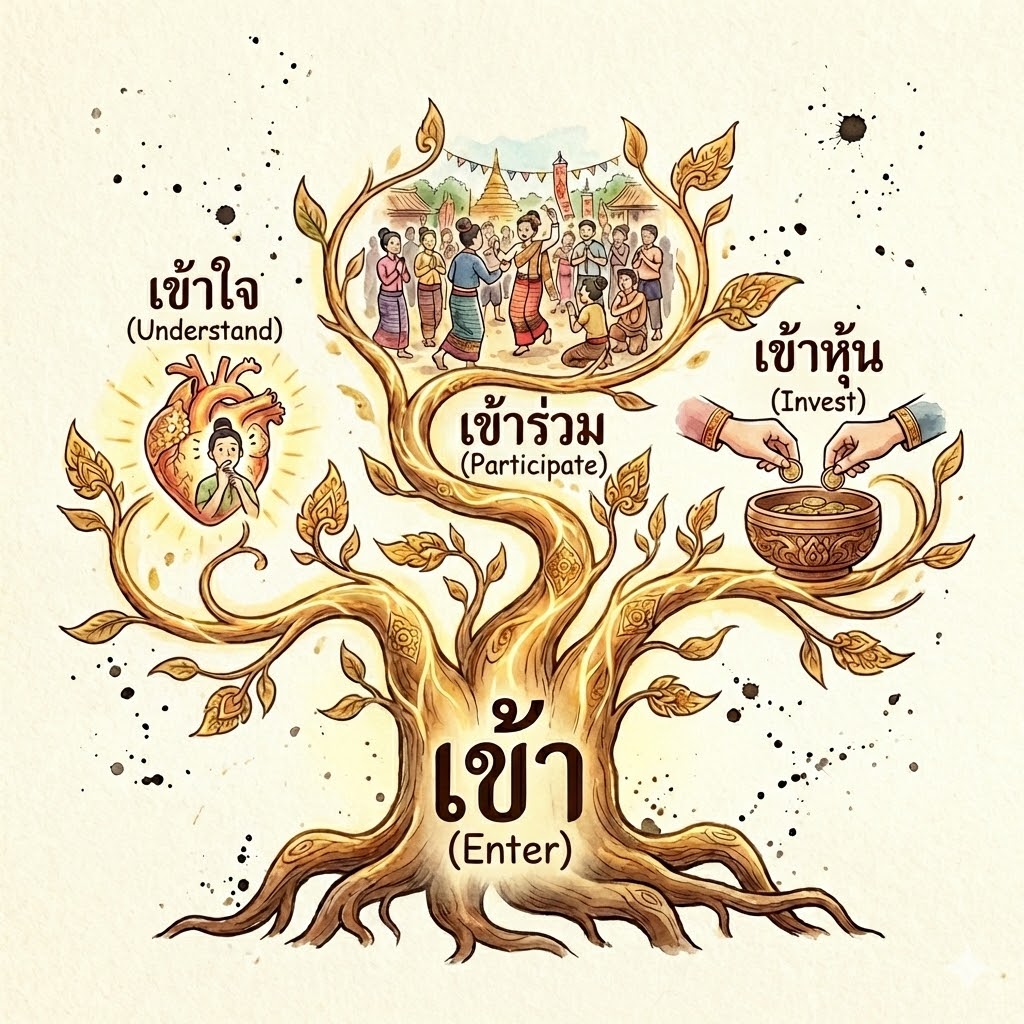
By adding a second word to Khao, the meaning shifts from physical movement to abstract concepts:
เข้า + ใจ (Heart) = เข้าใจ Khao-Jai: To Understand [View the full card]
Logic: To “enter” the heart
เข้า + ร่วม (Together) = เข้าร่วม Khao-Ruam: To Participate [View the full card]
Logic: To “enter” together
เข้า + หุ้น (Share) = เข้าหุ้น Khao-Hoon: To Invest [View the full card]
Logic: To “enter” the shares
This pattern is how Thai language basic words build complexity from simple roots.
The Bonus: The “Jai” Action Verbs
Beyond just “entering,” other basic physical actions snap onto ใจ (Jai / Heart) to create complex psychological verbs. These aren’t just feelings; they are mental maneuvers:
วาง (To Place) + ใจ = วางใจ Wang-Jai: To Trust [View the full card]
Logic: “To place your heart” on something
เปลี่ยน (To Change) + ใจ = เปลี่ยนใจ Plian-Jai: To change your mind [View the full card]
Logic: The action of “changing the heart”
เห็น (To See) + ใจ = เห็นใจ Hen-Jai: To sympathize [View the full card]
Logic: “To see the heart” of another
By learning the root verb first, you aren’t just memorizing vocabulary; you are learning the architecture of how Thais describe the world. This is what makes the verb in Thai language fundamentally different from English: Thai verbs combine, they don’t conjugate.
Explore the Library
Explore our interactive database:
Related posts
 McFarland House Hua Hin: A Wooden House Between Two Worlds
Among the beachfront hotels of Hua Hin stands a wooden house from another century. It once belonged to an American who became Siamese aristocracy, and who left behind a dictionary that still teaches Thai today.
6 min read Songkran Festival: Thailand’s Water Celebration & Thai New Year
Songkran festival marks Thai New Year with water blessings, temple visits, and nationwide celebration. Discover the meaning of สงกรานต์ and essential traditions.
7 min read ตั้งแต่…จนถึง: The Bracket That Holds Thai Time and Space
ตั้งแต่ and จนถึง are the two anchors that bracket time, space, and everything in between.
3 min read