
Down the Rabbit Hole of ฐ: One Thai Letter’s Journey Across Eurasia
3 min readI do love digging through the seams of Thai vocabulary. You sit down, say, to read about the letter ฐ ฐาน — tɔ̌ɔ tǎan, the 16th consonant of the Thai alphabet. And several hours later you find yourself far from Thailand, gleefully time-traveling back and forth across Eurasia.
Welcome down the rabbit hole.
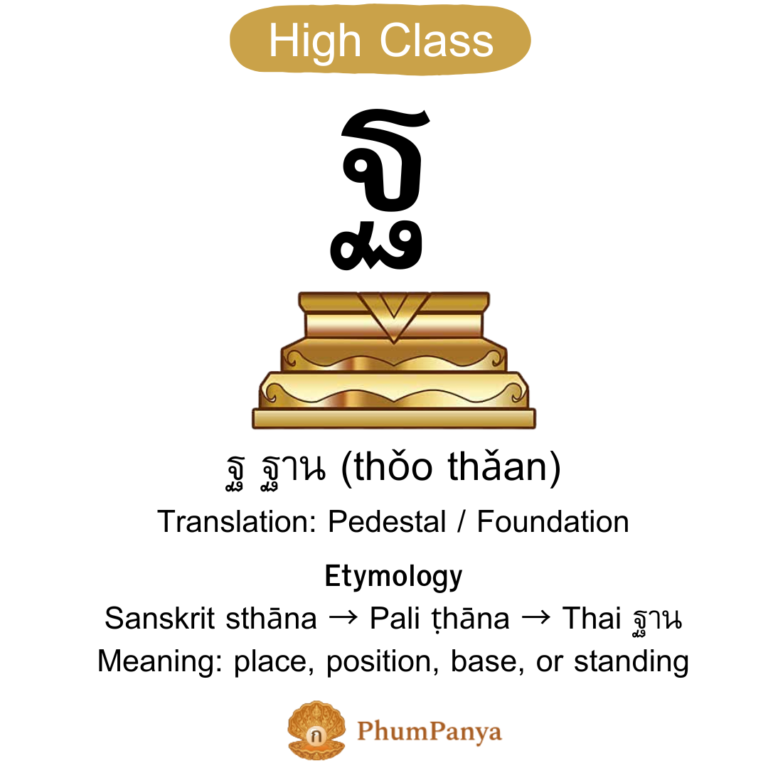
I started, as one does, with pronunciation and meaning. ฐ stands for the word ฐาน (than), meaning “base” or “pedestal.”
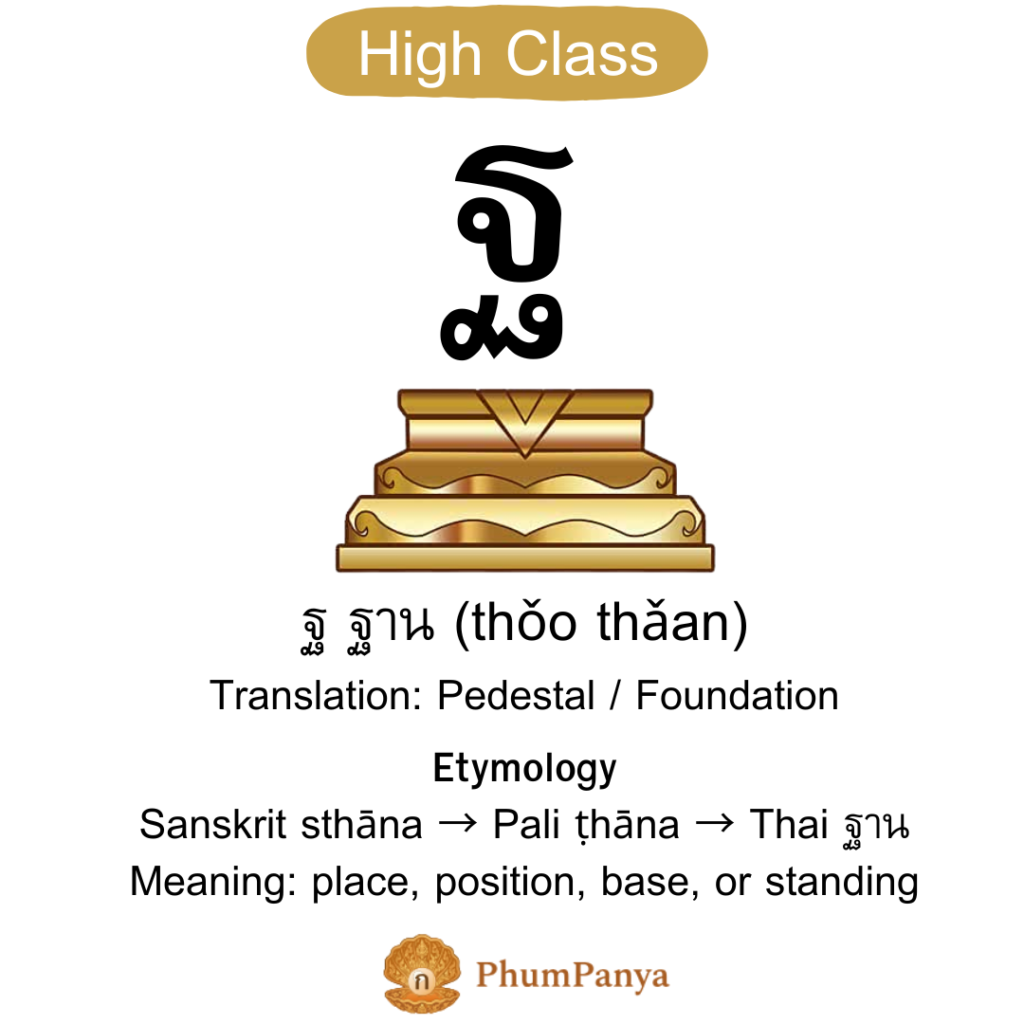
Even at a glance the letter looks exactly like a character resting on a detached pedestal. But this is pure historical luck — an artifact of how the Khmer-derived letterform settled over centuries, not a design meant to match the word.
ฐ is a retroflex consonant Thai inherited from India through the Khmer script — a sound Thai never actually had. It’s a specialist letter, kept alive purely to spell ancient, imported loanwords.
And the letter is named after one of those very loanwords. Every Thai consonant carries an acrophonic name — “ฐ as in ฐาน” — and here the name-word is itself the evidence: ฐาน (than), “base” or “pedestal,” is a direct import of the Pali word ṭhāna (from Sanskrit sthāna, “place”).
But Thai took that ancient root through a second door, too. Sanskrit sthāna also entered the language as สถาน (sathan), “place” or “establishment” — the source of everyday Thai words like สถานี (station) and สถานที่ (place).
Long before reaching Thailand, that Sanskrit word shared a close ancestor with ancient Persian. While Buddhist monks carried the word east, Persian empires used their exact linguistic equivalent to name territories: -stan, “land of.” It grew into a whole table of “-stans.”
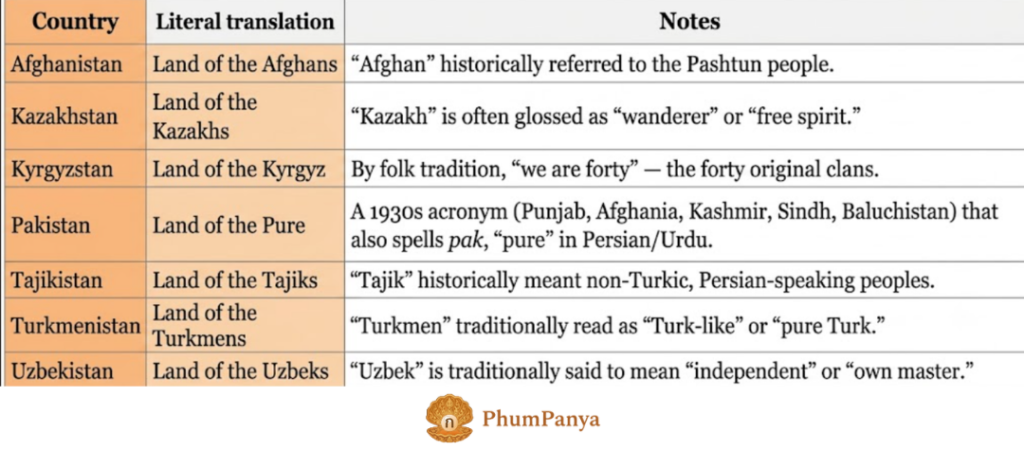
There are also non-sovereign regions using the suffix — Kurdistan, Tatarstan, Dagestan.
So Thai สถาน and Persian -stan are near-identical siblings, both meaning “place.”
That same Proto-Indo-European root — steh₂-, “to stand, be firm” — went west into Latin status, giving English state, estate, station, statue, stand, and understand. So “the United States” and “Uzbekistan” carry, etymologically, the very same word for country.
And straight down through Slavic, the root never left home: Russian still says стоять (stoyat’), “to stand.” From it Slavic built its own стан (stan), “camp, a place to halt” — twin of the Persian -stan, each formed independently from the same ancient root, neither borrowed from the other.
And that’s the journey the letter ฐ took me on.
References
- Etymonline, Indo-European root *sta- (“to stand”) — https://www.etymonline.com/word/*sta-
- The American Heritage Dictionary of Indo-European Roots, entry stā- (via The Free Dictionary) — https://www.thefreedictionary.com/_/roots.aspx?type=Indo-European&root=stā-
- Wikipedia, “Thai script — Consonants” — https://en.wikipedia.org/wiki/Thai_script#Consonants
- Wiktionary, “-stan” — https://en.wiktionary.org/wiki/-stan
- Wiktionary, “स्थान (sthāna)” — https://en.wiktionary.org/wiki/स्थान
Related posts
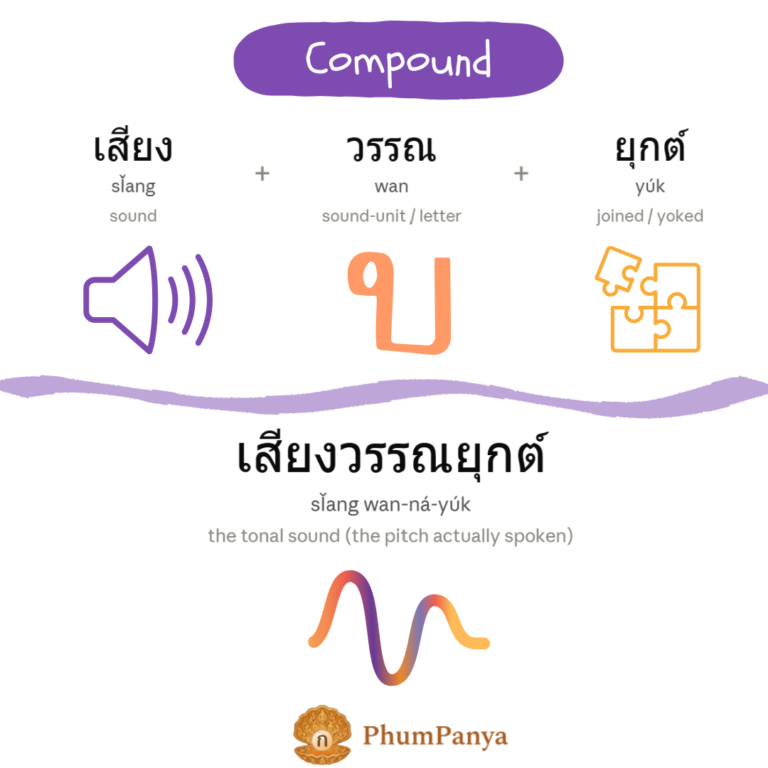 เสียงวรรณยุกต์ – Thai Tone Etymology
The Thai word for tone breaks into three roots — เสียง (sound), วรรณ (letter, from Sanskrit varṇa), and ยุกต์ (joined, from Sanskrit yukta). Native Tai and Sanskrit fused into one concept.
1 min read McFarland House Hua Hin: A Wooden House Between Two Worlds
Among the beachfront hotels of Hua Hin stands a wooden house from another century. It once belonged to an American who became Siamese aristocracy, and who left behind a dictionary that still teaches Thai today.
6 min read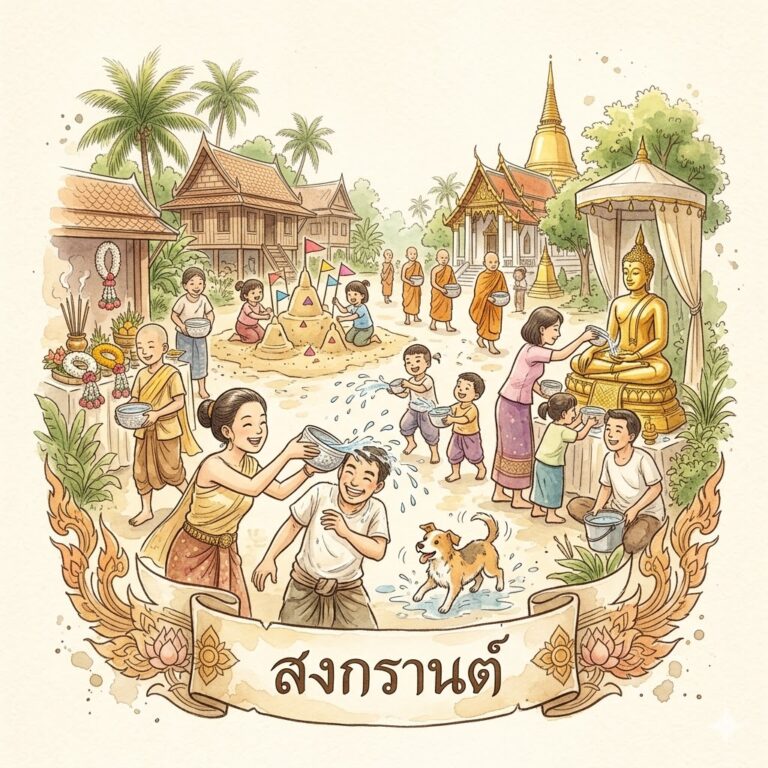 Songkran Festival: Thailand’s Water Celebration & Thai New Year
Songkran festival marks Thai New Year with water blessings, temple visits, and nationwide celebration. Discover the meaning of สงกรานต์ and essential traditions.
7 min read