

เปิด & ปิด: The Two Switches That Run Thai Life
2 min readIn Thai, you don’t need a dictionary full of verbs like “activate,” “launch,” or “turn on.” Life is simpler here. Everything is either open or closed.

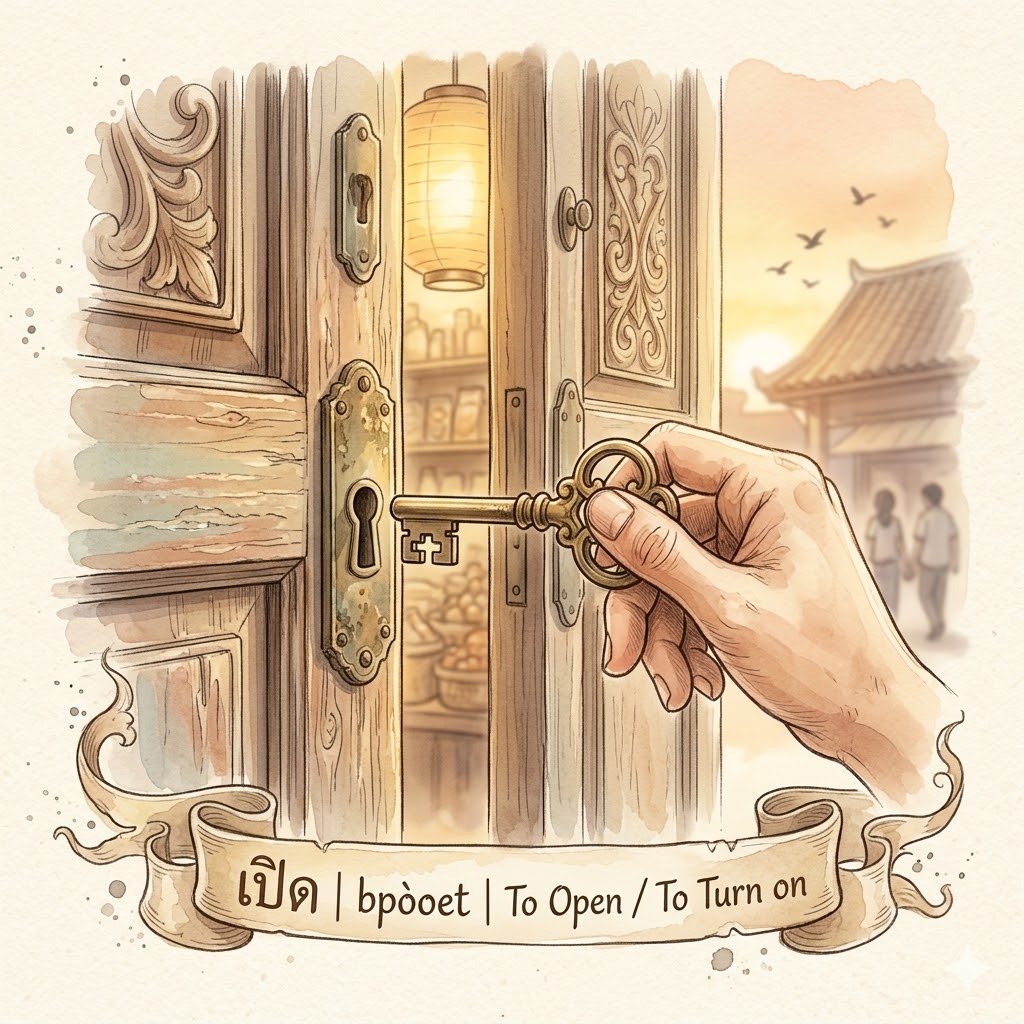
เปิด (bpòet) — To Open / To Turn On
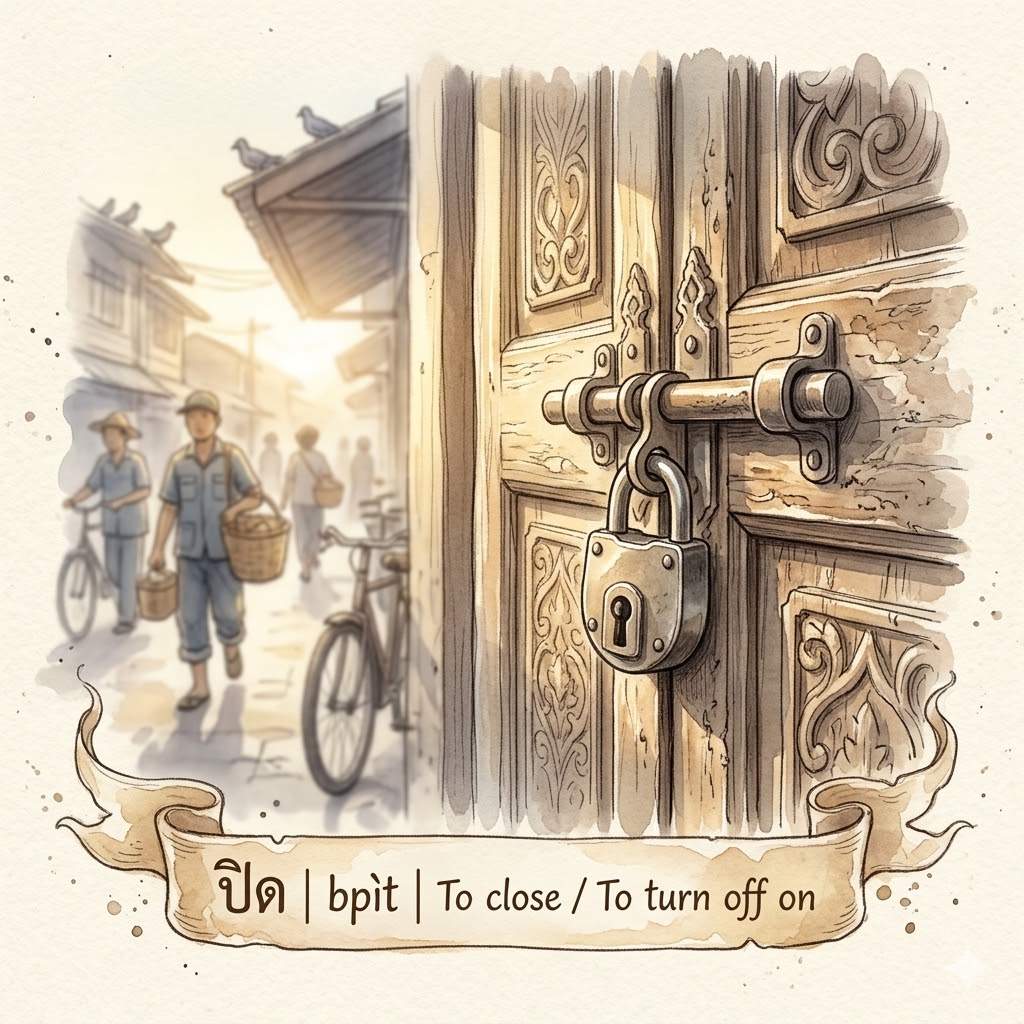
ปิด (bpìt) — To Close / To Turn Off
Two words. One logic. They cover doors, screens, switches, engines, shops, schools, and hearts.
The Faucet Logic
In English, the verb changes depending on what you’re operating. You turn on a light, start a car, open a door. Three actions, three words.
In Thai, electricity and engines are treated like a flowing tap. You either open the flow or close it.
- เปิดไฟ (bpòet fai) — Open the light. Let the power flow.
- ปิดไฟ (bpìt fai) — Close the light. Stop the flow.
This works for everything — your phone, the air-con, the TV, the car engine. The verb never changes. Only what you’re opening or closing does.
The Rhythm of Business
Two signs run every street in Thailand. If you can read these, you know everything you need to know before you try the door.
- เปิด — Come in. The business is alive.
- ปิด — We’re resting. Come back later.
And then there’s the phrase every Thai student lives for:
ปิดเทอม (bpìt term) — School’s out. Literally: “Closed term.” The two happiest words in a Thai child’s year.
The Heart Switch
Thai is a language that runs on ใจ (jai / heart). So it’s no surprise that เปิด and ปิด eventually move off the wall and into the chest.
เปิดใจ (bpòet jai) — Open your heart. Used when you want someone to be honest, to receive a new idea, or to give someone a genuine chance. It’s an invitation, not a demand.
ปิดบัง (bpìt bang) — To hide. To conceal. Literally “close and block.” This is the word for keeping someone in the dark — a secret held tight, a truth covered over.
The same switch that turns on a light can open a heart or seal a secret. That’s the economy of Thai — two words doing the work of twenty.
Related posts
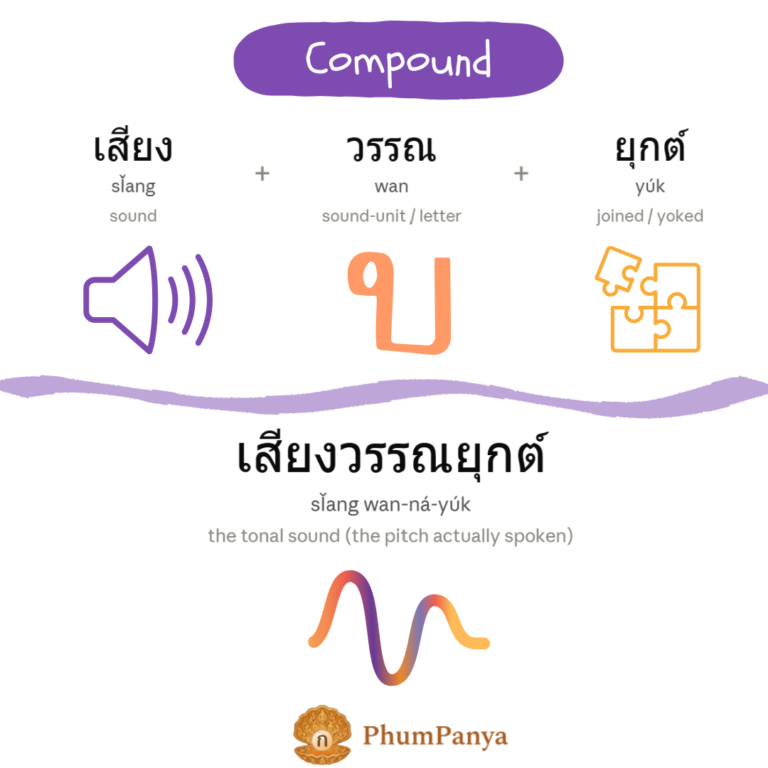 เสียงวรรณยุกต์ – Thai Tone Etymology
The Thai word for tone breaks into three roots — เสียง (sound), วรรณ (letter, from Sanskrit varṇa), and ยุกต์ (joined, from Sanskrit yukta). Native Tai and Sanskrit fused into one concept.
1 min read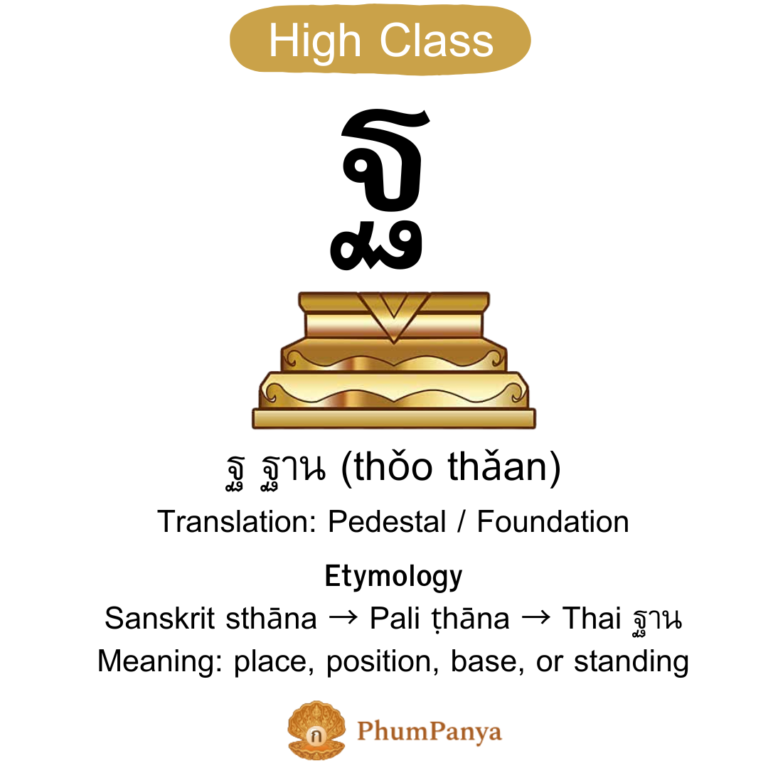 Down the Rabbit Hole of ฐ: One Thai Letter’s Journey Across Eurasia
I do love digging through the seams of Thai vocabulary. You sit down, say, to read about the letter — tɔ̌ɔ tǎan, the 16th consonant of the Thai alphabet. And several hours later you find yourself far from Thailand, gleefully time-traveling back and forth across Eurasia. Welcome down the rabbit hole.
3 min read McFarland House Hua Hin: A Wooden House Between Two Worlds
Among the beachfront hotels of Hua Hin stands a wooden house from another century. It once belonged to an American who became Siamese aristocracy, and who left behind a dictionary that still teaches Thai today.
6 min read