
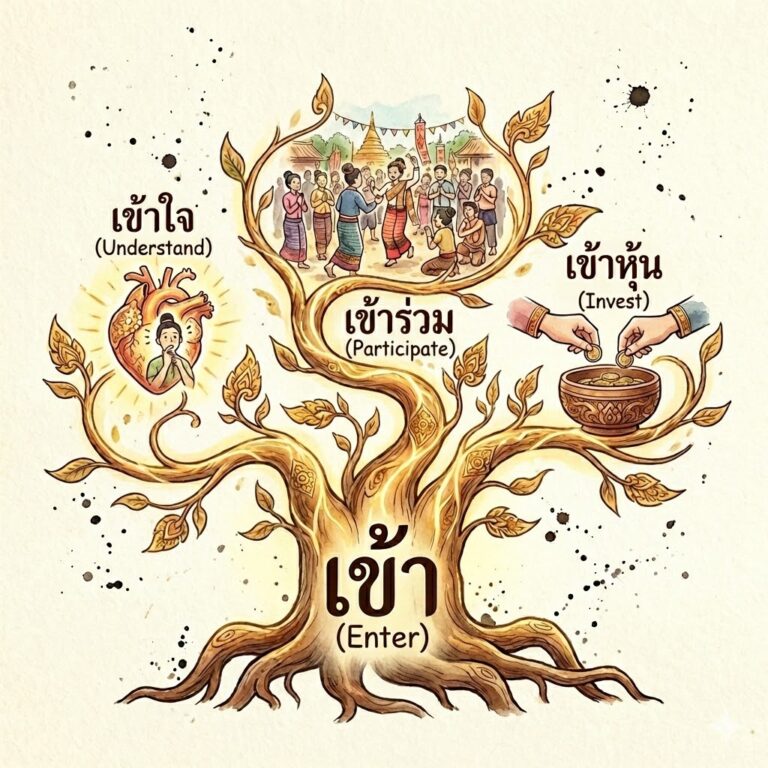
Thai Verbs: The Root System That Builds the Language
2 min readUnderstanding how verb in Thai language works is one of the most essential Thai language basics: a single basic action like Khao (เข้า / To Enter) is the foundation for everything from “understanding” to “investing.”
The Visual

- Primary Meaning: To Enter / To Go In
- Root Type: Basic Motion
- Library Link: [View the full card of เข้า →]
The Insight: The Logic of “Entering”
When you look at Thai verbs as a “Structural Map,” you see that a verb is a direction.
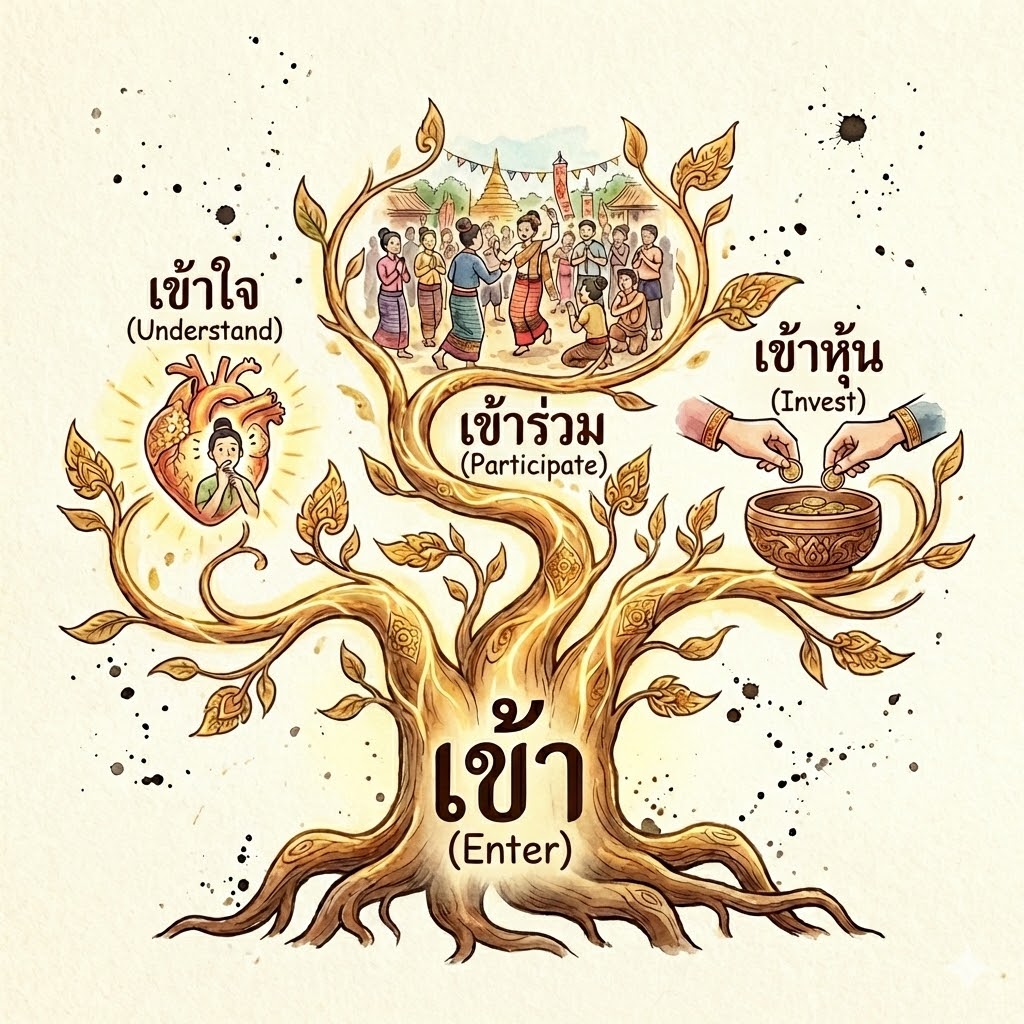
By adding a second word to Khao, the meaning shifts from physical movement to abstract concepts:
เข้า + ใจ (Heart) = เข้าใจ Khao-Jai: To Understand [View the full card]
Logic: To “enter” the heart
เข้า + ร่วม (Together) = เข้าร่วม Khao-Ruam: To Participate [View the full card]
Logic: To “enter” together
เข้า + หุ้น (Share) = เข้าหุ้น Khao-Hoon: To Invest [View the full card]
Logic: To “enter” the shares
This pattern is how Thai language basic words build complexity from simple roots.
The Bonus: The “Jai” Action Verbs
Beyond just “entering,” other basic physical actions snap onto ใจ (Jai / Heart) to create complex psychological verbs. These aren’t just feelings; they are mental maneuvers:
วาง (To Place) + ใจ = วางใจ Wang-Jai: To Trust [View the full card]
Logic: “To place your heart” on something
เปลี่ยน (To Change) + ใจ = เปลี่ยนใจ Plian-Jai: To change your mind [View the full card]
Logic: The action of “changing the heart”
เห็น (To See) + ใจ = เห็นใจ Hen-Jai: To sympathize [View the full card]
Logic: “To see the heart” of another
By learning the root verb first, you aren’t just memorizing vocabulary; you are learning the architecture of how Thais describe the world. This is what makes understanding Thai verbs different from English—they combine, they don’t conjugate.
Explore the Library
Explore our interactive database:
Related posts
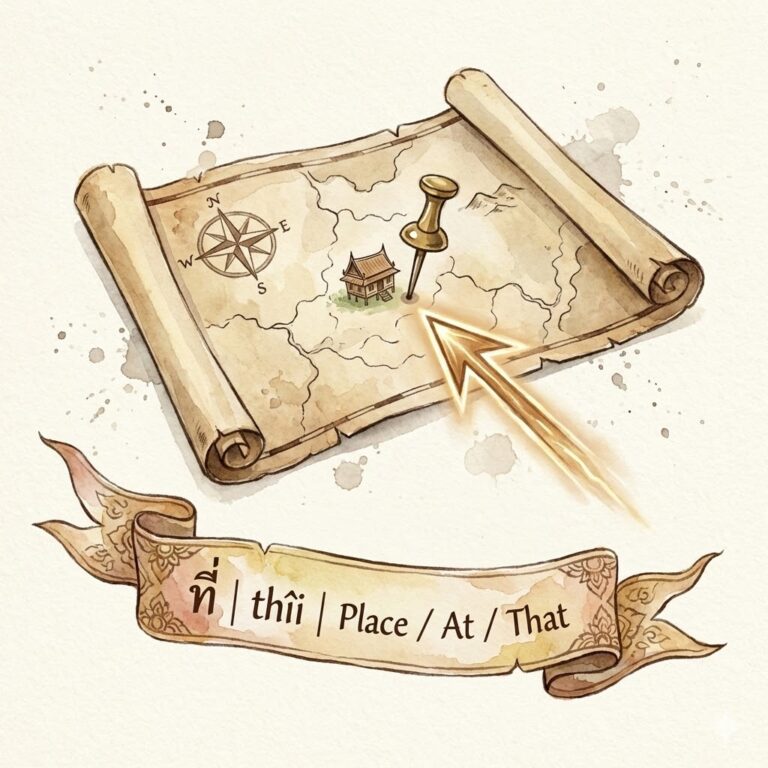 Thai Prepositions
Learn the prepositions that pin locations, glue ideas, mark journeys, and bridge time.
2 min read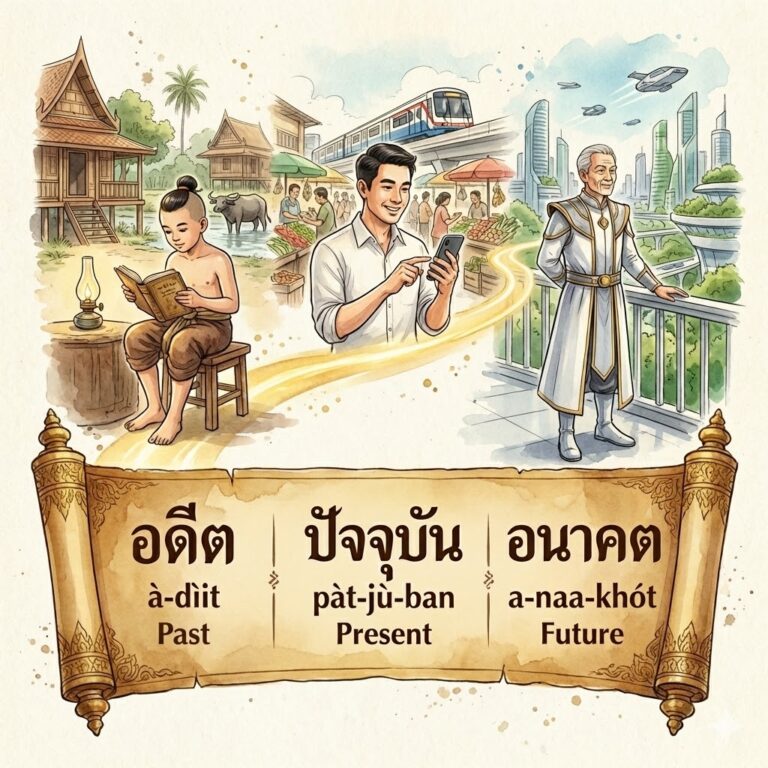 Past, Present & Future in Thai
Thai maps time through Sanskrit roots. Past is “already gone,” present is “born before you,” future is “not yet arrived.”
1 min read Hello in Thai: The Origin & Cultural Meaning of Sawasdee
Sawasdee isn’t ancient—it was mandated by government decree in 1943. Discover the Sanskrit roots, nation-building politics, and why saying hello in Thai is a blessing.
7 min read