
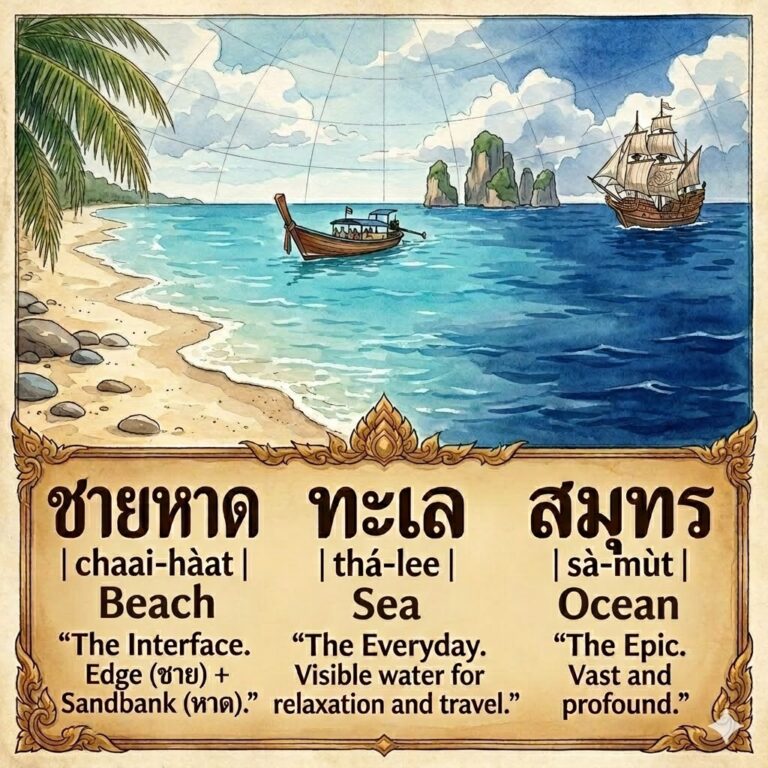
Sea in Thai Language
2 min readSea in Thai language depends on what you’re doing there—vacation, walking on sand, or sailing across continents.
Understanding ocean in Thai language means seeing how Thai distinguishes between the water you swim in, the sand you walk on, and the deep blue that connects worlds.
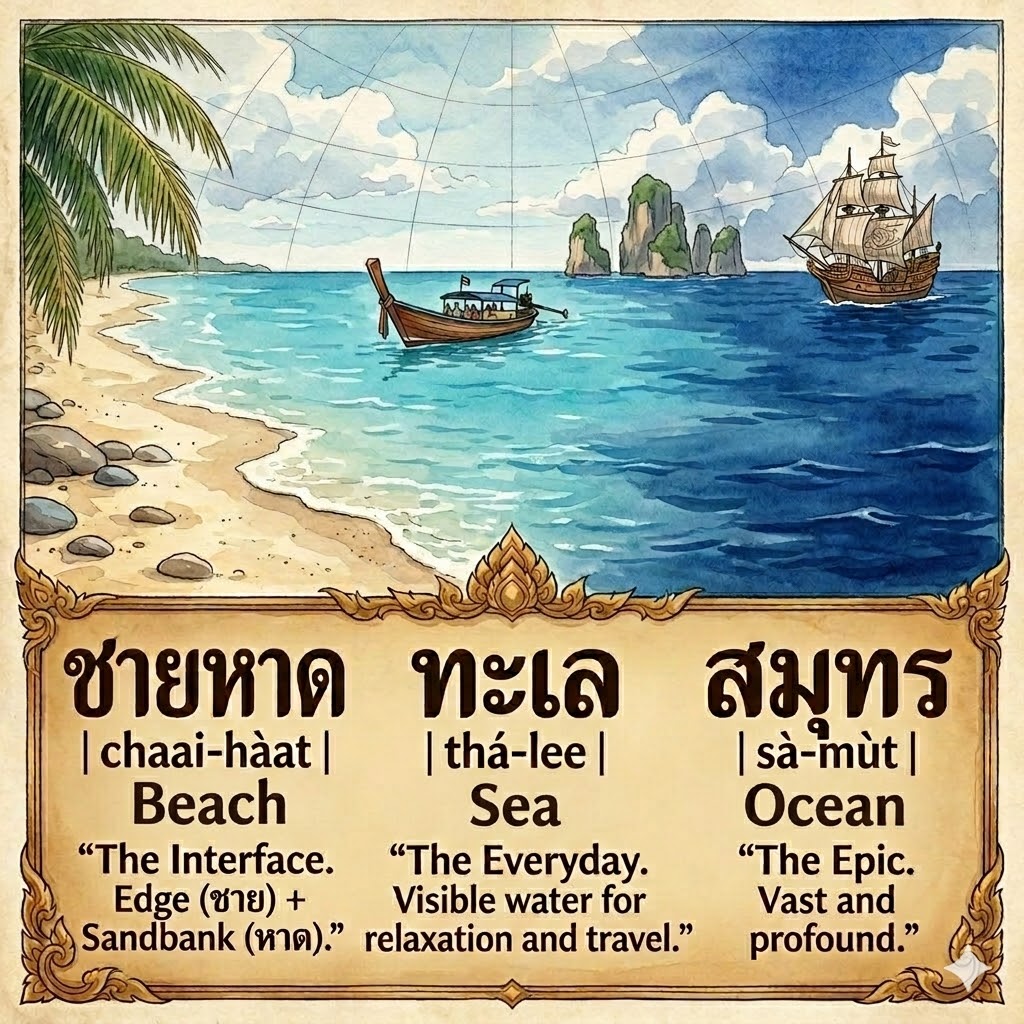
1. ทะเล (thá-lee) | The Sea / Seaside
Origin: Native Thai
Logic: The water you see from shore—for vacation, seafood, relaxation
When to use: Casual trips, Gulf of Thailand, beach vacations
Example:
“ไปเที่ยวทะเลกันไหม? “ (bpai thîiao thá-lee gan mǎi?)
“Shall we go to the seaside?”
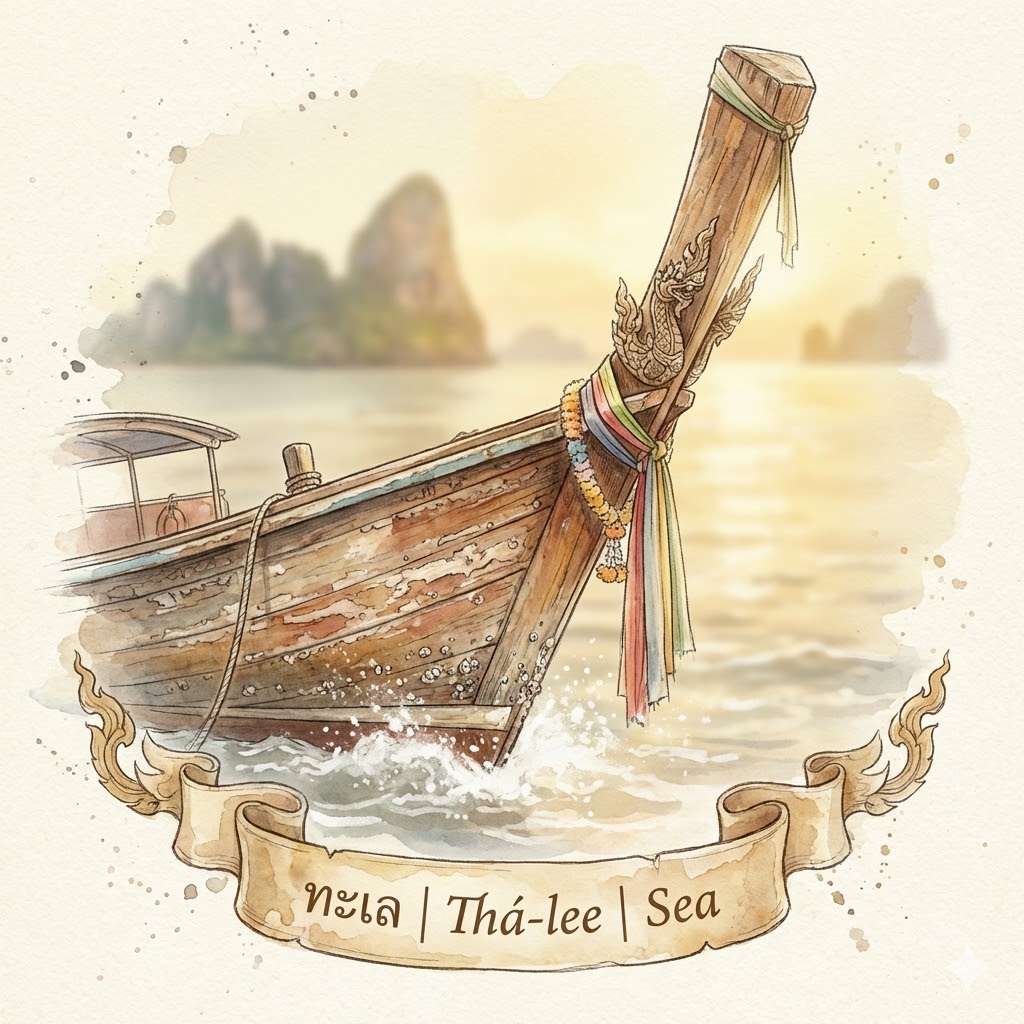
2. ชายหาด (chaai-hàat) | The Beach
Origin: Native Thai compound
Literal meaning: “Edge-Shallow” (where land meets water)
Structure:
- ชาย (chaai) = Edge / Border
- หาด (hàat) = Sandbank / Shallow area
When to use: The sand zone—sunbathing, walking, building sandcastles
Example:
“เดินเล่นที่ชายหาด “ (doen-lên thîi chaai-hàat)
“Taking a stroll on the beach”
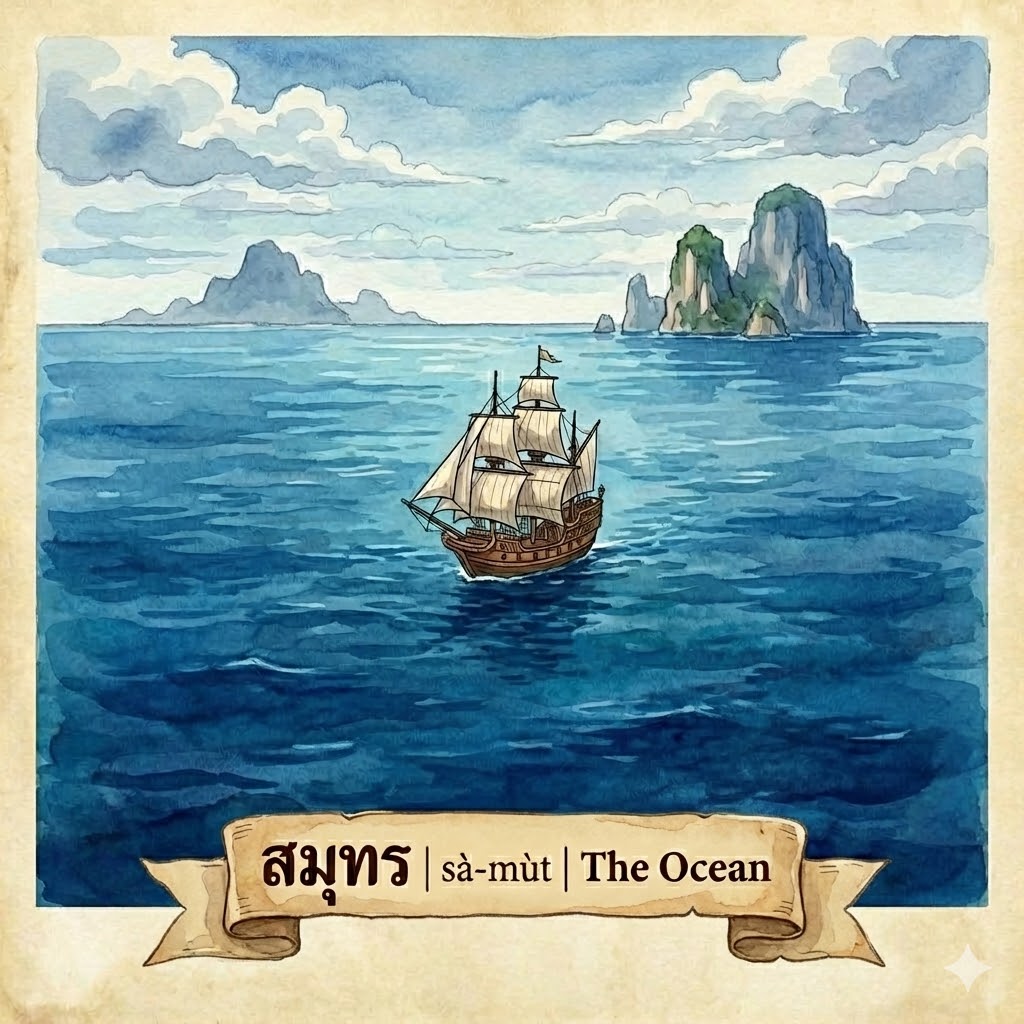
3. สมุทร (sà-mùt) | The Ocean
Origin: Sanskrit Samudra (“Gathering of Waters”)
Logic: The vast, deep water that requires ships—formal, geographical, epic
When to use: Province names (สมุทรปราการ), global oceans, science contexts
Example:
“เรือแล่นข้ามมหาสมุทร “ (ruea lâen khâam má-hǎa-sà-mùt)
“The ship sails across the Great Ocean”
Related posts
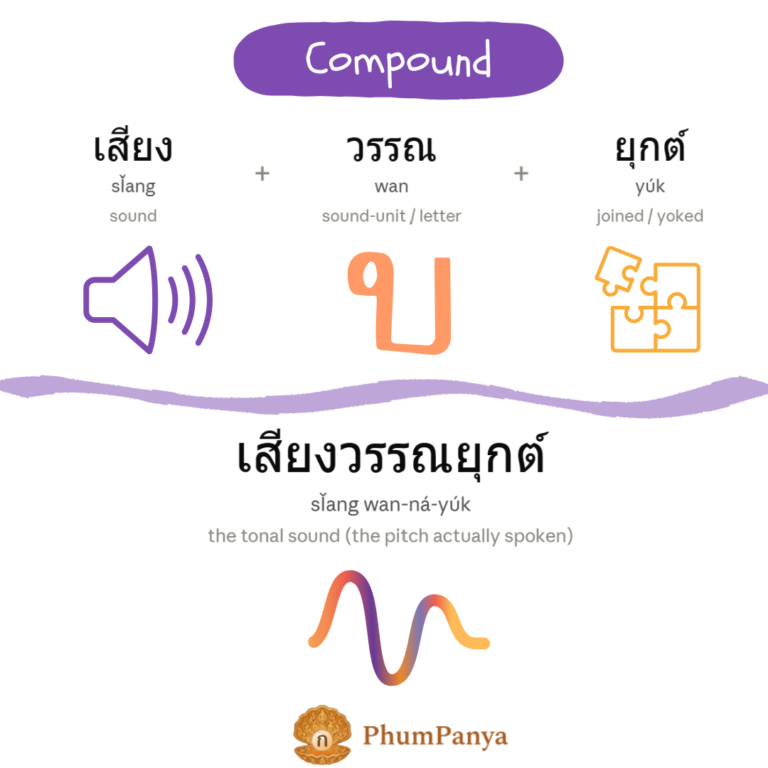 เสียงวรรณยุกต์ – Thai Tone Etymology
The Thai word for tone breaks into three roots — เสียง (sound), วรรณ (letter, from Sanskrit varṇa), and ยุกต์ (joined, from Sanskrit yukta). Native Tai and Sanskrit fused into one concept.
1 min read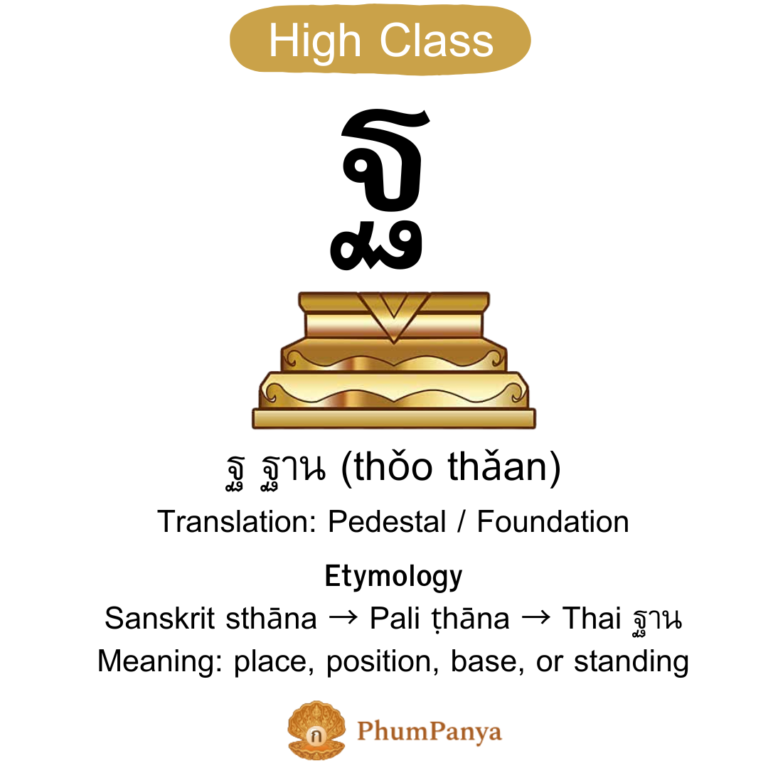 Down the Rabbit Hole of ฐ: One Thai Letter’s Journey Across Eurasia
I do love digging through the seams of Thai vocabulary. You sit down, say, to read about the letter — tɔ̌ɔ tǎan, the 16th consonant of the Thai alphabet. And several hours later you find yourself far from Thailand, gleefully time-traveling back and forth across Eurasia. Welcome down the rabbit hole.
3 min read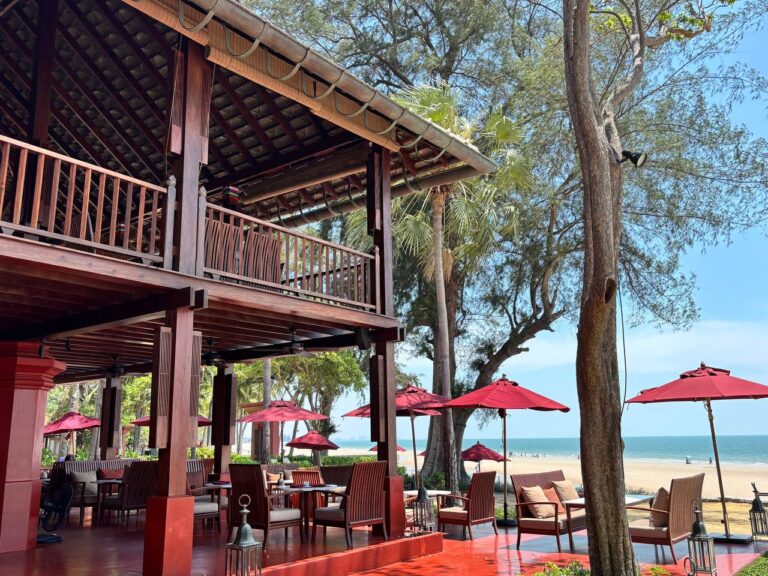 McFarland House Hua Hin: A Wooden House Between Two Worlds
Among the beachfront hotels of Hua Hin stands a wooden house from another century. It once belonged to an American who became Siamese aristocracy, and who left behind a dictionary that still teaches Thai today.
6 min read