
McFarland House Hua Hin: A Wooden House Between Two Worlds
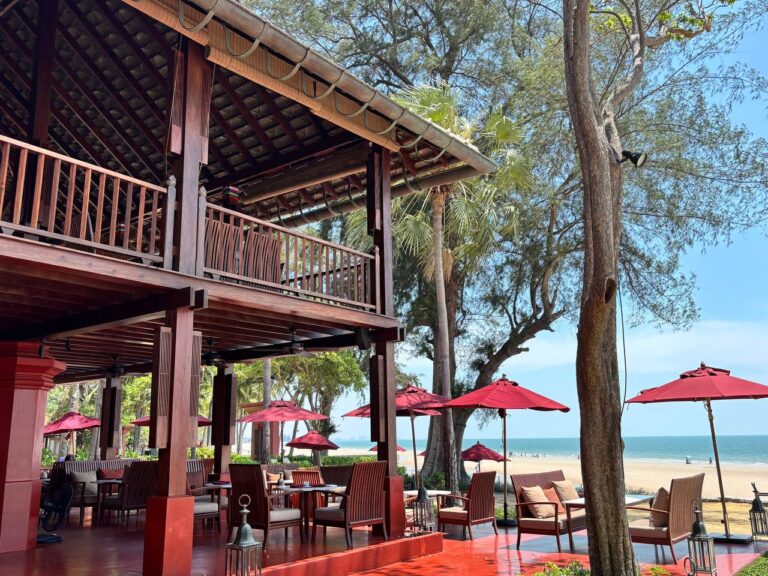
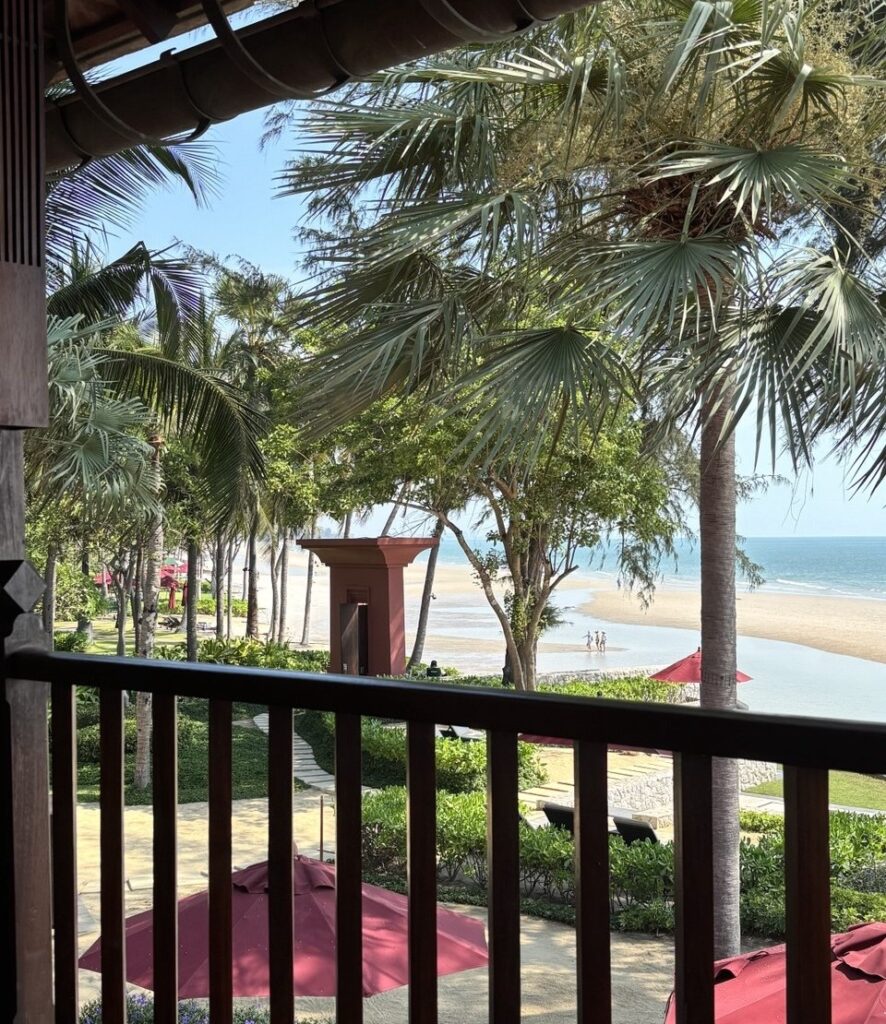
6 min readWe are sitting on the second floor of an empty restaurant on the shore of the Gulf of Siam, listening to the waves sing. It has been a long almost three and a half years away from my Homeland. Years of transformation and change. And now, a moment of contemplation. A moment to realize: I am here. My life flows here. By this dancing line between an emerald sea and an endless sandy beach. Above me, a ceiling fan turns its blades. Beneath the wooden roof, birds chirp. From the south, a warm wind blows.
I am grateful.
This country has given me refuge and new meaning, as it once gave others searching for peace, for forgetting, for healing, for something of their own.
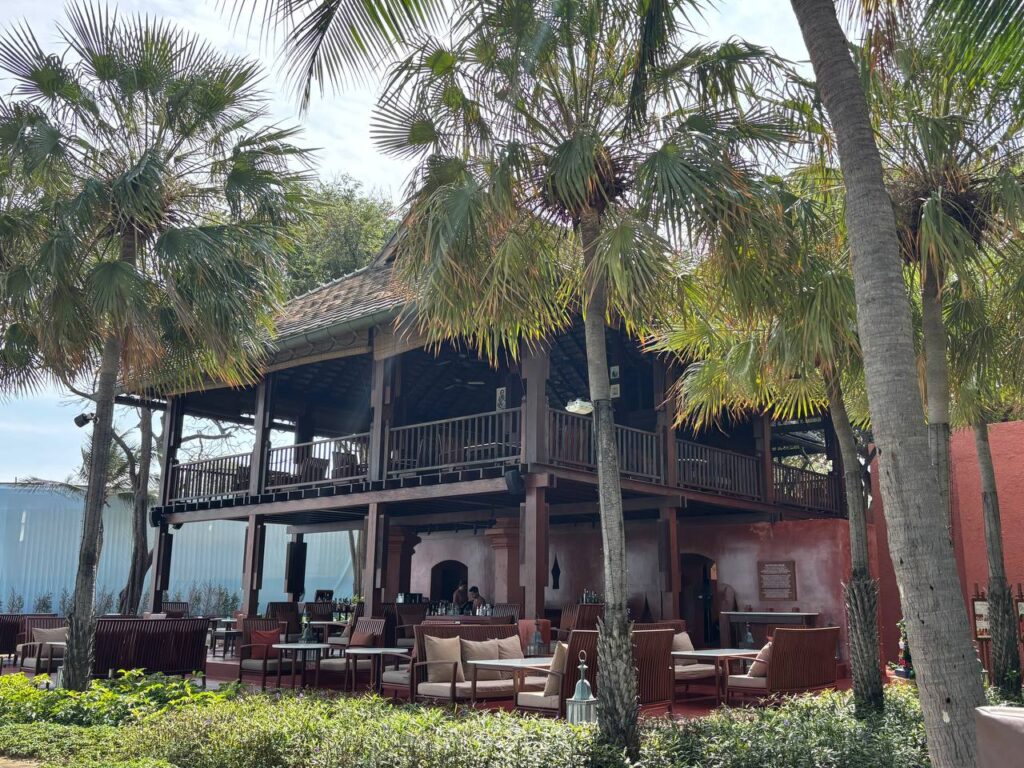
The restaurant where we sit listening to the wind and the waves is no ordinary place. Among the expensive beachfront hotels of Hua Hin, it stands as a greeting from a vanished era, from a country that was once called Siam. And it is not really a restaurant at all, but a wooden house in the traditional Thai style, once belonging to George Bradley McFarland (1866–1942).
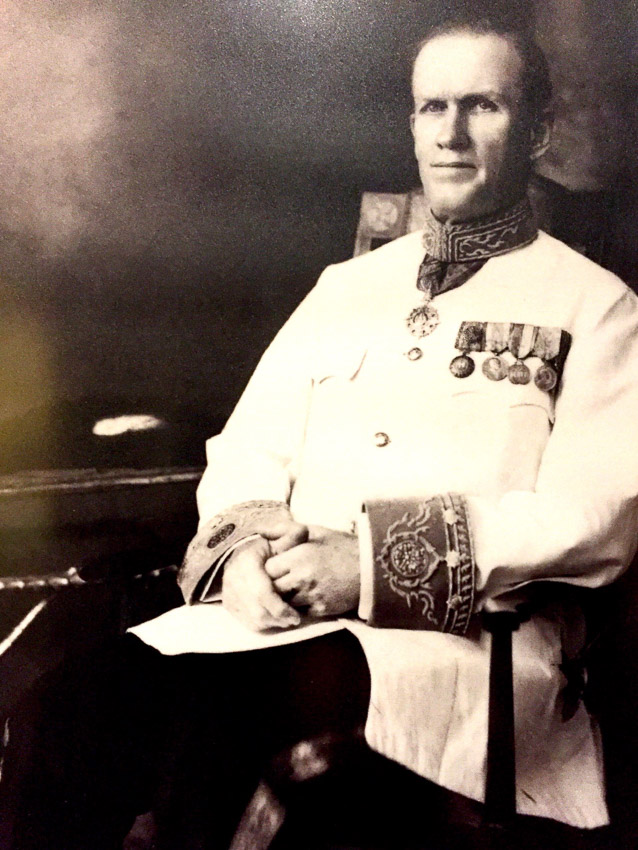
He was born in Bangkok, in the house of Dr. Dan Beach Bradley, the most famous American medical missionary in Siam and King Mongkut’s preferred Western doctor. The McFarlands and the Bradleys were close — both Presbyterian missionary families building lives in nineteenth-century Bangkok. George took his middle name from his father’s friend. Scotch-Irish by descent, American by passport, Siamese by upbringing. He spoke Thai with a southern accent, from Phetchaburi, that his royal classmates teased him about. He was never fully at home in either country.
If the plaque on the wall is to be believed, this is where he worked, with a view of the magnificent Khao Takiab.
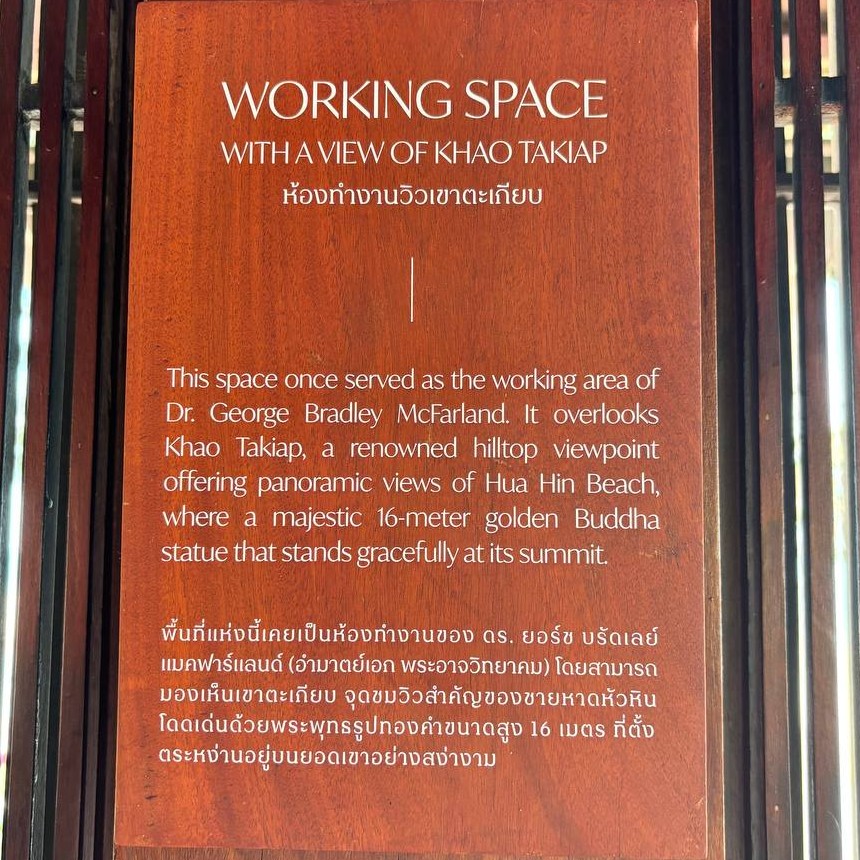
The magnificent view, of course, is long gone. In its place stands a construction fence, behind which yet another hotel is being built. Only a small piece of the sea remains visible from the Khao Takiab side. But on the left, the view is still as wonderful as ever. A harmony woven from the beige of the sand dunes and the turquoise of the water.
How did life feel for him here?
His father, Samuel McFarland, ran the Suan Anan School from 1879 to 1892, one of the earliest government schools educating the sons of Siamese nobility. George grew up alongside princes and the children of high-ranking court officials. They were his playmates.
The family’s main royal patron was Prince Damrong Rajanubhab, half-brother of King Chulalongkorn, Minister of Public Instruction and then Interior, called the father of Thai history, and later Chairman of the Chulalongkorn University Council.
His brother, Edwin McFarland, served as Prince Damrong’s private secretary. In 1892, Edwin brought the first Thai typewriter back from Syracuse and was granted a direct audience with King Chulalongkorn, Rama V, who personally typed on it.
Because the complex Thai script has 44 consonants and numerous vowels/tone marks, McFarland’s double keyboard couldn’t fit all of them. He intentionally excluded two less frequently used consonants, ฃ (kho khuat) and ฅ (kho khon). The omission on typewriters established a standard that eventually made these two letters obsolete in modern Thai writing.
The king ordered seventeen machines for government use. When Edwin died in 1895, George inherited both the typewriter business and the royal relationships that came with it.
In 1892, at the tender age of twenty-five, McFarland was appointed Superintendent of Siriraj Hospital, Dean of the Royal Medical College, and the first foreign lecturer at the Faculty of Medicine. It was a royal appointment, made personally by King Chulalongkorn. Siriraj had been the king’s own project, founded in 1888. To place a twenty-five-year-old American in charge of training Siam’s first generation of modern doctors was an extraordinary act of trust. He held the position for thirty-five years, across three reigns: Rama V, Rama VI, and Rama VII.
He received the title พระอาจวิทยาคม, Phra Ach Vidyagama, Lord Master of Knowledge. The Phra rank is a serious noble designation, not a courtesy honor. Rare for a foreigner. It made him, technically, a member of the Siamese aristocracy. His full name in Thai records reads: ดร. ยอร์ช บรัดเลย์ แมคฟาร์แลนด์ (อำมาตย์เอก พระอาจวิทยาคม), Dr. George Bradley McFarland, Royal Officer First Class, Phra Ach Vidyagama.
His works:
Reminiscences of Twelve Decades of Service to Siam 1860–1936 (Bangkok Times Press, 1936). Published four years after the revolution that dismantled the system he had served. He still used Siam, the old name of the country. Thailand would receive its new name in 1939, three years after his memoir and six years before his death.
Thai-English Dictionary. He continued his father Samuel’s English-Siamese dictionary work. The result was a 1,084-page volume, published by Stanford University Press in 1944, two years after his own death. It covered thousands of entries from classical literature, religious terminology, and historical vocabulary, with an etymological dimension tracking words back to their Sanskrit and Pali origins.
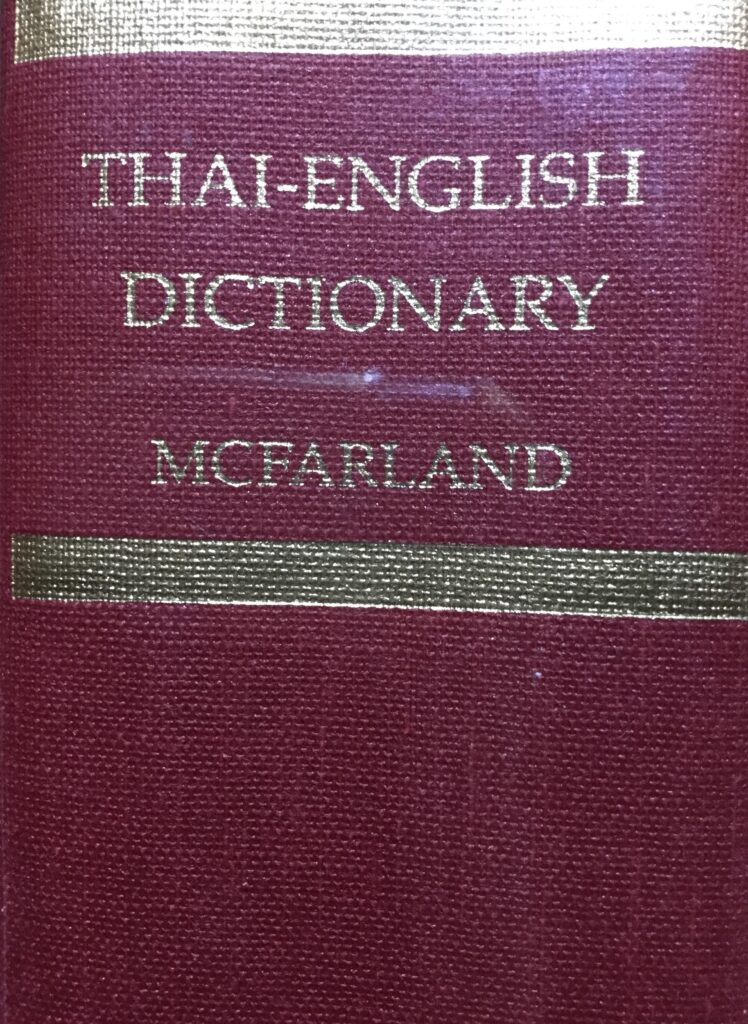
The very existence of this dictionary inspired our PhumPanya project. Without the internet, without AI, without any of the conveniences of modern civilization, he continued his father’s work. That a man could do this, alone, with paper and patience and the years he had — it changes what feels possible.
Here, on the Hua Hin coastline that was once the geographic heart of the royal and aristocratic escape network, on land gifted to him by His Majesty King Rama VI for his contribution to Thailand’s medical history, he watched the sea at sunrise and quietly mapped the Thai language.
Such inspiring, grace-filled thoughts come to me inside this remarkable wooden house. But here our tea arrives. Brick-red Thai Tea for Mistin, Oolong in a burgundy pot for me. Enough of history for today. Until we meet again.
Related posts
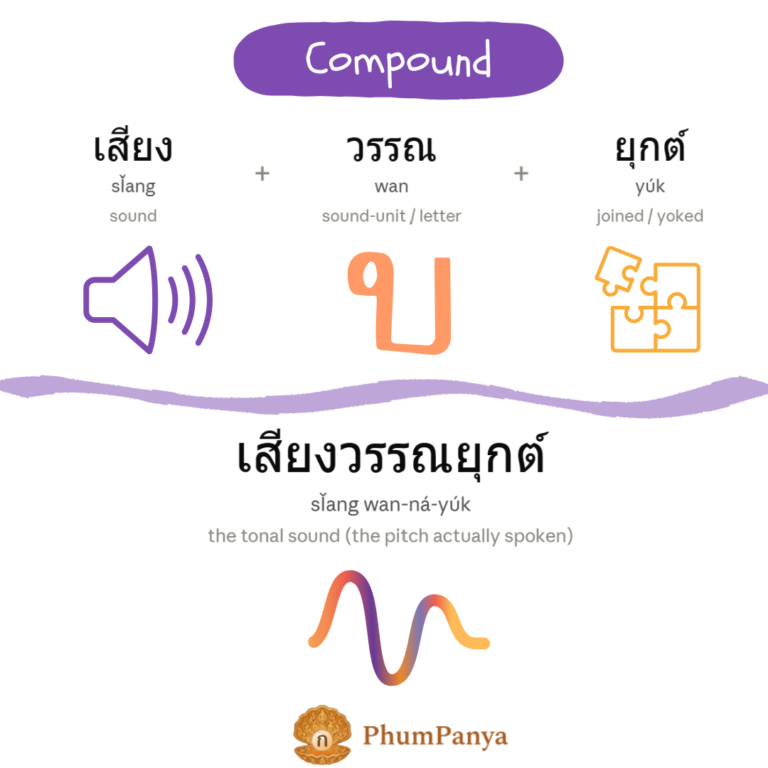 เสียงวรรณยุกต์ – Thai Tone Etymology
The Thai word for tone breaks into three roots — เสียง (sound), วรรณ (letter, from Sanskrit varṇa), and ยุกต์ (joined, from Sanskrit yukta). Native Tai and Sanskrit fused into one concept.
1 min read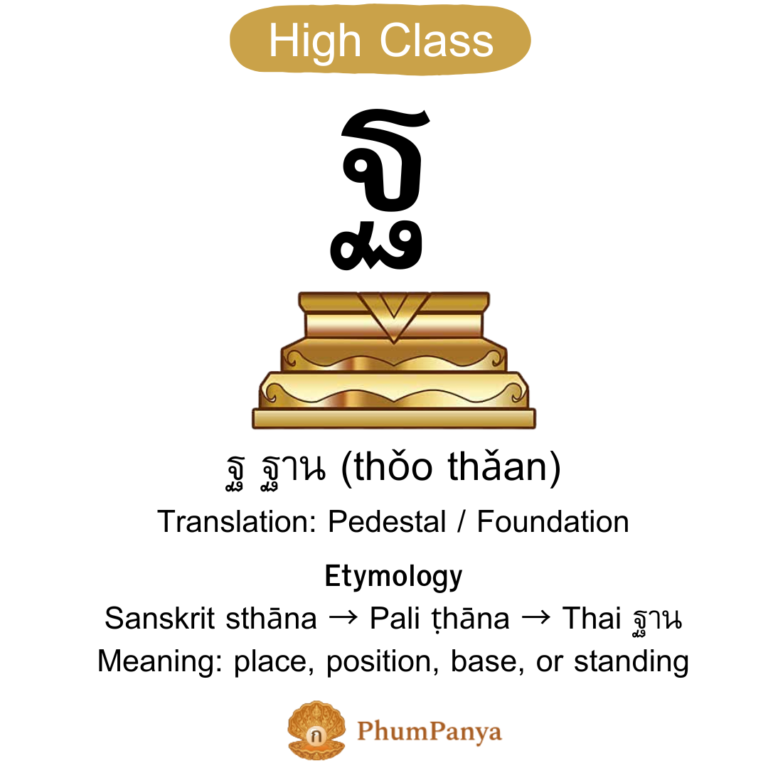 Down the Rabbit Hole of ฐ: One Thai Letter’s Journey Across Eurasia
I do love digging through the seams of Thai vocabulary. You sit down, say, to read about the letter — tɔ̌ɔ tǎan, the 16th consonant of the Thai alphabet. And several hours later you find yourself far from Thailand, gleefully time-traveling back and forth across Eurasia. Welcome down the rabbit hole.
3 min read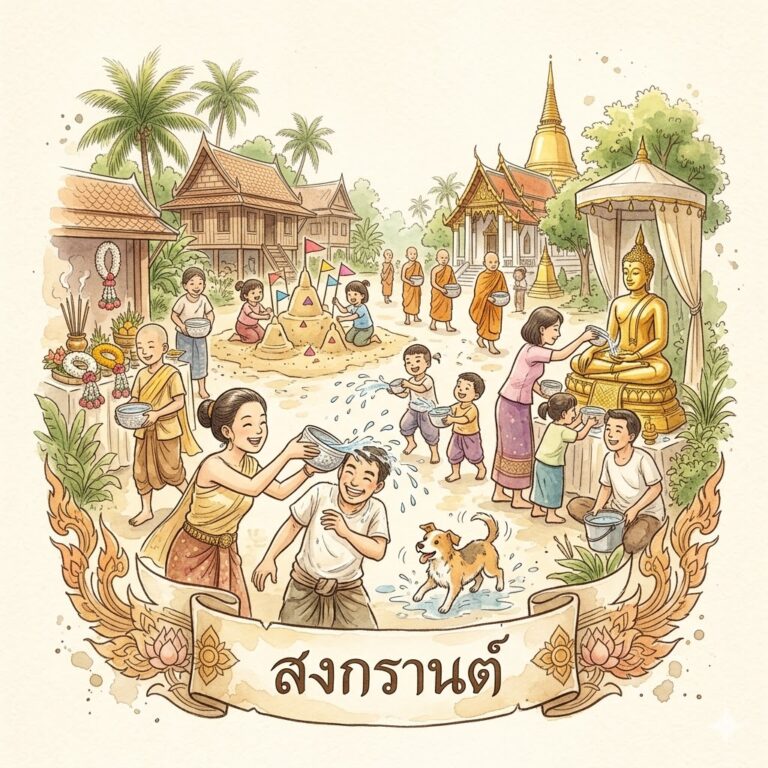 Songkran Festival: Thailand’s Water Celebration & Thai New Year
Songkran festival marks Thai New Year with water blessings, temple visits, and nationwide celebration. Discover the meaning of สงกรานต์ and essential traditions.
7 min read